
Companion Plants
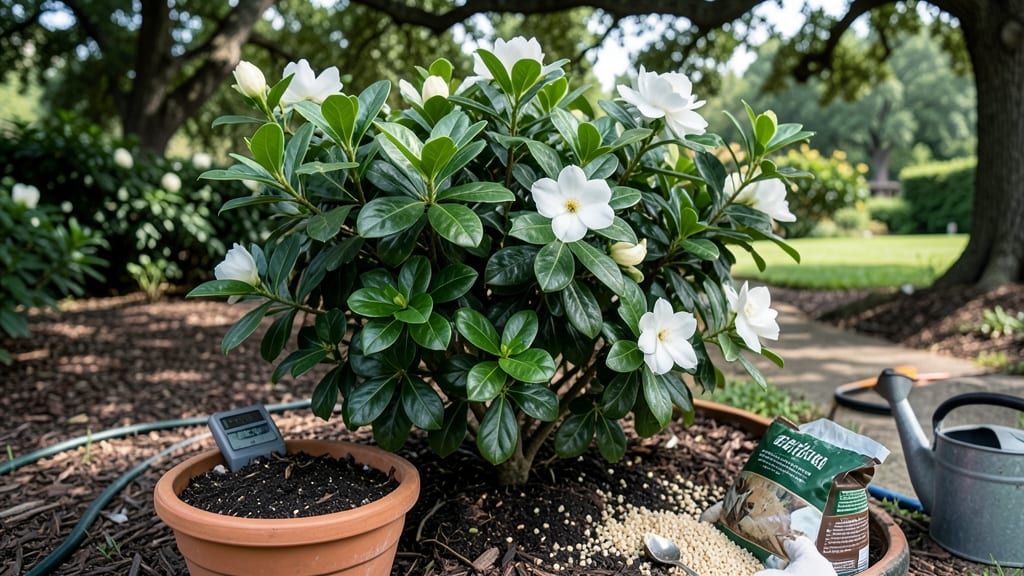
To feed gardenias properly, maintain acidic soil (pH 5.0–6.0), use balanced fertilizer (10-10-10 or 12-4-8), and adjust feeding seasons: light doses in spring/summer, none in winter. Organic alternatives like composted pine needles or worm castings provide gentle, effective nutrition.
Gardenias are picky eaters—they demand acidic soil to access essential nutrients like iron and manganese, which directly impact their signature fragrance and lush blooms. 🌸 The right fertilizer balance (10-10-10 or 12-4-8) supports root health in spring and flowering in summer, while winter dormancy means no feeding at all.
I've found that overfeeding is a common mistake—too much nitrogen can lead to leafy growth at the expense of those prized white flowers. For organic gardeners, composted pine needles or worm castings work wonders without the risk of chemical burn.
Seasonal timing matters just as much as what you feed them. In spring, focus on phosphorus to encourage bud formation, while summer calls for potassium to sustain blooms. 🌿 I always test my soil's pH before fertilizing—if it's too high, a simple application of sulfur can reset the balance.
The key is consistency: gardenias reward patience with their intoxicating scent, but they won't tolerate neglect or overindulgence.
💡 In This Article
- Gardenia Soil pH and Nutrient Requirements Explained
- Best Fertilizers for Gardenias: Organic vs Synthetic Options
Gardenia soil pH and nutrient requirements explained
Gardenias thrive in acidic soil because their roots need an environment where iron and manganese remain soluble.
At a pH of 5.0–6.0, these micronutrients become readily available—critical for chlorophyll production and flower development. 🌿 When soil pH rises above 6.5, iron becomes "locked out," causing yellowing leaves (chlorosis) even if the plant receives enough iron.
This is why gardenias often struggle in alkaline soils common in many regions, where lime or other alkaline amendments have been added over time.
The nutrient balance in gardenia soil must support three key growth stages: root establishment in spring, bud formation in early summer, and bloom maintenance through late summer. Nitrogen (N) fuels leaf growth, but too much leads to lush foliage at the expense of flowers—a classic case of misplaced energy.
Phosphorus (P) is the flower catalyst, while potassium (K) strengthens stems and disease resistance. A 10-10-10 or 12-4-8 fertilizer ratio provides this balance, with phosphorus slightly emphasized to encourage blooming without excessive leafy growth.
Root health is the foundation of gardenia nutrition. The plant's fibrous roots spread shallowly, so topsoil quality matters most. Sandy loam with good drainage prevents root rot while retaining enough moisture—gardenias hate soggy feet. 💧 Organic matter like composted pine needles (pH 4.5–5.5) improves soil structure while slowly releasing nutrients.
The key is consistency: gardenias develop deep root systems over time, so annual soil testing (especially pH) prevents nutrient deficiencies before they appear.
Seasonal nutrient needs shift dramatically. In spring, focus on nitrogen to jumpstart growth, but reduce it by summer when phosphorus takes center stage for bud formation. Potassium becomes critical in late summer to sustain blooms and strengthen stems against wind or rain.
The plant's natural dormancy in winter means no feeding—roots rest, and any fertilizer applied would simply leach away or burn tender roots.
One common mistake is assuming "more fertilizer equals better blooms." Overfeeding with nitrogen-rich products (like lawn fertilizers) leads to weak stems and fewer flowers. 🌸 The solution? Use a slow-release fertilizer in spring and switch to a bloom-boosting formula (higher phosphorus) in early summer.
Organic options like worm castings provide balanced nutrition without the risk of chemical burn, while coffee grounds (acidic) can be worked into the soil to adjust pH gradually.
For visual learners, think of gardenia nutrition like a three-act play: Act 1 (spring) builds the cast (roots/leaves), Act 2 (summer) writes the script (buds), and Act 3 (fall) delivers the performance (blooms).
Each act requires different nutrients, and the stage (soil pH) must be set correctly for the entire production to succeed.