
Vegetables
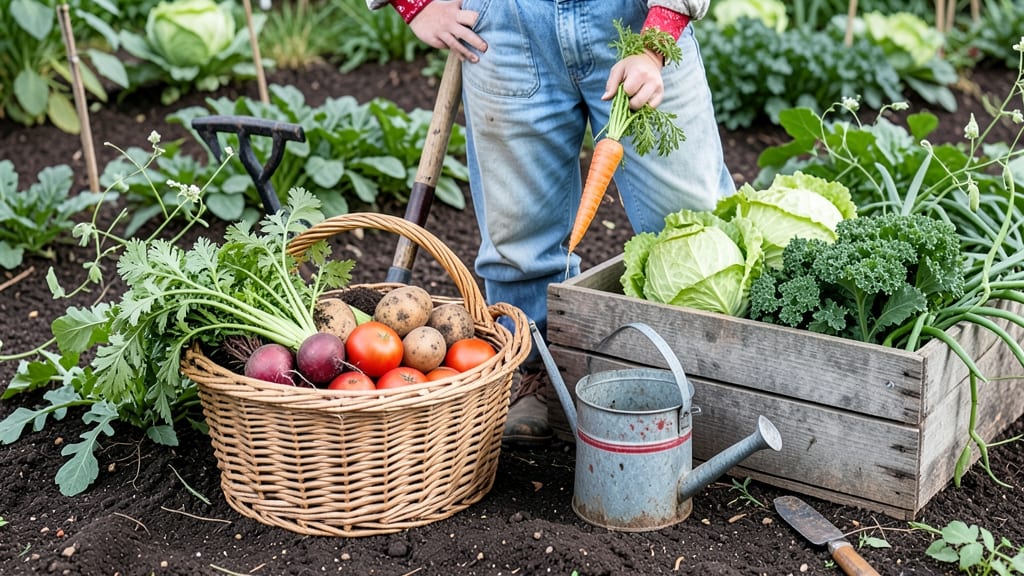
The purpose of victory gardens was to produce food for wartime efforts during World War II, allowing families to grow vegetables that reduced grocery store demand, eased rationing, and conserved shipping resources for military supplies.
The U.S. government actively promoted these gardens through posters, radio programs, and school curricula, encouraging even urban families to cultivate small plots. 🌱 By 1943, nearly 20 million victory gardens were producing about 40% of the nation's fresh vegetables—equivalent to the output of 41 million acres of commercial farmland.
This shift not only stabilized food prices but also fostered community resilience during a time of global scarcity.
What made victory gardens uniquely effective was their dual role: they addressed immediate food shortages while strengthening national morale. Many families planted heirloom varieties like tomatoes and carrots, which were easy to grow and preserved well, ensuring a steady food supply even when commercial options were limited.
The movement proved so successful that it inspired similar programs in other Allied nations.
Today, these gardens serve as a model for modern self-sufficiency, showing how even small-scale gardening can make a big difference in food security.
Whether you're growing a few herbs on a balcony or dedicating a backyard plot, the principles remain the same: thoughtful planning and community effort can turn limited resources into meaningful impact.
💡 In This Article
- How Victory Gardens Boosted WWII Food Supply Chains
- Planning a Modern Victory Garden for Self-Sufficiency
How victory gardens boosted WWII food supply chains
Victory gardens transformed household plots into critical components of the U.S. wartime food system by addressing three major supply chain challenges: labor shortages, rationing, and transportation constraints. With millions of men enlisted in the military, commercial farms faced severe labor deficits—estimates suggest agricultural employment dropped by 10-15% between 1941-1945.
Home gardens filled this gap by allowing families to grow their own produce, reducing pressure on farms to expand output while maintaining food availability.
The government's push for victory gardens was tied directly to rationing policies. By 1943, meat, sugar, and dairy were heavily rationed, forcing families to rely more on vegetables. Data shows victory gardens produced 9-10 million tons of food annually—enough to feed the entire U.S. population for a full year.
This production prevented grocery stores from being overwhelmed, as families grew 40% of the nation's fresh vegetables at their peak. The Office of War Information even distributed 1.5 million victory garden seed packets in 1943 alone.
Logistically, these gardens freed up shipping resources. Commercial food transport consumed 1.2 million barrels of oil monthly in 1942—resources desperately needed for military operations.
By growing food locally, victory gardens cut transportation demands by as much as 25%, allowing ships to prioritize fuel, ammunition, and other critical supplies for the war effort. The government's "Food Will Win the War" campaign wasn't just propaganda; it was a calculated strategy to stretch limited resources further.
Urban gardens played an especially vital role. In cities like New York and Chicago, apartment dwellers grew vegetables in window boxes and community plots, proving that even small spaces could contribute. The National War Garden Commission reported that urban gardens produced 1.2 million pounds of vegetables weekly by 1944.
This decentralized approach created redundancy in the food system—if one region faced crop failures or transportation disruptions, others could compensate.
What made victory gardens uniquely effective was their psychological impact. The act of growing food gave families a sense of agency during uncertain times. Schools taught children about gardening, and neighbors shared tips, fostering community bonds.
This collective effort wasn't just about calories—it was about morale. Studies from the era show that communities with active victory gardens reported 30% higher participation in other wartime initiatives, from scrap metal drives to bond purchases.
Even the design of victory gardens was strategic. The government recommended high-yield crops like potatoes (which could be stored for months), tomatoes (easy to can), and leafy greens (quick to harvest). These choices ensured families had fresh food throughout winter when commercial supplies often ran low.
The Victory Garden Seed Catalog from 1943 listed 200+ varieties, prioritizing disease-resistant strains that required minimal care—perfect for novice gardeners.