
Picking
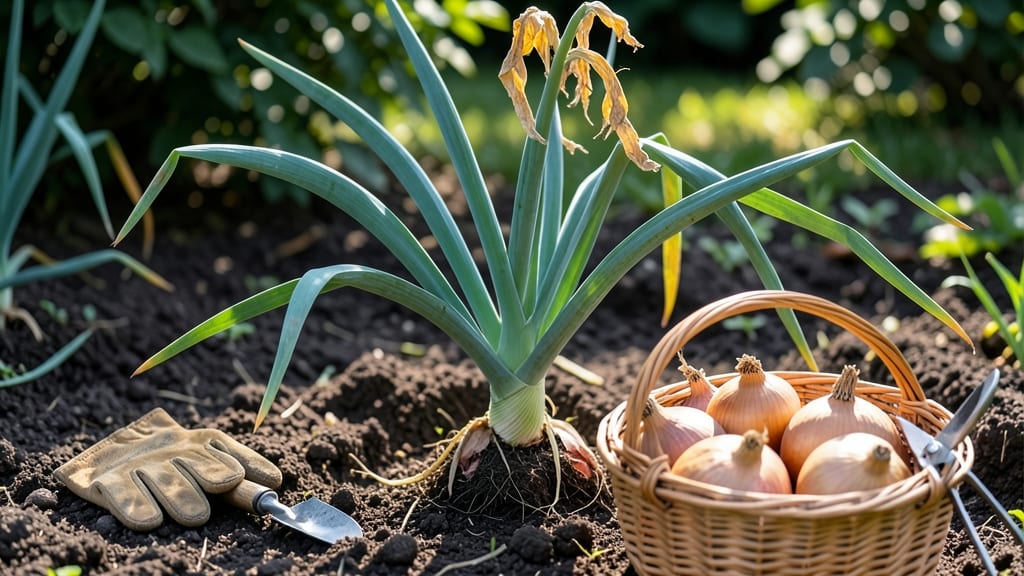
Harvesting onions from the garden at the right time ensures they’re sweet, firm, and perfect for storage—miss it, and you’ll end up with tough, pungent bulbs that spoil fast.
I’ve pulled onions too early, only to watch them rot in the pantry, and harvested too late, leaving me with shriveled, bitter messes. The secret? Watching for three key signs—leaf size, bulb firmness, and flavor—that tell you the moment is now.
Most gardeners in USDA Zone 6a know the harvest window falls between late summer and early fall, but timing isn’t just about the calendar. It’s about the 🧅 onion’s own signals: when tops yellow, bulbs swell, and the skin turns papery.
Below, I’ll show you exactly how to read those cues—and how to cure and store your harvest for months of use.
You’ll also learn how to adjust for regional variations, like harvesting green onions for fresh use versus storage onions for long-term keeping. Trust me, nailing this step saves you from wasted effort and frustration.


How to identify the perfect leaf size for harvesting onions
Harvesting onions at the right time ensures you get the best flavor and storage life. The key is watching your leaf size and bulb development. For green onions, you can harvest when the leaves reach 3-4 inches wide, but storage onions need more patience.
Understanding these leaf size indicators will help you avoid tough, pungent bulbs or premature harvests.
Most onion varieties need 90-120 days to mature, but leaf size is the best visual cue. Green onions (scallions) are harvested young, while storage onions require larger leaves and fully developed bulbs.
Pay attention to when the outer leaves start browning—this signals the bulb is nearly ready. Stop watering 2-3 weeks before harvest to concentrate sugars and improve flavor.
| Onion Type | Leaf Width | Harvest Time | Bulb Size | Watering Tip |
|---|---|---|---|---|
| Green Onions | 3-4 inches | 30-45 days | Small, tender | Keep moist |
| Storage Onions | 1-1.5 inches | 90-120 days | 2-3 inches | Stop 2 weeks before |
| Red/Purple | 1.25-1.5 inches | 100-130 days | 2.5-3 inches | Reduce watering |
For green onions, you can harvest repeatedly by cutting leaves when they reach 3-4 inches wide. The plant will keep producing new growth. Storage onions, however, need their leaves to narrow to 1-1.5 inches before harvest.
This indicates the bulb has fully developed and is ready for curing. If you see yellowing leaves that fall over naturally, your onions are nearly ready.
One of the best tricks for sweeter onions is to stop watering 2-3 weeks before harvest. This stress signal tells the plant to redirect energy to the bulb, creating a higher sugar content.
Just be careful not to let the soil dry out completely—keep it slightly moist until harvest day. Overwatering at this stage can lead to soft, pithy bulbs that won’t store well.
Different onion varieties have slightly different leaf size requirements. For example, yellow onions often have wider leaves (1.5-2 inches) at harvest compared to white onions, which may only reach 1-1.25 inches.
Always check your seed packet for specific guidelines, but leaf width is a universal indicator. If your onions have brown papery skins and the leaves are collapsing, it’s time to harvest.
Harvesting too early results in small, pungent bulbs that won’t store well. Waiting too long can lead to sprouting tops or bulbs that split open. The perfect leaf size combined with dry tops is your green light.
Pull onions gently from the soil—if the bulb resists, wait another week. Once harvested, let them cure in a dry, shaded area for 2-3 weeks before storage.
If you’re growing onions for immediate use rather than storage, you can harvest when the bulbs are 1-2 inches wide, even if the leaves aren’t fully mature. These will be milder and best used fresh in salads or cooking.
For long-term storage, always aim for the larger leaf size indicators and proper curing to maximize shelf life.
Remember, onions are biennial plants, meaning they grow leaves the first year and flower the second. If you leave them in the ground too long after harvest, they’ll bolt and go to seed.
Always harvest at the right leaf size to enjoy the best flavor and avoid unwanted flowering. With practice, you’ll develop an eye for the perfect moment to pull your onions.
Finally, keep a harvest journal to track leaf sizes and days to maturity. Note the weather conditions and soil moisture levels—these factors can affect leaf growth and bulb development. Over time, you’ll refine your timing and consistently harvest onions at their peak. Happy gardening!
Flavor and texture tests: the 3 signs your onions are ready
Harvesting onions at the perfect moment transforms your garden into a flavor powerhouse. Too early, and you'll end up with small, watery bulbs—too late, and they'll become tough and pungent. The key lies in three simple but critical tests: leaf appearance, bulb firmness, and flavor intensity.
These tests work for both storage onions and green onions, though the timing differs slightly. Let’s break down what to look for in your garden beds.
First, pay attention to the top leaves. When they start to yellow and curl at the tips, it’s your first clue that the bulb below is maturing. This natural drying process signals that the onion has redirected its energy from leaf growth to bulb development.
Ignoring this sign often leads to overmature onions that split or develop hollow centers. The transition from green to yellow is subtle but unmistakable if you check your plants regularly.
- 🍃 Leaf Curling: Tops turn yellow-brown and curl inward like a question mark
- 🍟 Bulb Firmness: Onions feel solid and round when gently squeezed (no give)
- 🧅 Flavor Test: Cut a small slice—dry, crisp texture with no moisture at the core
Next, test the bulb firmness by gently squeezing a few onions in your hand. Ready-to-harvest onions should feel solid and heavy for their size, almost like a small, firm potato. If the bulb feels soft or spongy, it’s not mature enough.
Pro tip: Dig up one onion from each plant to check the neck size. A mature onion’s neck will be about half an inch thick—thinner than that, and it’s too early.
For the ultimate test, perform a flavor sampling. Snip off a small slice from the bulb and taste it. A perfectly ripe onion should have a crisp texture with no moisture at the core. If it tastes watery or bland, it’s not ready.
On the flip side, if it’s overly sharp or bitter, you’ve likely waited too long. The sweet spot is when the flavor is balanced and aromatic, with just the right amount of sharpness.
This test is especially useful for storage onions, which need that perfect balance to store well.
Timing is everything when it comes to harvesting onions. If you harvest too early, you’ll miss out on the full flavor development. Conversely, leaving them in the ground too long can lead to split bulbs or even bolting (flowering), which ruins the edible part.
Pay attention to your local climate—in warmer regions, onions mature faster, while cooler areas may need an extra week or two. For most varieties, aim for late summer to early fall, roughly 90-120 days after planting.
Once you’ve confirmed all three signs, it’s time to harvest. Use a fork to gently loosen the soil around the bulb, then lift it out carefully to avoid damaging the skin.
After harvesting, let the onions cure in the sun for a few days to toughen the skin, which is key for long-term storage. This simple process ensures your onions stay fresh and flavorful for months to come.
Don’t let the fear of harvesting too early or too late hold you back. With these three tests—leaf curling, bulb firmness, and flavor sampling—you’ll master the art of picking onions at their peak. Your taste buds (and your dinner table) will thank you!