
Picking
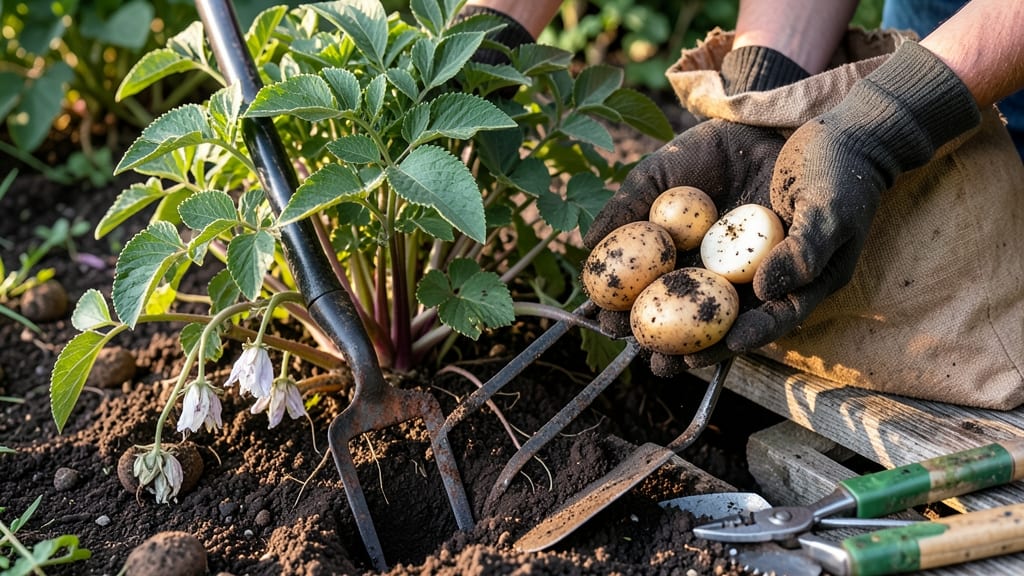
Harvesting potatoes from your garden at the right time means the difference between fluffy, flavorful spuds and tough, waterlogged ones that turn to mush.
Picture this: you’re digging up your 🥔 crop, only to find small, green tubers that taste bitter or split open when cooked. That’s the nightmare of harvesting too early—or too late. The good news? With a few simple tests, you can nail the perfect moment every time.
Most gardeners wait for the foliage to yellow and die back, but that’s just the start. Below, I’ll walk you through three hands-on tests—including the thumbnail trick and the fork test—to determine when your potatoes are truly ready, whether you’re growing early varieties or storing them for winter.
Ready to dig up a perfect harvest? Let’s get into the details so you never miss the window again.


How to test potato skin color for perfect harvest timing
Your potato plants might look ready, but the real magic happens underground—specifically with the skin color. This subtle clue tells you whether your tubers are tender new potatoes or fully mature spuds perfect for storage.
For example, Yukon Gold potatoes develop a golden-brown hue when ready, while Red Pontiac turns a deep russet. Ignoring these color cues often leads to harvesting too early (small, green potatoes) or too late (shriveled, tough tubers).
Start by gently brushing away soil from a few tubers using your hands or a small trowel. Look for uniform color without patches of green or white. Green skin means your potatoes have been exposed to light, which can make them bitter and toxic (thanks to solanine buildup).
Meanwhile, a dry, papery texture signals maturity and storage readiness. This simple test saves you from digging up underripe potatoes or missing the harvest window entirely.
Here’s the color-to-action guide you need to know:
| Skin Color | Harvest Stage | Flavor & Texture | Storage Potential |
|---|---|---|---|
| Green patches | Too early (exposed to light) | Bitter, toxic (solanine) | Not storable |
| Pale white/cream | New potatoes (early harvest) | Tender, waxy, mild | Short-term (1-2 weeks) |
| Golden-brown (Yukon Gold) | Mature (ideal harvest) | Buttery, rich, firm | Long-term (cool, dark) |
| Deep purple (e.g., Purple Viking) | Fully mature (late harvest) | Earthy, nutty, dense | Excellent storage (3+ months) |
| Rusty brown (e.g., Russet) | Late-season maturity | Fluffy, starchy, dry | Best for long storage |
For new potatoes, harvest when the skin is still thin and slightly glossy (usually 2-3 weeks after flowering). These are best eaten fresh and won’t store well. In contrast, mature potatoes develop a thicker, rougher skin—like sandpaper—and are ideal for storage.
Pro tip: If you’re unsure, dig up one tuber to check the skin color before committing to a full harvest.
Regional differences matter too. In cooler climates (like Zone 4), potatoes may mature slower, so monitor skin color more closely. Meanwhile, in warmer zones (Zone 8+), some varieties like Red LaSoda can overmature quickly, turning shriveled if left too long.
Adjust your timing based on your local growing season and variety.
One common mistake? Waiting until the foliage is completely dead. By then, your potatoes might be shriveled or sprouting. Instead, harvest when the stems turn yellow and flop over—this is your cue that the tubers are ready. Combine this with the skin color test for foolproof results every time.
After harvesting, cure your potatoes for 1-2 weeks in a dark, humid space (like a cardboard box with holes) at 50–60°F. This toughens the skin, improving storage life. Store them in a cool, dry place (40–50°F) away from light to prevent greening.
With these skin color tests, you’ll never guess wrong again—just dig, taste, and enjoy your perfect harvest!
🌱
3 Hands-on tests to determine when potatoes are ready to dig
Timing your potato harvest isn’t just about waiting for the foliage to yellow—it’s about using three simple, hands-on tests that give you precise results. Each test reveals a different clue about tuber maturity, whether you’re growing early-season reds or late-season russets.
The key? Combine these methods for foolproof timing, especially if you’re unsure whether your Yukon Golds are ready or still growing.
First, let’s tackle the most reliable visual cue: leaf yellowing. Most gardeners assume this means harvest time, but it’s only part of the story. For example, early varieties like 'New Potatoes' may yellow weeks before they’re fully mature, while late-season types like 'Idaho Russets' can keep green longer.
That’s why you need the other two tests to confirm readiness.
🌱 3 Hands-On Tests for Perfect Potato Harvest Timing
-
Test 1: Leaf Yellowing & Dieback
Wait until 50-70% of foliage turns yellow and wilts. Early varieties may yellow faster—check skin firmness next! -
Test 2: Flower Blooming & Stem Snapping
Once flowers fade and stems snap cleanly when bent, tubers are near peak size. Ideal for new potatoes (1-2" diameter). -
Test 3: The Fork Test (Soil Dryness Check)
Gently insert a fork 6 inches deep. If soil is dry and tubers resist pressure, they’re ready. Wet soil = wait 1-2 weeks.
Pro Tip: Combine all three tests for 100% accuracy, especially for storage varieties like 'Kennebec' or 'Russet'.
Let’s break down Test 1: Leaf Yellowing in more detail. For early-season potatoes (60-90 days to maturity), yellowing often starts 2-3 weeks before harvest. But if your plants are late-season types (90-120 days), wait until 70% of leaves are yellow and crispy.
Pro tip: If leaves turn brown but tubers feel soft, you’ve waited too long—store them in a cool, dark place for a few days to firm up.
Next up is Test 2: Flower Blooming & Stem Snapping, which is especially useful for new potatoes. Once the flowers fade and the stems snap cleanly when bent (like a dry twig), the tubers below are typically 1-2 inches in diameter.
This works best for varieties like 'Red LaSoda' or 'Fingerlings', which are harvested young. For storage potatoes, ignore this test—it’s more about skin firmness than stem flexibility.
Finally, the fork test reveals soil moisture levels, which directly impact tuber quality. If the soil is dry and crumbly when you fork 6 inches down, your potatoes are ready. Wet soil means they’ll split or rot when dug.
This test is critical for heavy clay soils, where waterlogged conditions can turn perfect spuds into mush. Always dig on a dry, sunny day to minimize soil sticking to the tubers.
Remember, early varieties (like 'Early Girl') may pass all three tests in 60-70 days, while late-season types (like 'Monalisa') could take 100+ days. Check your seed packet for days-to-maturity guidelines, then use these tests to fine-tune your harvest timing. With practice, you’ll spot the perfect moment—no guesswork required!