
Picking
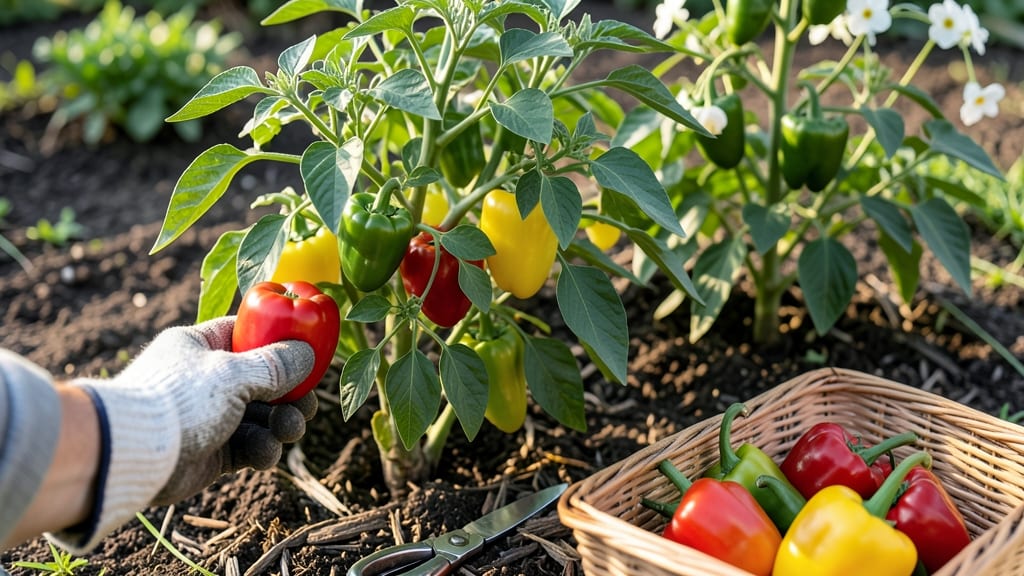
To pick bell peppers from your garden at the perfect moment means catching them when they’re firm, glossy, and fully colored—not a day too early or too late.
Here’s the catch: some peppers stay green forever while others ripen into vibrant reds, yellows, or oranges. Timing is everything—and picking too early or too late can ruin your harvest.
Whether you’re in Zone 6a or beyond, knowing the exact cues will give you the sweetest, most abundant peppers all season.
Color isn’t the only clue—texture, size, and even the way the stem separates from the plant matter. Below, I’ll break down the color-coded ripeness stages, plus the five key signs your 🌶️ bell peppers are finally ready to pick.
You’ll also learn how to harvest without damaging the plant and why regular picking keeps your peppers producing like crazy. Let’s get started!


Bell pepper ripeness stages by color: the exact time to harvest
Bell peppers are one of the most rewarding vegetables to grow, but knowing when to pick bell peppers from your garden can make all the difference between a mediocre harvest and a flavor-packed bounty.
Unlike many fruits, bell peppers don’t all ripen to the same color—some stay green, while others turn yellow, orange, or red. Each color stage offers unique flavors and textures, and picking at the wrong time can leave you with tough, bland, or even rotten peppers.
The key to harvesting bell peppers at peak ripeness lies in understanding their color-coded ripeness stages. While color is a major indicator, it’s not the only factor. Size, firmness, and even the plant’s growing conditions play crucial roles.
For example, a pepper might turn red but still be underripe, or it could stay green indefinitely if the plant isn’t getting enough heat or sunlight. Let’s break down each stage so you can harvest your peppers at their absolute best.
📌 Pro Tip: Most bell peppers take 70–90 days to mature after transplanting, but this varies by variety. Check your seed packet for specific timelines—some hybrids are bred to ripen faster or in specific colors.
| Ripeness Stage | Color | Size | Flavor Profile | Harvest Time | Best For |
|---|---|---|---|---|---|
| Immature Green | Solid green | 3–4 inches | Mild, slightly crisp | 60–70 days | Pickling, stuffing |
| Mature Green | Deep green, glossy | 4–6 inches | Crisp, sweet | 70–80 days | Raw eating, salads |
| Yellow | Bright yellow | 5–7 inches | Sweet, fruity | 80–90 days | Roasting, grilling |
| Orange | Deep orange | 5–7 inches | Slightly sweeter than red | 85–95 days | Fresh eating, sautéing |
| Red | Bright red | 5–8 inches | Rich, sweetest | 90–100 days | All uses, best flavor |
Green bell peppers are the most common stage for harvesting, especially for varieties like ‘Sweet Banana’ or ‘California Wonder’, which are bred to stay green. These peppers are best picked when they reach 4–6 inches long and have a deep, glossy green color.
If you wait too long, they’ll toughen up and lose their crispness. The flavor is mild but still pleasant, making them ideal for raw eating or pickling.
Yellow and orange bell peppers, such as ‘Lemon Drop’ or ‘Golden California Wonder’, are often overlooked but pack a unique flavor. They typically ripen later than green peppers, around 80–90 days after transplanting. These colors indicate a sweeter, almost fruity taste, perfect for roasting or grilling.
Don’t assume all yellow or orange peppers are ripe—some may still have a green stem end, which means they’re not fully mature.
Red bell peppers, like ‘Red Knight’ or ‘Apache’, are the most flavorful but also the slowest to ripen, often taking 90–100 days. They’re not just about color—they develop a deeper, richer sweetness that’s unmatched in green or yellow peppers.
However, red peppers can also become overripe quickly, especially in hot climates. If the skin starts to wrinkle or the pepper feels soft, it’s past its prime.
⚠️ Watch Out: Some bell pe
5 Key signs your bell peppers are ready to pick (beyond color)
Color isn’t the only clue that your bell peppers are ready for harvest. While vibrant reds, yellows, or oranges signal ripeness, overlooking texture, stem separation, and size can mean missing the peak flavor window.
I’ve learned the hard way—waiting for full redness when flavor peaks earlier means sacrificing sweetness for tougher skin. Let’s dive into the 5 field-tested signs that guarantee you’re picking at the perfect moment.
First, check the stem separation—this is my go-to trick. When you gently twist the pepper near the stem, it should snap cleanly without tearing the skin. If it resists or pulls away with the fruit, it’s not ready yet.
This method works for all colors, from green to deep red. I’ve found that overripe peppers often detach with the stem still attached, signaling they’ve passed their prime.
- 1. Stem Snaps Cleanly – Twist near the stem; it should break off smoothly at the base.
- 2. Firm & Glossy Skin – Press gently; ripe peppers resist pressure without denting.
- 3. Mature Size (3–6") – Measure length; undersized peppers lack full flavor development.
- 4. Deep, Even Color – No green at the stem end; color should be consistent all over.
- Flavor Test – Taste one! Sweetness peaks before full redness in many varieties.
Next, focus on skin texture. A ripe bell pepper should feel firm yet slightly glossy, almost like a fresh apple. If the skin feels soft, wrinkled, or dull, it’s either underripe or overripe.
I test this by gently pressing my thumbnail into the pepper—if it leaves a dent, it’s past its prime. This trick saves me from harvesting peppers that taste bland or mealy.
Don’t overlook size consistency. While bell peppers vary by variety, most reach their prime between 3 and 6 inches long. Smaller peppers (under 3 inches) are often underdeveloped and lack the sweetness of fully mature fruit.
I use a ruler to check my ‘Jalapeño’ and ‘Sweet Banana’ peppers—this simple step ensures I’m not picking prematurely.
Here’s a common mistake I see: waiting for full redness in varieties like ‘California Wonder’ when flavor actually peaks earlier. For example, yellow and orange peppers often hit their sweetest point before turning deep red.
To avoid this, I taste-test one pepper from each plant—this simple habit has saved me from harvesting bitter or tough fruit.
Finally, watch for color consistency. A ripe pepper should have no green at the stem end and a deep, even hue. Uneven color often means uneven ripeness, which can lead to a mix of flavors.
I’ve learned to harvest peppers as soon as they reach their target color, especially in cooler climates where full ripening can stall.