
Picking
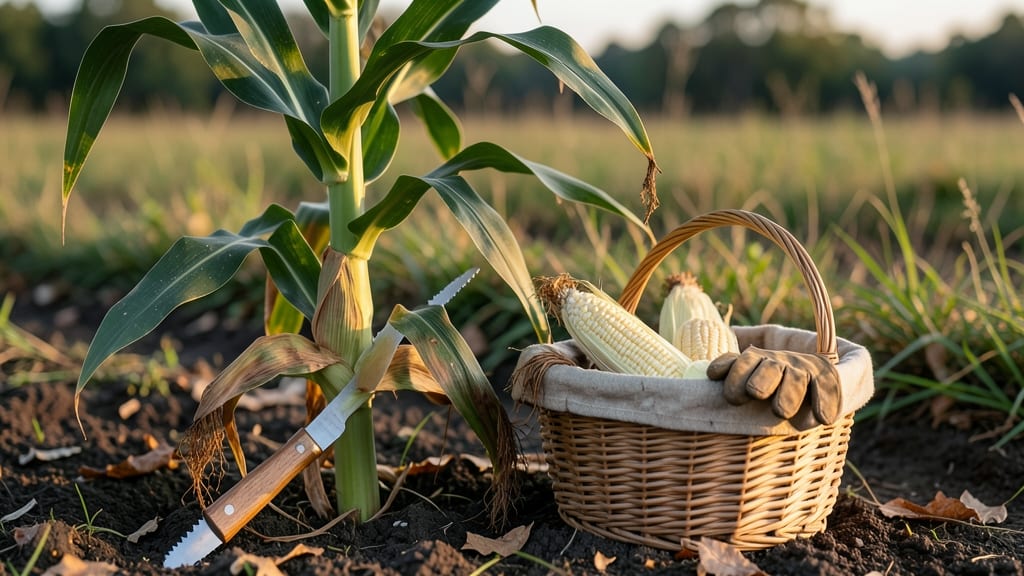
Picking corn from your garden at the right time means the difference between sweet, juicy ears and tough, starchy ones—so timing matters more than you think.
Imagine biting into a perfectly tender ear, its kernels bursting with milky sweetness, only to find the next one you pick is hard and dry. That’s the frustration of missing the 60- to 90-day harvest window for 🌽 corn.
But here’s the good news: with just a few simple cues—silk color, kernel size, and even a quick finger test—you can nail the perfect moment every time.
In this guide, I’ll walk you through the exact visual and physical signals to watch for, from browned silks to the "milk stage" of kernels.
You’ll also learn how to troubleshoot common mistakes (like harvesting too early or too late) and how to store your harvest for maximum freshness—because even the best-picked corn won’t stay sweet forever.
Whether you’re a first-time gardener or a seasoned grower, these tips will help you turn your corn patch into a flavor-packed feast every harvest season.


How to determine when to pick corn by silk color & kernel development
Knowing exactly when to pick corn from your garden can feel like solving a puzzle—but it’s all about reading two key signals: the silks and the kernels. The silks (those long, thread-like strands) start green and moist, then gradually dry out and turn brown.
Meanwhile, the kernels inside go from hard and starchy to plump and milky. Miss these cues, and you’ll end up with corn that’s either too tough or too sweet-and-starchy. Let’s break down the exact visual and physical clues to harvest at peak perfection.
First, focus on the silks. When they’re still green and moist, your corn isn’t ready—it needs more time to develop. But once they turn brown and dry, that’s your first sign that harvest time is near.
If the silks have already fallen off entirely, you’ve waited too long, and the kernels will be hard and starchy. Think of the silks as nature’s countdown timer: brown = go! The kernels also give away their readiness through their size, color, and texture.
Here’s the golden rule for kernels: they should be plump, firm, and milky white when pierced with a fingernail. To test, gently press a kernel with your thumbnail—if a milky liquid oozes out, it’s ready to eat.
If the kernel feels hard and dry, it’s overripe. And if it’s still hard and starchy with no liquid, it’s not ready yet. This simple test saves you from the disappointment of underdeveloped corn.
Now, let’s talk about ear size. A fully ripe ear of corn should feel heavy for its size, almost like it’s too big for its husk. If the ear feels light or hollow when you hold it, the kernels aren’t fully developed.
Pro tip: compare ears side by side—some varieties mature faster than others, so don’t assume all your plants are ready at once. For example, ‘Golden Bantam’ (a dwarf variety) might be ready in 60 days, while ‘Peaches and Cream’ could take up to 90 days.
| Stage | Silk Color | Kernel Condition | Ear Weight | Action |
|---|---|---|---|---|
| Early Development | Green and moist | Hard, starchy, no milky liquid | Light | Wait 5-7 more days |
| Peak Ripeness | Brown and dry | Plump, firm, milky when pierced | Heavy | Harvest immediately |
| Overripe | Dry, fallen off | Hard, dented, starchy | Light or shriveled | Too late; kernels won’t soften |
One of the biggest mistakes I see gardeners make is harvesting too early because they’re eager to enjoy their crop. But corn that’s picked too soon won’t develop its full sweetness or tenderness. On the flip side, waiting too long leads to hard, mealy kernels that lack flavor.
To avoid this, check your corn every 2-3 days once the silks start turning brown. Use a sharp knife to trim the husk back just enough to peek at the kernels—this way, you won’t damage the plant or the ear.
If you’re growing multiple varieties, pay attention to their maturity dates. Some corn, like ‘Silver Queen’, matures faster than others, so it’s wise to plant a mix of early, mid, and late-season varieties.
This gives you a staggered harvest and ensures you’re not overwhelmed with corn all at once. For example, plant ‘Early Sunglow’ (60 days to maturity) alongside ‘Ambrosia’ (85 days) to spread out your picking schedule.
Weather also plays a role in corn ripening. Hot, dry conditions can speed up the process, while cool, wet weather may slow it down. If you’re in a region with unpredictable weather, like the Midwest, keep a close eye on your plants.
A sudden heatwave might cause silks to dry out faster, while a cold snap could delay kernel development. In these cases, rely more on the kernel test than just the silk color—it’s the most reliable indicator of readiness.
Finally, don’t forget that dwarf varieties like ‘Golden Bantam’ or ‘Tiny Tasty’ have smaller ears but follow the same ripening cues. Their silks and kernels behave just like standard corn, so you can use the same guidelines.
The key is consistency: check the silks, test the kernels, and trust your senses. With practice, you’ll develop a knack for knowing exactly when your corn is at its sweetest and most tender.
Once you’ve mastered these cues, you’ll never again miss the perfect moment to pick corn from your garden. And when you do harvest, remember to store it properly—whether in the fridge, freezer, or even on the cob—to preserve that fresh-picked flavor for as long as possible. Happy harvesting! 🌽
Best practices for testing corn ripeness before harvesting
Knowing exactly when to pick corn from your garden ensures you enjoy that perfect balance of sweetness and tenderness. The key lies in three simple but critical tests: the silk color check, the kernel moisture test, and the ear squeeze method.
Each method gives you a different clue about whether your corn is ready to harvest—or if you should wait a few more days.
Start with the silk color, which is your first visual cue. When the silks (those long, thread-like strands at the top of the ear) turn from bright green to brown and crispy, it’s a strong sign that the kernels are filling out.
However, don’t rush to harvest just because the silks are brown—you’ll still need to confirm ripeness with the other tests to avoid tough or underdeveloped ears.
⚠️ WARNING: Harvesting Too Early or Too Late Harvesting corn too early means tough, starchy kernels that lack sweetness, while waiting too long results in dry, shriveled ears. The ideal harvest window is just 2-3 days after the silks turn brown—miss this, and your corn’s flavor and texture will suffer.
Even experienced gardeners can misjudge, so always double-check with the kernel moisture test and ear weight before cutting.
Here’s how to perform the kernel moisture test: Pierce a kernel with your fingernail. If a milky white liquid oozes out, your corn is at peak ripeness. If the kernel is hard and dry, it’s past its prime.
This test is foolproof and works even if the silks haven’t fully browned yet. For extra accuracy, test 2-3 kernels from different parts of the ear—consistency is key!
The ear squeeze test is another quick way to gauge ripeness. Hold the ear firmly in your hand and give it a gentle squeeze. A ripe ear will feel heavy for its size and slightly firm to the touch.
If it feels light or hollow, the kernels aren’t fully developed yet. This test helps you avoid picking ears that are still filling out, ensuring you only harvest the best-tasting corn from your garden.
Don’t overlook the ear size comparison either. Mature corn ears typically measure 4 to 6 inches long, depending on the variety. If your ears are smaller than expected, they may not be fully ripe yet.
Compare them to the variety’s expected size listed on your seed packet—this gives you a benchmark to avoid underdeveloped harvests.
Once you’ve confirmed ripeness, harvest your corn by grasping the ear near the base and twisting gently. Avoid cutting the stalk too close to the ear, as this can leave the plant vulnerable to disease.
Store your freshly picked corn in the fridge for up to 3-5 days to preserve its sweetness, or blanch and freeze for long-term storage. With these tests, you’ll never miss the sweet spot again!