
Picking
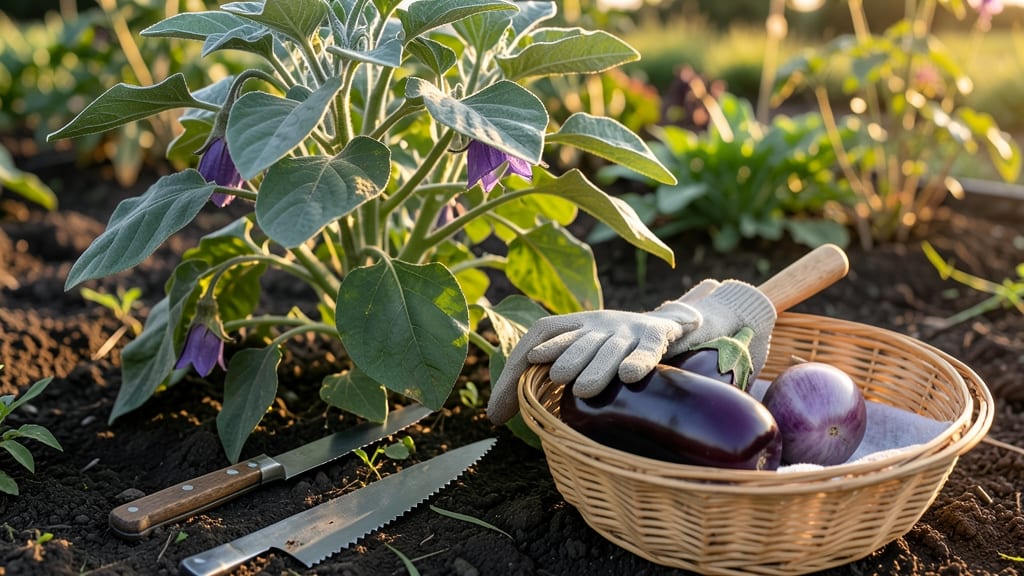
Knowing when to pick eggplant in the garden ensures sweet, tender fruit instead of bitter, seedy disappointment—and the secret lies in color shifts, size, and a simple firmness test.
Ever pulled an eggplant from the vine only to bite into tough, underripe flesh? Or worse, let it sit too long and watch it turn mealy?
These mistakes happen when you miss the perfect ripening window—but the good news is, you can spot it with just a few easy checks.
From the deep purple glow of Black Beauty to the glossy white skin of Ichiban, each variety has its own cues. We’ll walk you through the visual and tactile signs that guarantee your eggplant is ready—plus how temperature and weather can trick you into picking too early or too late.
By the end, you’ll know exactly when to grab your shears and how to avoid the two biggest harvest blunders: overripe fruit and underripe disappointment.
Eggplant ripening stages: color & size clues to harvest perfectly
Eggplants are finicky about timing—pick them too early, and you’ll get bitter, seedy fruit. Too late, and the flesh turns woody. The secret lies in color shifts and size benchmarks that vary by variety.
I’ve learned the hard way that ignoring these cues leads to wasted harvests, so let’s break down exactly what to watch for.
Most gardeners focus on purple eggplants like Black Beauty, but Asian varieties like Ichiban have entirely different ripening signals. The key? Stem color and fruit firmness work together to tell you when it’s time to harvest.
For example, a yellow stem end is your first visual cue that the fruit is ready.
Let’s start with the most reliable indicators: color changes and size thresholds. These two factors alone can save you from harvesting eggplants that are either underripe or overripe. Below, I’ve included a quick-reference table to help you spot the perfect moment to pick your eggplants.
| Ripening Stage | Color Clues | Size Benchmarks | Stem Condition |
|---|---|---|---|
| Early Maturity | Pale green or uneven purple | Under 6 inches | Green stem end |
| Optimal Ripeness | Deep, consistent purple (or variety-specific color) | 6-8 inches (standard); 3-5 inches (Asian) | Yellow stem end |
| Overripe | Green shoulders or dull color | Exceeds variety’s max size | Brown or mushy stem |
For standard eggplants like Black Beauty, aim for a length of 6-8 inches and a deep, glossy purple hue. These varieties often have a matte finish when fully ripe, while Asian eggplants like Ichiban stay glossy and compact at just 3-5 inches.
The color shift from pale green to vibrant purple (or white for varieties like Casaba) is your best indicator.
One mistake I see often is waiting until eggplants develop green shoulders—this is a classic sign of overripeness. When this happens, the flesh becomes fibrous and bitter. Instead, harvest when the color is uniform and deep, and the stem end turns yellow.
This shift happens quickly, so check your plants every 2-3 days during peak season.
Size isn’t just about length—diameter matters too. For standard varieties, a 3-4 inch diameter is ideal, while Asian eggplants should be 2-3 inches wide. Smaller varieties like Fairy Tale stay under 4 inches but still follow the same ripening rules.
Always compare your eggplants to the variety’s expected size in your seed packet for the most accurate guidance.
Temperature plays a sneaky role in ripening. Eggplants grown in hotter climates (above 85°F) may ripen faster and develop a duller color. In cooler areas (below 70°F), they’ll take longer to reach maturity.
If your garden is on the cooler side, don’t rush—wait for the full color shift before harvesting, even if the size seems right.
Pro tip: Gently squeeze the eggplant near the stem. If it feels slightly soft with a little give, it’s ready. If it’s rock-hard, it’s underripe; if it’s mushy, it’s past its prime. This firmness test works alongside color and size to give you a three-pronged check for perfection.
Finally, remember that Asian eggplants have different ripening cues. Varieties like Ichiban stay glossy and small, often with white or light purple skin. Their stem end turns yellow faster than standard types, so check them more frequently. Ignoring these differences can lead to harvesting too early or too late.
Mastering these color and size clues will transform your eggplant harvest from hit-or-miss to consistently delicious. Next time, I’ll share my favorite firmness tests to avoid bitter eggplants entirely—trust me, your taste buds will thank you! 🌱
Firmness & texture tests: how to avoid bitter eggplant every time
Eggplant ripeness isn’t just about color—it’s a tactile experience. Overlooking firmness and texture cues often leads to bitter, seedy fruit that spoils your dishes. I’ve learned the hard way that glossy skin or a yellow stem alone don’t guarantee perfection.
The real magic happens when you combine visual clues with physical tests to confirm readiness.
Start by examining the skin resistance. A ripe eggplant’s skin should feel slightly firm but yielding—not rock-hard or mushy. Press your thumbnail gently against the fruit. If it leaves no mark, it’s likely underripe.
If it dents easily, it’s overripe. This simple test saves me from harvesting bitter or seedy eggplants that ruin my favorite recipes.
Next, check the stem separation. Twist the eggplant gently at the stem. If it snaps cleanly with minimal resistance, it’s ready to pick. A stubborn stem means it’s not quite there yet.
I’ve found this trick especially useful for Asian varieties, which often ripen faster than their Western counterparts.
🔴 ⚠️ callout-warning ⚠️
Don’t ignore the 'thump test', a foolproof method I swear by. Hold the eggplant and tap it lightly with your knuckles. A ripe eggplant produces a dull, hollow thud, while an underripe one sounds sharp or crisp.
This test reveals internal firmness, which is critical for flavor and texture. I use it as a final verification before adding eggplants to my harvest basket.
Environmental factors like heat waves or high humidity can accelerate ripening, throwing off your timing. Eggplants grown in consistent 80°F+ temperatures may ripen faster, while cooler weather slows the process.
I’ve noticed my Black Beauty plants mature in 70 days during hot summers but take closer to 90 days in cooler climates. Adjust your expectations based on your local microclimate.
Finally, avoid the common mistake of picking eggplants based solely on color or size. A small, glossy eggplant might look perfect but taste bitter and fibrous. Always prioritize firmness, stem separation, and the thump test over visual cues.
When you master these tactile checks, you’ll harvest eggplants with creamy, sweet flesh every time—no bitterness in sight!