
Picking
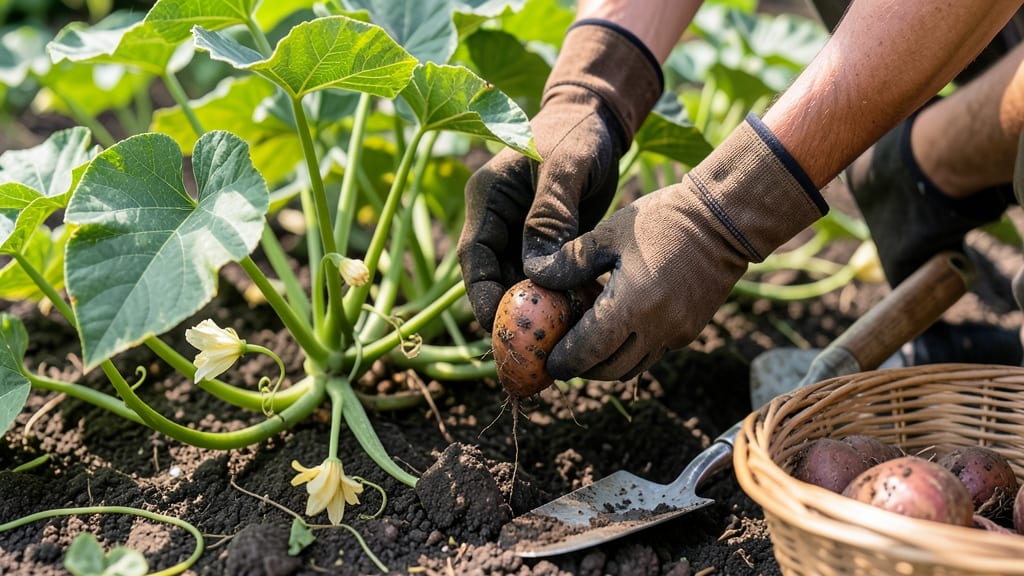
To pick sweet potatoes from the garden at their sweetest, watch for yellowing vines and firm, 2-inch tubers—these are your key signals that flavor and size are peaking.
Sweet potatoes left too long in the ground turn starchy and lose their signature sweetness—but harvest them too early, and you’ll end up with small, underdeveloped tubers. Timing is everything, and knowing the right visual cues can mean the difference between a disappointing harvest and a bounty of flavorful 🍠.
Most gardeners in Zone 6a should plan to harvest between October and November, when frost threatens or vines naturally yellow and die back. But regional differences matter—cooler climates may need to harvest earlier, while warmer areas can wait until late fall.
Below, I’ll walk you through the exact leaf and skin signals to look for, how to adjust timing based on your location, and what to do if you miss the window. No guesswork, just a foolproof plan for your best harvest yet.


How to tell when sweet potatoes are ready to harvest by leaf and skin signals
Sweet potatoes thrive when you harvest them at the right moment—neither too early nor too late. The key lies in observing two main areas: the foliage and the skin.
When these signals align, you’ll know your tubers are ready for picking. Paying attention to these visual cues ensures you avoid small, underdeveloped potatoes or overripe ones that lose flavor.
Start by checking the vine health. Healthy sweet potato vines should be lush and green during the growing season. However, as they mature, you’ll notice the leaves beginning to yellow and die back.
This natural process signals that the plant is redirecting energy to the tubers below. Don’t wait until the vines are completely dead—harvest when about 50-70% of the leaves have yellowed and dried.
Next, focus on the skin condition. Mature sweet potatoes develop a thick, tough skin that’s difficult to pierce with your fingernail. If the skin feels soft or gives way easily, the tubers aren’t ready yet.
Aim for potatoes that are 2-3 inches in diameter and have a firm, glossy exterior. This indicates they’ve reached peak sweetness and texture.
Avoid the temptation to harvest based solely on plant age. While sweet potatoes typically mature between 90-140 days after planting, environmental factors like soil temperature and rainfall can shift this timeline. Always prioritize visual and tactile cues over a rigid schedule for the best results.
| Signal | Description | Action |
|---|---|---|
| Leaf Color | 50-70% of leaves turn yellow and dry | Check for natural dieback |
| Skin Firmness | Thick, hard to pierce with fingernail | Avoid soft or easily damaged skin |
| Potato Size | 2-3 inches in diameter | Smaller tubers lack sweetness |
| Vine Health | Vines slow growth, leaves wilt | Harvest before full vine death |
One common mistake gardeners make is waiting until the vines are completely dead. By this point, the sweet potatoes may have overmatured and developed a woody texture. Instead, harvest when the vines are drying but still attached.
This ensures you capture the sweetest flavor while the tubers remain tender. Use a garden fork to gently loosen the soil around the base of the plant before lifting the tubers carefully.
For early harvests, you can dig up a few tubers to check their size and readiness. This is especially useful if you’re unsure about the maturity timeline for your specific variety.
If the potatoes are still small or soft, leave them in the ground for another 1-2 weeks and recheck. This proactive approach helps you avoid wasting time on underdeveloped tubers.
Regional differences can also impact harvest timing. In warmer climates, sweet potatoes may mature earlier, while cooler regions might extend the growing season. Always monitor soil temperature—ideal harvest conditions occur when soil temps are above 55°F.
If frost is imminent, harvest immediately, even if the tubers aren’t perfectly sized, to prevent damage.
Once you’ve confirmed the sweet potatoes are ready, handle them with care. Avoid washing the tubers immediately after harvest, as moisture can promote rot. Instead, let them cure in a warm, humid environment (around 80-85°F) for 5-10 days to develop their full sweetness.
This curing process also thickens the skin, improving storage life.
If you miss the perfect harvest window, don’t panic. Sweet potatoes can often be salvaged if stored properly in a cool, dark place. However, for the best flavor and texture, always aim to harvest when the leaves yellow and the skin firms up.
These simple cues will guide you to a successful harvest every time.
🍠
Best time of year to harvest sweet potatoes based on your climate Zone
Your climate zone dictates the perfect window for harvesting sweet potatoes. In warm climates like USDA Zones 8-11, aim for fall harvests between October and November when daytime temps hover around 70-80°F.
Cooler regions (Zones 3-7) should harvest late summer to early winter, typically September through October, before the first frost hits. The key is soil temperatures—ideal harvests occur when soil stays above 60°F.
Frost sensitivity is critical—sweet potatoes cannot tolerate freezing. A light frost will damage foliage, but tubers may survive in well-drained soil. However, prolonged freezing causes rot and flavor loss.
If frost threatens, harvest immediately, even if vines aren’t fully yellowed. In extended growing seasons (Zones 9-11), you might even get a second harvest in early spring after a cold snap.
- 🌡️ Zones 3-5 (Cool Climates): Harvest late August to September—before first frost (typically by mid-October). Soil temps should stay above 55°F.
- 🌞 Zones 6-7 (Temperate): Aim for October harvests when vines yellow. Soil temps between 60-70°F ensure sweetness.
- ☀️ Zones 8-9 (Warm): Harvest October-November or even early December in mild winters. Tubers mature slower in heat.
- 🌴 Zones 10-11 (Tropical): Harvest fall (Sept-Oct) and spring (Feb-Mar) after vines die back. Soil must stay above 65°F.
- ❄️ Frost Warning: If frost is forecasted, harvest immediately—even if tubers aren’t fully sized. Cure them indoors to improve flavor.
Soil temperature plays a hidden but crucial role. Sweet potatoes stop growing when soil drops below 60°F, but they need time to convert starches to sugars for sweetness. In cooler zones, prioritize early harvests (even slightly under-sized tubers) over risking frost damage.
In warmer zones, you can afford to wait longer—sometimes until December—as long as soil remains workable.
Watch for vines turning yellow as your first clue, but don’t rush—wait until 70-80% of foliage dies back. This signals tubers have reached peak sweetness. Dig a test tuber at 2-3 inches in diameter to confirm readiness.
If skin is tough and hard to pierce, they’re ready. In short-season zones, this might mean harvesting smaller tubers for better flavor than waiting for frost.
Pro tip: Mulch heavily in late summer to insulate soil and extend the harvest window by 1-2 weeks. Use straw or leaves to maintain soil temps above 60°F.
This is especially helpful in Zone 7 and cooler, where nights can drop quickly. Just remember to remove mulch before digging to avoid cutting tubers.
If you’re in a transition zone (Zone 7-8), split your harvest: pull early-maturing varieties (like Beauregard) in October, then later varieties (like Georgia Jet) in November. This staggered approach ensures a steady supply while avoiding flavor loss from over-maturity or frost damage.