
Picking
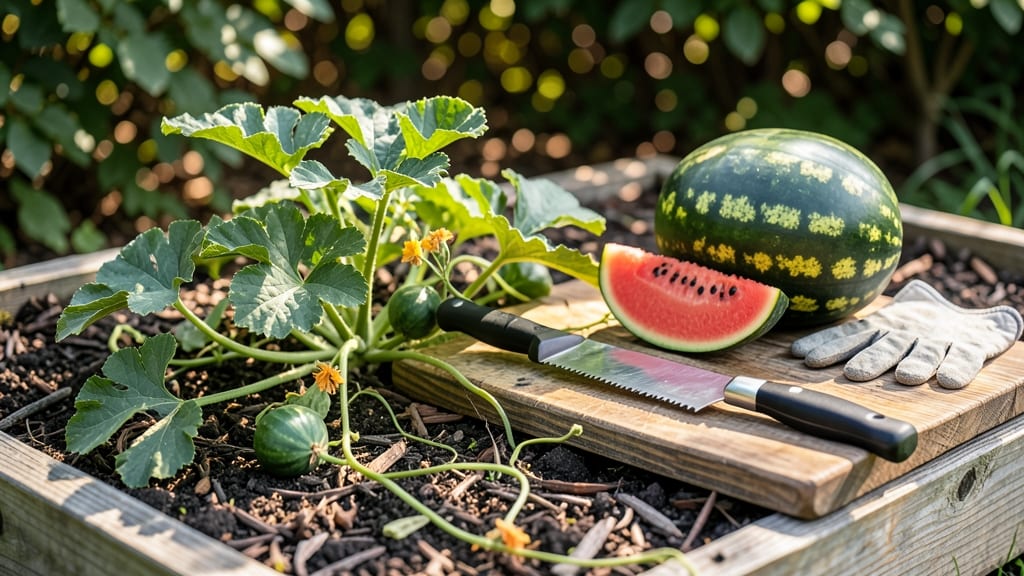
To pick watermelon from your garden at the perfect moment means the difference between a juicy, sweet slice and a bland, seedy disappointment.
Picture this: you’ve waited 80-90 days for your 🍉 to ripen, only to cut into one that tastes more like water than the burst of flavor you imagined. The secret? Timing. A watermelon’s ripeness isn’t just about size—it’s about color, sound, and even the way it feels in your hands.
Most gardeners miss the mark by relying on size alone, but the real clues are hidden in the rind’s texture, the hollow thump when tapped, and the telltale brown stem.
These three signs are your shortcut to harvest-day confidence, saving you from overripe melons that split on the vine or underripe ones that never sweeten.
Below, I’ll walk you through how to read these cues—plus the best time of day to pick for maximum flavor—and avoid the most common mistakes that turn your hard work into disappointment.

3 Visual signs your watermelon is perfectly ripe for picking
Nothing beats the excitement of watching your watermelon grow in the garden, but knowing exactly when to pick can be tricky. Overripe fruit loses sweetness, while underripe melons stay hard and bland. The key lies in these three visual cues that signal peak ripeness—no guesswork required!
First, pay attention to the rind color. A ripe watermelon’s skin transitions from bright green to a dull, matte finish. The creamy yellow or white patch on the bottom (called the field spot) also darkens to a buttery hue.
These changes indicate the melon has fully matured under the sun.
Visual cues matter because they’re nature’s way of telling you the fruit’s sugar content has peaked. The field spot darkens as the melon absorbs sunlight, while the dull rind means the waxy coating has thickened—both signs of perfect sweetness.
Here’s a quick-reference table to help you spot these ripeness signs at a glance:
| Ripeness Indicator | What to Look For | Why It Matters |
|---|---|---|
| Rind Color | Dull, matte (not shiny) | Thickened skin = full maturity |
| Field Spot | Creamy yellow/white → brown | Sun exposure = sugar development |
| Stem Drying | Brown, dry, detached easily | Nutrient cutoff = peak ripeness |
The field spot is your best friend when picking watermelons. This patch on the underside starts light green and turns cream-colored or yellowish as it ripens.
When it deepens to a buttery brown, that’s your green light to harvest—unless you’re growing a green-fleshed variety, where the spot stays lighter.
Don’t overlook the stem near the fruit. A ripe watermelon’s stem will feel dry and papery, almost ready to snap off with a gentle tug.
If it’s still green and firm, give the melon more time. This drying process signals the plant has stopped feeding the fruit, locking in sweetness.
Pro tip: Combine these visual cues with the thump test for extra confidence. Tap the melon—if it sounds hollow and deep, it’s ready. A dull thud means it’s still firm and underripe. This combo ensures you never pick a watermelon too soon or too late.
Timing your harvest right means the difference between a juicy, sweet slice and a mealy disappointment. Watch for these three key signs—rind dullness, field spot darkening, and stem drying—and you’ll always know when to pick. Happy harvesting!
🍉
How to test watermelon ripeness beyond appearance: the thump and tap method
Sometimes visual cues like rind color or field spots aren’t enough to guarantee a sweet, ripe watermelon. That’s where the thump and tap method comes in—a foolproof way to test ripeness when you’re unsure.
These simple sound and touch tests help you avoid picking watermelons that are either too hard or past their prime.
Start by giving your watermelon a gentle tap with your knuckles. A ripe watermelon produces a deep, hollow sound, almost like knocking on a wooden door.
If it sounds dull or flat, it’s likely still immature. This method works best when the fruit is at room temperature, not cold from the ground.
Next, check the weight-to-size ratio. A ripe watermelon feels surprisingly heavy for its size. Lift it in your hands—if it feels light and hollow, it hasn’t fully developed its sweetness yet. This is especially useful for large varieties like Crimson Sweet, where size alone can be misleading.
⚠️ Avoid These Common Mistakes When Testing Ripeness
Picking too early based on size alone—many watermelons won’t ripen further off the vine. Overlooking the field spot (the cream-colored patch on the underside) can lead to underripe fruit. Tapping near the stem gives a false hollow sound; always tap the flat side of the melon.
Don’t forget to inspect the stem near the fruit. It should be dry and brown, not green or moist. If it’s still attached but dried out, that’s a green light for harvest.
This is a critical sign that the vine has stopped feeding the melon, signaling it’s reached peak ripeness.
For extra precision, combine the thump test with the field spot check. A ripe watermelon will have a dull, matte rind and a cream-colored spot where it rested on the ground.
If the spot is still white or the rind is shiny, wait a few more days before testing again.
Pro tip: Harvest in the morning hours when temperatures are cooler. This reduces stress on the fruit and preserves its sweetness. Once picked, store watermelons in a shady, dry place for up to a week to let flavors fully develop.
With these methods, you’ll never guess again—just listen, touch, and trust your instincts to pick watermelons at their sweetest. Happy harvesting! 🍉