
Companion Plants
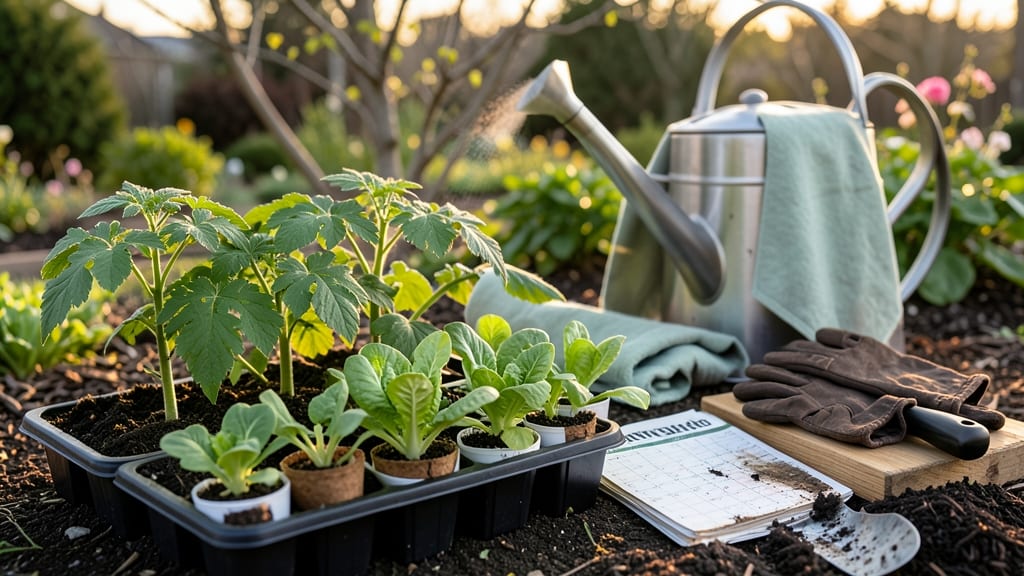
Knowing when to plant a garden in East Tennessee means timing your spring crops for mid-April after the last frost, while fall planting should start by late August. Cool-season vegetables like lettuce thrive with these dates, but warm-season plants like tomatoes need soil temperatures above 60°F before going in.
Timing your garden in East Tennessee isn't just about frost dates—it's about understanding how elevation and microclimates create variations across the region. 🌱 For instance, Knoxville's lower elevation often warms up faster than Johnson City's higher terrain, which can delay planting by a week or more.
I always check the USDA Zone 7a/7b guidelines but adjust based on my specific yard's frost history. Last year, my tomatoes in a sunken area bloomed two weeks later than those in a raised bed, even though both were planted the same day.
What also makes a difference is soil temperature. Warm-season crops like peppers and cucumbers won't germinate well in cold soil, so I use a soil thermometer to confirm it's reached 70°F before planting.
For cool-season crops, I start seeds indoors 6-8 weeks before the last frost date to get a head start. Container gardens can be planted slightly earlier since they warm up faster, but they also dry out quicker, so I water them more frequently during those early weeks.
💡 In This Article
- East Tennessee Frost Dates and Microclimate Variations
- Planting Calendar for East Tennessee’s Most Popular Vegetables
East Tennessee frost dates and microclimate variations
East Tennessee's frost patterns aren't uniform—they shift dramatically based on elevation and terrain. The region spans USDA Zones 7a and 7b, but a 500-foot elevation change can create a 10-day difference in frost dates.
For example, Knoxville (Zone 7b) typically sees its last spring frost around April 15, while Johnson City (Zone 7a) often holds onto frost until April 25. The higher elevations of the Appalachian foothills can delay planting by another week or more due to cooler air pooling in valleys.
What makes this tricky is how valleys act as frost traps. Cold air sinks and collects in low-lying areas, meaning your garden in a valley might experience frost 2-3 weeks later than one on a hillside.
I've seen this firsthand—my raised beds on a slight incline produced tomatoes three weeks earlier than those in the backyard valley. To account for this, I always check local frost records from nearby weather stations rather than relying solely on zone averages.
Historical data shows East Tennessee's frost dates have shifted slightly over the past 30 years, with springs warming by about 5-7 days on average. However, late frosts still occur—especially in May—so I always keep frost cloth handy for heat-sensitive plants like squash and melons.
The National Weather Service provides excellent regional frost predictions, but I cross-reference these with my own 5-year planting journal to spot patterns specific to my property.
Here's how elevation affects your planting schedule:
- Below 1,000 ft (Knoxville area): Last frost April 10-15
- 1,000-2,000 ft (Johnson City): Last frost April 20-25
- Above 2,000 ft (mountain valleys): Last frost May 1-5
For fall planting, the first frost typically arrives between October 15 (low elevations) and October 30 (high elevations).
This means warm-season crops need to be planted by late August to reach maturity before frost, while cool-season crops can often handle light frosts and may even taste sweeter after exposure to 28-32°F temperatures.
Pro tip: If you're in a frost-prone area, consider planting heat-tolerant varieties like 'Heatmaster' tomatoes or 'Southern Exposure' collards, which can handle our region's occasional late-summer heat spikes better than standard varieties. 🌿