
Planting
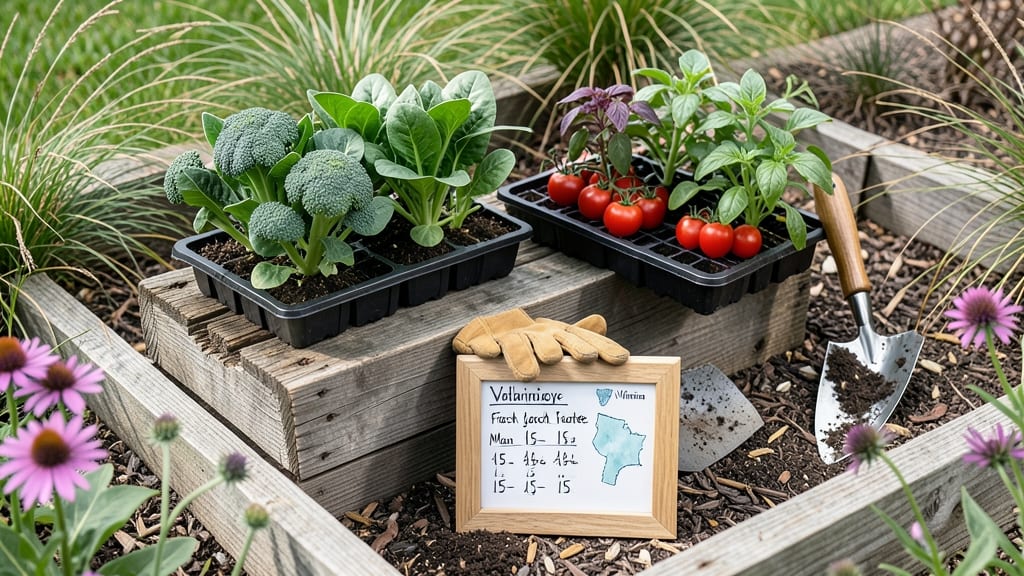
Planting a garden in Virginia at the right time means the difference between a bumper crop and a wasted season—especially when late frosts or heat waves can ruin your hard work in days.
Virginia’s diverse microclimates—from the humid Piedmont to the coastal plains—mean your garden’s success hinges on planting at the perfect time. Get the wrong timing, and even frost-sensitive crops like tomatoes or peppers will bolt or fail. Here’s your region-specific planting calendar to maximize yields and avoid costly mistakes.
Cool-season crops like lettuce and peas need to hit the soil 4-6 weeks before your last frost, while warm-season favorites such as tomatoes and peppers can’t afford to go in until 2-3 weeks after the danger of frost has passed.
With Virginia’s USDA zones ranging from 6b to 8a, the ideal window shifts from mid-March in the Tidewater region to early May in the mountains.
Below, I break down the exact deadlines by zone, how to prep your soil for success, and the most foolproof ways to stretch your growing season—whether you’re planting in February for early greens or squeezing in a fall harvest before the first frost.
Virginia planting zones & microclimate deadlines for frost-free crops
Virginia spans USDA Zones 6b through 8a, creating dramatic differences in frost dates across just 200 miles. In Zone 6b (Shenandoah Valley), gardeners face a May 15 last frost date, while Zone 8a (Tidewater) enjoys frost-free conditions by March 1.
These variations mean your okra or basil could bolt in the mountains but thrive near the coast.
Microclimates add another layer of complexity. The Piedmont region often sees 2-3 weeks earlier last frosts than nearby valleys, while coastal areas benefit from warmer ocean breezes that delay first frosts until November 15. Ignoring these nuances risks transplant shock or stunted growth for warm-season crops like sweet potatoes.
Here’s the critical comparison table breaking down last frost dates, ideal planting windows, and zero-frost-risk deadlines for Virginia’s three key regions—plus my pro tips for each zone to avoid common mistakes.
For Tidewater gardeners, the March 15 mark signals the start of your 120-day growing window for frost-sensitive crops. Plant basil and okra by April 1 to avoid bolting—these plants need consistent 80°F+ soil temps to thrive. My trick? Use black plastic mulch to warm soil faster in coastal areas.
In the Piedmont, where last frosts average April 15, wait until May 1 to transplant tomatoes or peppers. The July 1 deadline isn’t arbitrary—it’s when daytime highs consistently hit 85°F+, preventing blossom drop.
I’ve learned the hard way: planting too early in Zone 7b means stunted peppers that never mature.
Up in the Shenandoah Valley (Zone 6b), your May 30 zero-frost date feels like a gift after long winters. But don’t rush—soil temps lag behind air temps here.
Use a soil thermometer to confirm 60°F+ before planting corn or beans. Pro tip: Cover seeds with row fabric for 2 weeks to jumpstart germination in cooler microclimates.
All three regions share one non-negotiable rule: Succession plant warm-season crops every 2 weeks until your zone’s deadline. For example, in Tidewater, I’ll plant basil on April 1, April 15, and May 1 to stretch harvests until October’s first frost.
This tactic doubles your yield without extra space.
Watch for microclimate traps like urban heat islands (planting in Zone 8a pockets in Richmond) or frost pockets in valleys. My Shenandoah garden sits in a Zone 6b valley but gets 3°F warmer on a south-facing slope—perfect for extended-season tomatoes.
Always scout your yard for these hidden growing advantages.
For container gardening in Virginia, adjust deadlines by 1-2 weeks earlier—pots heat up faster and dry out quicker. My bal
How to adjust planting times for Virginia’s unpredictable weather patterns
Virginia’s weather can throw curveballs—one week you’re battling late spring frosts, the next you’re sweltering under a heat dome. These shifts make planting timing tricky, especially for frost-sensitive crops like tomatoes or peppers.
The key? Flexibility. I’ve learned to adjust based on soil temperature, 7-day forecasts, and even moon phases to avoid transplant shock and maximize yields.
Start by checking soil temperatures—most warm-season crops need 60°F+ for 10+ days before planting. Use a soil thermometer (they’re cheap and lifesavers). In the coastal plains, humidity can delay warming, while the Piedmont might heat up faster.
Pair this with the National Weather Service’s 7-day forecast—if overnight temps drop below 55°F, hold off on transplanting until stability returns.
🌱
⚠️ NON-NEGOTIABLE RULES for Virginia Planting
Pro Tip: Use row covers for a 2–3 week head start on spring planting.
For moon planting, time it right: root crops (carrots, beets) thrive during the waxing moon, while leafy greens (lettuce, spinach) do better in the waning moon. This old-school trick actually works—studies show lunar cycles influence water uptake and growth rates.
Pair this with succession planting: sow radishes every 2 weeks for a continuous harvest, even if Mother Nature throws a tantrum.
In high-risk areas like the Shenandoah Valley, where late frosts can hit into May, opt for cold-hardy varieties like Swiss chard or kale. For coastal Virginia, where humidity stalls germination, pre-sprout seeds indoors or use heat mats to jumpstart growth.
And always mulch—it insulates roots from temperature swings and retains moisture during heat domes.
Finally, transplant shock is real. Harden off seedlings by gradually exposing them to outdoor conditions over 7–10 days. Plant in the late afternoon to reduce stress, and water deeply afterward.
If a heat wave hits, shade young plants with floating row covers or shade cloth to prevent wilting. Trust me, these tweaks save dozens of plants every season.
🌿