
Tools
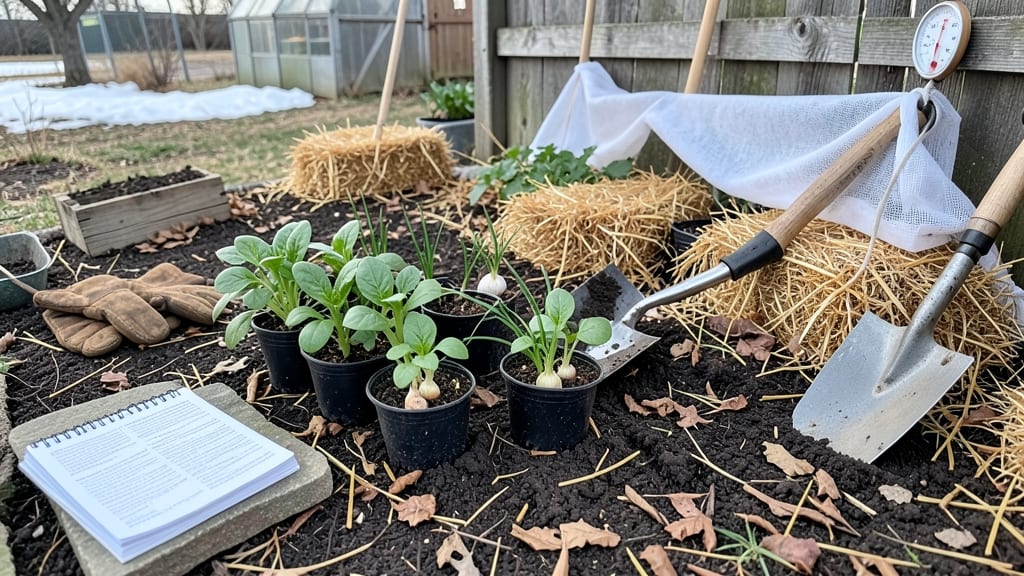
To start a garden in Michigan, time your planting around frost dates: begin cool-season crops like peas and spinach 2-4 weeks before the last frost (mid-April in southern areas, late May in northern regions), while warm-season plants like tomatoes and peppers should wait until after the last frost (late May to early June). Always verify your USDA Zone 5-6 planting window for accuracy.
Michigan's short growing season demands precision timing.
The key is understanding your last spring frost date—this determines whether seedlings will survive or wither. 🌱 For example, southern Michigan's earlier frost dates (around April 15) let gardeners start earlier than those in the Upper Peninsula, where frost lingers until May 20 or later.
I always recommend checking local weather forecasts or almanacs for the most reliable dates, as microclimates can shift planting windows by weeks.
Once you've nailed down frost dates, focus on soil readiness. Cool-season crops thrive in 40-50°F soil, while warm-season plants need 60°F or warmer. In colder northern regions, consider using black plastic mulch to warm the soil faster—a trick that can extend your planting window by 1-2 weeks.
For container gardens, which warm up quicker, you might even shave off another week of waiting time.
💡 In This Article
- Michigan Frost Dates by Region: Key Planting Windows
- Best Early-Season Vegetables for Michigan Gardens
Michigan frost dates by region: key planting windows
Michigan's frost dates vary dramatically between regions, with the southern Lower Peninsula experiencing its last spring frost around April 15 in Detroit, while the Upper Peninsula often waits until May 20 or later. This 4-6 week difference creates a challenge for gardeners—what thrives in one area may fail in another.
The first fall frost follows a similar pattern, arriving in early October in northern regions but lingering until mid-November in southern areas.
Understanding these timelines is critical because frost kills seedlings when temperatures drop below 28°F. Cool-season crops like spinach and kale can tolerate light frosts, but their seeds need warm soil (50°F) to germinate.
That’s why I always recommend starting these 2-4 weeks before last frost—early enough for growth but late enough to avoid frost damage. Warm-season plants like tomatoes, however, won’t germinate until soil reaches 60°F, so waiting until after last frost is essential.
Regional variations extend beyond dates. Southern Michigan’s milder climate allows for longer growing seasons, while northern areas must rely on cold-hardy varieties or season extenders like row covers.
For example, in USDA Zone 5 (southern Michigan), you might plant peas by March 20, but in Zone 6 (northern Michigan), waiting until April 15 is safer. This precision is why local frost records—available from Michigan State University Extension—are invaluable for gardeners.
Microclimates add another layer of complexity. A south-facing slope warms faster than a shaded area, potentially shaving 1-2 weeks off your planting window. Urban heat islands in cities like Grand Rapids can delay frost by 5-7 days compared to rural areas.
To account for this, I always test soil temperature with a thermometer—55°F is the magic number for most cool-season crops to germinate reliably.
Frost also affects fall planting. In northern Michigan, the first frost arrives by September 20, leaving only 60-80 days for warm-season crops like beans to mature. That’s why I prioritize fast-maturing varieties (like 45-day beans) and use black plastic mulch to extend the season.
In southern Michigan, the window stretches to October 15, giving gardeners more flexibility.
For container gardeners, timing shifts even further. Pots warm up 2-3°F faster than in-ground soil, meaning you can plant 1-2 weeks earlier in containers. This is especially useful for frost-sensitive plants like basil, which can be started indoors 6-8 weeks before last frost and transplanted outside once soil warms.
Pro tip: Use a frost calendar from your local cooperative extension office—they account for long-term averages and regional quirks. For example, Traverse City’s frost dates differ from those in Kalamazoo by 10-14 days. With this data, you’ll avoid the heartbreak of frost-nipped seedlings and maximize your garden’s potential. 🌿