
Tools
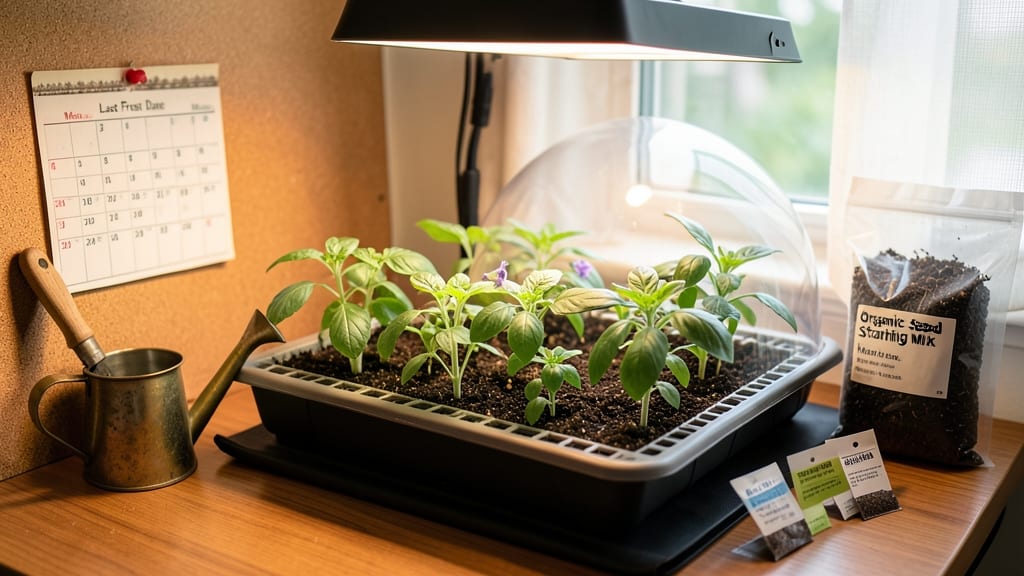
Starting garden seeds at the wrong time can turn your green thumb into a lesson in patience—but with a little math and heat mat precision, you’ll never guess again.
Picture this: you’ve spent hours sowing your favorite General Garden Seeds 🌱, only to watch them bolt in the heat or freeze before they even sprout.
The difference between success and disappointment often comes down to timing, and a heat mat can shave weeks off your schedule—if you use it right.
Most gardeners rely on last frost dates, but that’s only half the story. Seedlings need consistent warmth to germinate, and heat mats let you start earlier without risking a cold snap.
Below, I’ll break down how to calculate your perfect start window, adjust for your zone, and avoid the three biggest mistakes that waste seed packets every year.
By the end, you’ll know exactly when to press "plant" on your seed-starting journey—and how to keep those little sprouts thriving until harvest time.
How to calculate seed starting dates using heat mat temperature zones
Precision timing is everything when you're starting seeds with a heat mat. These handy tools can accelerate germination by 2-3 days for cool-season crops and up to 10 days for warm-season varieties.
But without a solid plan, even the best heat mat won't save you from planting too early or too late. The key lies in understanding your local frost dates, plant maturity timelines, and how heat mat temperatures interact with these factors.
First, determine your last frost date—this is your anchor point. In USDA Zone 6a (like my garden), this typically falls around April 15. For other zones, check the National Weather Service or local cooperative extension service.
Once you know this date, work backward using the days to maturity for each crop and the optimal heat mat temperature for germination.
Heat mats typically run at 70-75°F, but some seeds—like peppers and tomatoes—thrive at 80-85°F. Others, such as lettuce or carrots, prefer cooler 60-65°F ranges. Your seed packet will specify ideal temperatures, but always adjust for your heat mat’s max setting (usually 85°F).
Here’s the critical formula: Last Frost Date - Days to Maturity - Weeks on Heat Mat = Start Date. For example, if your tomatoes need 80 days to maturity and you’ll use a heat mat for 3 weeks, subtract 10 weeks from your frost date.
This gives you a precise window to start seeds without rushing or delaying growth.
| Crop Type | Days to Maturity | Heat Mat Temp (°F) | Weeks on Heat Mat | Start Date (Zone 6a) |
|---|---|---|---|---|
| Cool-Season (Lettuce, Spinach) | 45-60 days | 60-65°F | 2-3 weeks | February 20 - March 10 |
| Warm-Season (Tomatoes, Peppers) | 70-90 days | 80-85°F | 3-4 weeks | March 1 - March 15 |
| Herbs (Basil, Cilantro) | 30-60 days | 70-75°F | 2 weeks | March 15 - April 1 |
| Root Veggies (Carrots, Radishes) | 40-70 days | 65-70°F | 2-3 weeks | February 28 - March 20 |
| Flowers (Marigolds, Zinnias) | 50-75 days | 70-75°F | 3 weeks | March 1 - March 20 |
Pro tip: Use a seed starting calculator (like the one from Johnny’s Selected Seeds) to automate this process. Simply input your frost date, plant variety, and heat mat temperature, and it’ll spit out your exact start window.
I’ve found this saves me from recalculating every year—just adjust for minor climate shifts.
Don’t forget to account for light requirements after germination. Seedlings need 12-16 hours of light daily, so if your windows are dim, invest in a grow light early. Without enough light, even heat-mat-accelerated seeds will grow leggy and weak, defeating the purpose of your precise timing.
For warm-season crops, like eggplants or pe
Top 5 crops that benefit most from heat mat-assisted early starting
Heat mats are a game-changer for gardeners eager to jumpstart their growing season. These temperature-controlled tools create ideal conditions for slow-germinating seeds and heat-loving plants, helping them sprout faster and stronger.
When used correctly, they can shave weeks off your planting timeline, especially for warm-season crops that struggle in cool soil.
Not all plants respond equally to heat mat assistance. Some varieties—like tomatoes and peppers—thrive with the extra warmth, while others may not need it.
Below, I’ve highlighted the top 5 crops that benefit the most from heat mat acceleration, along with their ideal temperature ranges and growth milestones to help you plan like a pro.
Why these crops? They either require warmer soil temperatures to germinate or grow more vigorously with consistent heat. For example, basil and cucumbers bolt (flower prematurely) in cool conditions, while eggplants and okra need soil temps above 70°F to even sprout. Heat mats solve these challenges by mimicking summer-like conditions indoors.
| Crop | Ideal Heat Mat Temp (°F) | Germination Time | Start Indoors (Weeks Before Last Frost) | Key Growth Milestone |
|---|---|---|---|---|
| Tomatoes | 70-85°F | 7-14 days | 6-8 weeks | First true leaves (transplant when sturdy) |
| Peppers (Bell/Chili) | 80-90°F | 10-20 days | 8-10 weeks | Seedlings 3-4" tall (harden off before transplanting) |
| Basil | 75-85°F | 5-7 days | 4-6 weeks | 4-6 leaves (pinch to encourage bushiness) |
| Eggplants | 85-90°F | 14-21 days | 8-10 weeks | First true leaves + 2" growth (transplant carefully) |
| Okra | 85-95°F | 10-14 days | 4-6 weeks | 2-3 leaves (transplant after soil warms to 60°F) |
For tomatoes, a heat mat set to 70-85°F can cut germination time in half compared to room temperature. Start these seeds 6-8 weeks before your last frost date to ensure they’re robust enough for transplanting.
Look for first true leaves—these are the second set of leaves that appear after the initial seed leaves (cotyledons)—before hardening them off.
Peppers are another powerhouse for heat mat use, needing soil temps as high as 90°F to germinate. If your seeds sit in 60°F soil, they may take 3-4 weeks to sprout, but with a heat mat, you’ll see sprouts in 10-14 days. Aim to start them 8-10 weeks before last frost and transplant when they’re 3-4 inches tall and have a sturdy stem.
Herbs like basil are also heat mat champions. Basil seeds germinate quickly in 75-85°F soil, but they bolt (flower prematurely) if stressed by cool temps. Starting them 4-6 weeks before last frost gives you a head start on the season.
Once they’ve grown 4-6 leaves, pinch the top set of leaves to encourage bushier growth—this is key for a bountiful harvest.
If you’re growing eggplants or okra, heat m