
Vegetables
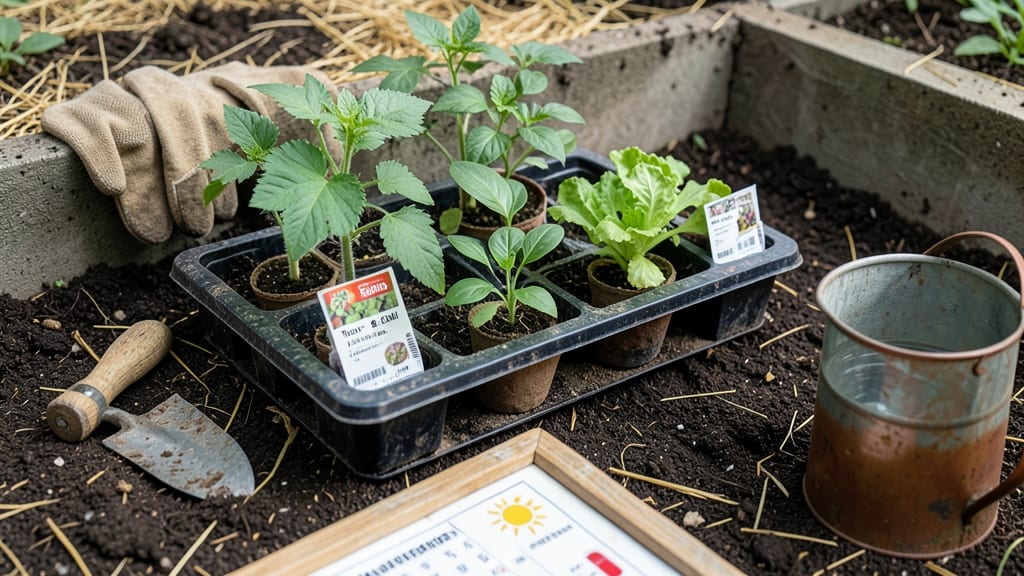
To start gardening vegetables at the right time means knowing your last frost date—and the zero-frost risk window that follows.
Timing your vegetable garden planting can mean the difference between a bountiful harvest and wasted seeds—knowing your last frost date is just the start.
For warm-season crops like tomatoes and peppers, planting too early can leave them vulnerable to chilly nights, while cool-season veggies like lettuce and spinach thrive when soil temperatures dip. The key is matching your planting schedule to your USDA zone and local microclimate.
In this guide, I’ll break down exactly when to start seeds indoors, when to transplant seedlings, and how to adjust for your region—so you can maximize your garden’s potential without guessing.
How to calculate your last frost date and zero-frost risk timeline
Timing your vegetable garden planting can mean the difference between a bountiful harvest and wasted seeds—knowing your last frost date is just the start. For zero-frost risk crops like tomatoes, peppers, and cucumbers, precision matters most.
These heat-loving plants simply won't survive even light frost, so planning your frost-free window with accuracy is essential. Let's break down how to calculate this critical timeline for your specific location.
First, identify your USDA hardiness zone using the USDA Plant Hardiness Zone Map. This gives you a baseline for your average first and last frost dates. For example, Zone 5 typically sees its last spring frost between April 15-30, while Zone 9 might not experience frost until December.
However, this is just your starting point—your actual zero-frost risk timeline can vary by 1-3 weeks depending on local conditions.
Next, account for your microclimate—the unique climate conditions in your specific garden location. A south-facing slope warms up faster than a north-facing area, and urban areas often experience heat islands that delay frost.
Check local weather records for the past 5-10 years to find your historical frost-free dates. Many local agricultural extensions or gardening clubs maintain these records—don't hesitate to reach out for precise data.
For zero-frost risk crops, you'll want to wait until after your average last frost date plus an additional 2-3 weeks. This buffer accounts for late frosts that can still occur.
For instance, if your average last frost is May 15, aim for planting heat-lovers like tomatoes around June 1 to ensure no frost risk remains. Use this frost-free window to plan your transplanting schedule for maximum success.
Here's a quick-reference frost-free timeline for common USDA zones to help you visualize the process:
To further refine your frost-free window, monitor your local weather forecast in the weeks leading up to your target planting date. Many weather services provide 10-day forecasts that include frost risk alerts.
Additionally, consider using a frost clock or planting calendar specific to your region—these tools often incorporate local microclimate data for more accurate predictions.
For container gardening, remember that potted plants warm up faster than in-ground soil, which can create a microclimate advantage. You may be able to plant heat-loving crops 1-2 weeks earlier in containers.
However, always have row covers or a greenhouse on hand for late frosts, especially if you're pushing your frost-free window to its limits.
Finally, keep in mind that your first fall frost also affects your planting timeline. For crops like beans and corn that mature quickly, you might need to start seeds earlier to ensure harvest before frost.
Use your frost-free window to calculate backward from your first fall frost date to determine the latest you can plant for a successful harvest.
By combining your USDA zone, historical frost data, and microclimate observations, you'll create a precise zero-frost risk timeline tailored to your garden. This approach minimizes risk and maximizes your chances of a thriving harvest for heat-loving vegetables.
With this knowledge, you're ready to confidently plan your transplanting schedule and watch your garden flourish!
Best planting windows by vegetable type for maximum yield
Understanding the planting windows for your vegetable garden is crucial for maximizing yields. Warm-season crops like tomatoes and peppers thrive after the last frost, while cool-season crops such as lettuce and spinach can handle chilly temperatures. Your USDA hardiness zone determines these windows, so knowing your local climate is key.
For warm-season vegetables, start seeds indoors 6-8 weeks before your last frost date, then transplant after all danger of frost has passed.
Cool-season crops, on the other hand, can be sown directly into the garden 4-6 weeks before your last frost or even in early fall for a winter harvest. Succession planting is another strategy to keep your garden productive year-round.
🌱 Comparison Table: Planting Windows by Vegetable Type
| Vegetable Type | Start Indoors | Transplant Outdoors | Direct Sow After | Succession Planting |
|---|---|---|---|---|
| Tomatoes | 6-8 weeks before last frost | After last frost | N/A | Every 2-3 weeks |
| Peppers | 8-10 weeks before last frost | After last frost | N/A | Every 3 weeks |
| Squash | 2-3 weeks before last frost | After last frost | N/A | Every 1-2 weeks |
| Lettuce | N/A | N/A | 4-6 weeks before last frost | Every 2 weeks |
| Spinach | N/A | N/A | 4-6 weeks before last frost | Every 3 weeks |
| Kale | N/A | N/A | 4-6 weeks before last frost | Every 3-4 weeks |
In USDA Zones 3-5, where winters are harsher, focus on early spring planting for warm-season crops and late summer/fall for cool-season varieties.
For Zones 6-8, you can extend your growing season by planting warm-season crops in early spring and late summer, while cool-season crops can thrive in both spring and fall. Always check your local last frost date to fine-tune your schedule.
For succession planting, sow fast-growing crops like radishes or bush beans every 2-3 weeks to ensure a steady supply. This method works especially well for leafy greens and herbs, which can be harvested multiple times before bolting.
By planning ahead, you can enjoy fresh produce from your garden for months instead of just a few weeks.
Experiment with different planting windows each year to see what works best in your garden. Keep a planting journal to track your successes and adjust your strategy accordingly.
With the right timing and a little patience, you’ll be rewarded with a garden bursting with flavorful, homegrown vegetables all season long! 🌿