
Propagation
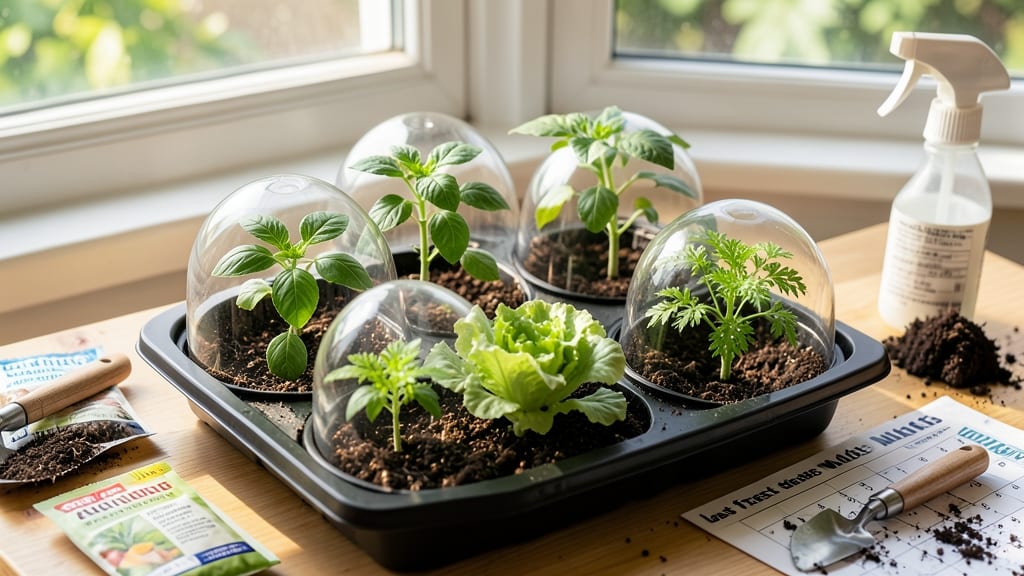
To start seeds for a spring garden, begin 4-6 weeks before your last frost date for quick-growing plants like lettuce, while slower varieties such as tomatoes require 8-10 weeks of indoor cultivation. Always verify seed packet instructions and adjust for your specific climate zone.
Timing your seed starts correctly ensures healthy seedlings ready for transplant when outdoor conditions are ideal. 🌱 The key is matching each plant's growth rate to your local frost dates—most seed packets list days-to-maturity, which helps calculate when to begin indoors.
For example, basil typically needs 60-75 days to mature, so starting it 8 weeks before frost gives it enough time to develop strong roots before warm weather arrives. I always double-check my local frost date (available through the National Weather Service) and add buffer time for unpredictable spring weather patterns.
Another critical factor is temperature control during germination. Most seeds need consistent warmth—around 70°F—to sprout efficiently, while seedlings often require cooler days (65°F) and warmer nights (75°F) for optimal growth.
Using a seedling heat mat can accelerate germination for slower starters like peppers, which often take 10-14 days to break through soil. The goal is to avoid overcrowding while ensuring each plant gets enough light—without stretching too tall before transplanting.
💡 In This Article
- Calculating Seed Starting Dates by Plant Maturity
- Best Seed Starting Methods for Spring Vegetables
Calculating seed starting dates by plant maturity
Determining when to start seeds indoors relies on three key variables: your plant's days-to-maturity, your last frost date, and the transplant window (typically 2-4 weeks before frost).
For example, a pepper plant needing 80 days to fruit should start 8-10 weeks before frost—this accounts for the 4-6 weeks it takes to grow a sturdy seedling before transplanting. The math is simple: subtract days-to-maturity from your frost date, then add the weeks needed for seedling development. 🌱
Temperature plays a crucial role in this calculation. Most seeds germinate best at 70-75°F, but seedlings often thrive in cooler conditions (60-65°F during the day) to prevent leggy growth. For instance, tomatoes—which need 75-85 days to mature—should start when indoor temperatures are stable.
Using a seedling heat mat (80-85°F) can speed up germination for slower starters like eggplants, which may take 7-14 days to sprout. The goal is to balance warmth for germination with cooler light exposure to encourage compact, stocky seedlings.
Light is another critical factor. Seedlings need 12-16 hours of light daily to prevent stretching. Without sufficient light, seedlings grow tall and weak, a condition called "etiolation," which makes them vulnerable to breakage.
For example, starting broccoli 6-8 weeks before frost requires a grow light or south-facing window to ensure strong stems. I’ve found that using a T5 fluorescent bulb just 2-3 inches above seedlings provides the right spectrum without overheating.
Local climate variations add complexity. In Zone 5, where frost can linger until mid-May, starting tomatoes in early March ensures they’re ready by late May. But in Zone 8, where frost is rare, you might delay starts until late February.
Always verify your frost date using the USDA Plant Hardiness Zone Map and adjust for microclimates—like a sunny hillside that warms faster than a shaded valley. 🌿
Seed packets often include a "start indoors" recommendation, but these are averages. For instance, a packet might say "start 6-8 weeks before last frost," but if your seedlings grow faster in ideal conditions, you could start slightly later.
Conversely, if your home is drafty, add an extra week to the timeline. Testing soil temperature with a thermometer ensures consistency—most seeds need 60-70°F soil to germinate reliably.
Finally, consider the plant’s transplant shock sensitivity. Delicate seedlings like basil or cilantro benefit from starting just 3-4 weeks before frost, as they establish quickly but struggle with root disturbance. Hardier plants like kale or Swiss chard can handle earlier starts because they tolerate cooler temperatures and transplant well.
The key is matching the plant’s resilience to your local growing season.