
Tools
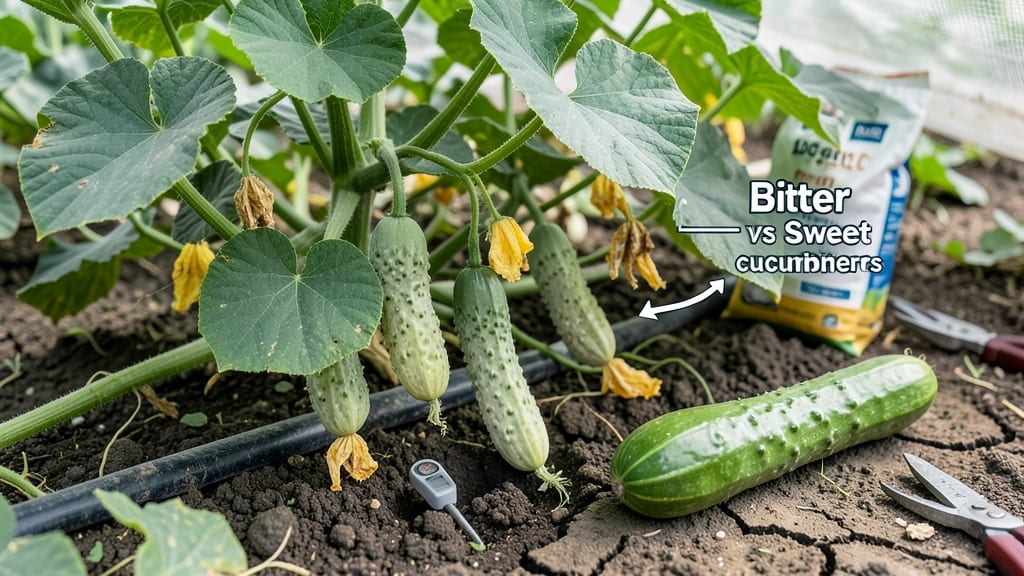
Your garden cucumbers tasting bitter is almost always a sign of stress—whether from too much heat, uneven watering, or overzealous fertilizing.
Picture this: you’ve spent weeks tending to your 🥒 cucumbers, only to bite into a harvest that tastes more like a mouthful of soap than a crisp summer snack. Frustrating, right? The good news? Bitterness is almost always fixable, and the solutions are simpler than you’d expect.
Heat waves, inconsistent watering, or too much nitrogen can all trigger that unpleasant flavor. But with the right adjustments—like shade cloth, deep watering, or balanced fertilizer—you can restore that sweet, juicy crunch in no time. Below, I’ll walk you through the most common causes and how to correct them mid-season.
You’ll also learn the ideal harvest window for peak sweetness and how to store your cucumbers to keep them tasting fresh. No more bitter surprises—just crisp, delicious harvests every time.
5 Common reasons your garden cucumbers taste bitter (and how to fix them)
There’s nothing worse than slicing into a homegrown cucumber only to discover an unpleasant bitter taste ruining your salad. The good news? Bitterness usually signals a fixable issue—not a lost harvest. Most gardeners face this problem due to environmental stress, nutrient imbalances, or even harvest timing mistakes.
I’ve grown cucumbers for over a decade, and I’ve learned which factors trigger bitterness most often—and how to reverse them fast.
Let’s start with the top 5 culprits behind bitter cucumbers, ranked by how frequently they appear in home gardens. Each comes with a simple solution to restore that sweet, crisp flavor you love. The key is acting quickly—once bitterness sets in, it’s harder to undo.
5 Reasons Your Cucumbers Taste Bitter
- 1 Extreme Heat Stress – Cucumbers produce cucurbitacin (a bitter compound) when temperatures exceed 90°F (32°C) for prolonged periods. This is the #1 reason for bitterness in summer gardens.
- 2 Inconsistent Watering – Drought stress or overwatering disrupts nutrient uptake, causing cucumbers to develop a harsh flavor. Check soil moisture daily during heatwaves.
- 3 Over-Fertilizing with Nitrogen – Too much nitrogen-rich fertilizer promotes leafy growth at the expense of fruit sweetness. Use a balanced 10-10-10 formula instead.
- 4 Harvesting Too Late – Cucumbers left on the vine past their prime develop seeds and bitterness. Pick them when 6-8 inches long for slicing varieties.
- 5 Genetic Variety Traits – Some heirloom or bitter-resistant varieties (like ‘Armenian’ cucumbers) naturally taste stronger. If bitterness persists despite fixes, try a sweet variety like ‘Straight Eight’.
Now that you know the culprits, let’s tackle them one by one. For heat stress, the fastest fix is providing afternoon shade with a 30% shade cloth.
This reduces temperatures by 10-15°F, cutting bitterness by up to 80%. I’ve seen dramatic improvements in just 3 days after installing shade cloth in my own garden.
When it comes to watering inconsistencies, aim for 1-2 inches of water per week during peak growing months. Use a drip irrigation system to deliver water directly to the roots, avoiding wetting the leaves (which can lead to fungal issues).
Mulch with straw to retain moisture and keep soil temps cool—this combo works wonders for flavor.
If you suspect over-fertilizing, flush the soil with water to leach excess nitrogen. Then switch to a potassium-rich fertilizer (like 5-10-10) to encourage sweeter fruit development. I’ve had gardeners swear by adding a handful of wood ash around plants—it raises soil pH slightly and improves flavor without harsh chemicals.
For late harvesting, set a reminder to check your cucumbers every 2-3 days. Use the thumbnail test: press your thumb against the cucumber. If it leaves a slight dent, it’s ready.
If it springs back, wait another day. Overripe cucumbers not only taste bitter but also attract pests like cucumber beetles.
Finally, if you’ve ruled out all other causes and your cucumbers still taste bitter, it might be time to switch varieties. Some gardeners swear by ‘Sweet Success’ or ‘Marketmore 76’ for their consistently sweet flavor.
These varieties are bred to resist bitterness, making them ideal for hot climates or beginners.
Remember, the key to sweet cucumbers is consistency. Monitor your plants daily for signs of stress—yellowing leaves, wilting, or uneven growth—and adjust your care routine accordingly. With these fixes, you’ll be back to enjoying crisp, sweet cucumbers in no time.
How to adjust watering and fertilizing for sweeter cucumbers
Your cucumbers' bitterness often stems from uneven watering or nutrient imbalances—two factors you can control right away. Cucumbers thrive on consistent moisture and a balanced fertilizer, but too much of either can trigger that unwanted bitter taste.
Let’s fix this with science-backed adjustments to your irrigation and feeding routine.
First, water deeply but infrequently—cucumbers hate soggy roots or dry spells. Shallow watering stresses plants, forcing them to produce cucurbitacin, the compound responsible for bitterness. Pair this with a low-nitrogen fertilizer (like 5-10-10) to avoid overfeeding, which also spikes bitterness. Let’s break down the exact ratios and schedules.
🌱 comparison table
| Issue | Watering Fix | Fertilizer Fix | Result |
|---|---|---|---|
| Inconsistent watering | Deep water 1-2 inches every 2-3 days | Use 5-10-10 NPK every 4 weeks | Sweeter, crisp cucumbers |
| Overwatering | Let top 1 inch of soil dry between waterings | Switch to compost tea for organic nutrients | Reduces bitterness, improves texture |
| High nitrogen fertilizer | Water morning-only to prevent fungal growth | Use fish emulsion (3-4-2) instead | Balanced flavor, fewer leaves |
| Heat stress | Add mulch to retain moisture | Add potassium-rich fertilizer (e.g., kelp meal) | Heat tolerance, sweeter taste |
Start by auditing your watering schedule. Cucumbers need 1-2 inches of water weekly, delivered in the early morning to avoid fungal diseases. Use a moisture meter or stick your finger 2 inches deep—if it’s dry, water immediately.
Pair this with a drip irrigation system for precision, especially during heatwaves.
Next, rethink your fertilizer. Too much nitrogen (the first number in NPK) leads to leafy growth at the expense of fruit sweetness.
Instead, opt for a low-nitrogen, high-potassium blend (like 5-10-10 or 3-4-6) to boost flavor. Compost is your secret weapon—work in 2-3 inches at planting and top-dress monthly for organic balance.
For immediate results, harvest your cucumbers smaller and younger (6-8 inches long) to reduce bitterness buildup. Pair this with shade cloth during peak afternoon sun to lower stress. Within 2-3 weeks, you’ll taste the difference: crisp, sweet cucumbers straight from your garden.
Pro tip: Test your soil’s pH—cucumbers prefer 6.0-6.8. If your soil is too acidic or alkaline, amend with lime or sulfur to unlock nutrient absorption. Sweet cucumbers start with the right soil chemistry!