
Vegetables
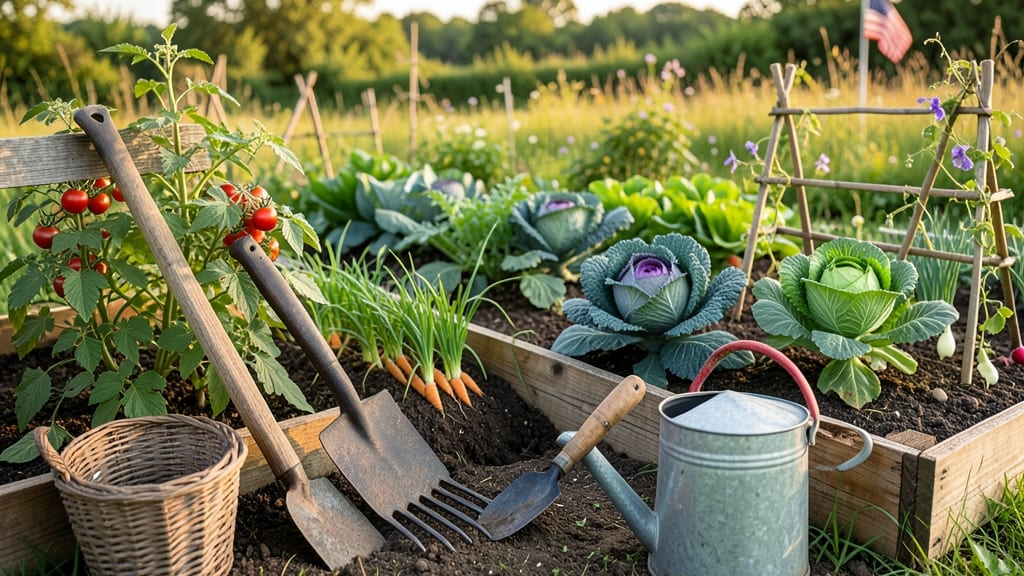
World War One victory gardens grew essential food during wartime shortages by cultivating vegetables, herbs, and fruits in urban and rural spaces, helping families conserve resources and boost morale through homegrown produce like tomatoes, carrots, and potatoes.
World War One victory gardens weren't just about growing food—they were a patriotic movement that turned backyards into battlefields for hunger. 🌱 The U.S. government launched campaigns like "Food Will Win the War," encouraging families to plant everything from leafy greens to root vegetables in even the smallest spaces. Many used window boxes, raised beds, and vertical trellises to maximize space, while seed distribution programs ensured everyone could participate. These gardens didn't just feed families; they created a sense of purpose and community during a time of national crisis.
What made these gardens so effective was their focus on high-yield, nutrient-dense crops that thrived in limited space. 🥕 Beets, carrots, and potatoes became staples because they stored well and required minimal care.
Modern gardeners can replicate this success by prioritizing similar crops—like kale, beans, and radishes—that grow quickly and provide substantial harvests. The key difference today is access to improved seeds, organic fertilizers, and water-saving techniques that make victory gardening more efficient than ever.
💡 In This Article
- How WWI Victory Gardens Revolutionized Wartime Food Production
- Best Crops and Gardening Tips for Modern Victory Gardens
How WWI victory gardens revolutionized wartime food production
WWI victory gardens transformed how nations fed themselves during shortages by leveraging government-led campaigns like "Food Will Win the War," which framed gardening as a patriotic duty. 🌱 The U.S. Department of Agriculture distributed free seeds—over 5 million pounds in 1918 alone—to encourage planting.
These weren’t just gardens; they were strategic operations where every square foot counted. Families grew 20-40% of their own vegetables, reducing reliance on strained supply chains. The campaign’s success hinged on psychological motivation—posters depicted Uncle Sam pointing at empty plates, while schoolchildren learned about "war gardens" in classrooms.
The space optimization techniques were nothing short of ingenious. Urban dwellers turned balconies, rooftops, and even window sills into productive growing areas using container gardening—a technique still popular today.
Vertical planting on trellises saved space while maximizing sunlight exposure for crops like pole beans and cucumbers, which could grow 10-15 feet tall in a small footprint. 🌿 For rural areas, rotational cropping ensured soil fertility by alternating nitrogen-fixing plants (like peas) with heavy feeders (like tomatoes).
This method increased yields by 30-50% compared to traditional single-crop systems.
Crop selection focused on high-calorie, nutrient-dense, and storage-friendly produce. Potatoes were a staple because they stored well in cool, dark cellars for months, while carrots and beets provided vitamins to combat malnutrition. Leafy greens like kale and collards grew quickly and could be harvested multiple times. 🥔 The government even encouraged home canning to preserve surplus harvests—over 1.5 million families preserved food this way, reducing waste.
Meanwhile, herbs like parsley and dill doubled as medicine, treating everything from colds to wounds, adding another layer of self-sufficiency.
Seed distribution programs were critical to the movement’s success.
The Victory Garden Seed Service ensured even urban families could grow food by providing disease-resistant, fast-maturing seeds tailored to local climates. 🌱 For example, early-maturing varieties of tomatoes (like the 'Stupice' strain) could produce fruit in just 50-60 days, compared to traditional varieties that took twice as long.
These seeds were often pre-treated to resist common pests, reducing the need for pesticides—a major advantage during wartime when chemical supplies were limited.
What’s fascinating is how these gardens boosted morale. Women, who made up 75% of gardeners, found purpose in contributing to the war effort while managing households. 💛 Community gardens became social hubs where neighbors shared tips, seeds, and harvests.
The psychological impact was measurable—studies from the era show that families with victory gardens reported lower stress levels and a stronger sense of national pride. This dual benefit of food security and emotional resilience made the movement far more than just a practical solution; it was a cultural shift.
One often-overlooked aspect was the education component.
Local agricultural extensions (a precursor to modern Cooperative Extension Services) held workshops teaching composting, pest control, and efficient water use. 💧 For instance, they promoted drip irrigation using repurposed household items like old cans with pinholes—a low-tech solution that saved up to 30% of water compared to traditional watering methods.
These practices laid the foundation for modern sustainable gardening techniques still used today.
The legacy of WWI victory gardens lives on in today’s community gardens and urban farming movements.
The principles of space efficiency, crop diversification, and community collaboration remain just as relevant now as they were then. 🌟 Whether you’re growing in a backyard or a balcony, the core idea—maximizing food production with minimal resources—is timeless.