
Light Requirements
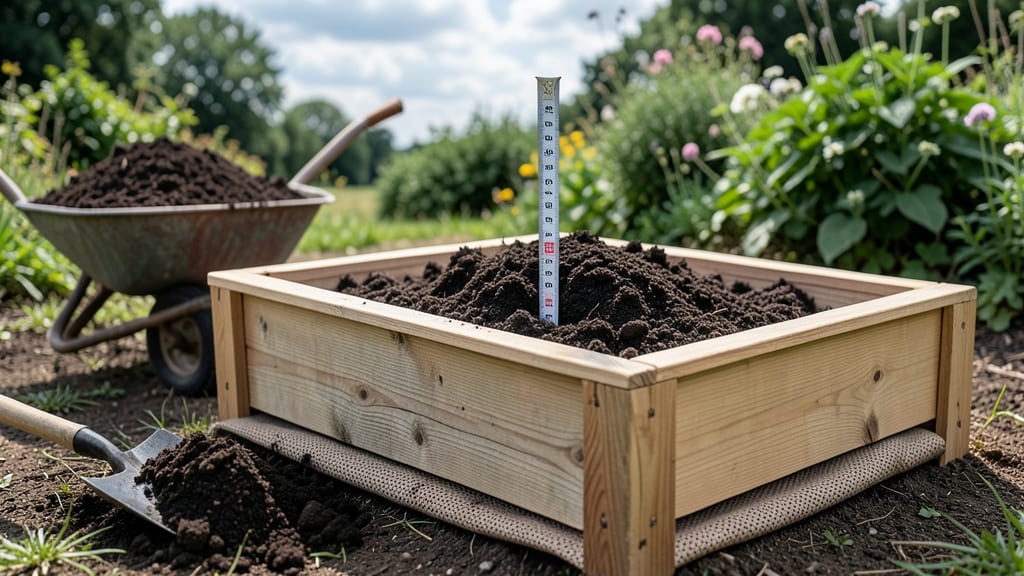
For an 8x4x2 raised garden bed, you'll need 36.3 cubic feet of soil (about 1.1 tons), accounting for a 10% settling factor over time. Mixing topsoil with compost and coconut coir cuts costs while boosting plant growth.
Understanding soil volume for raised beds starts with the simple math of length × width × height.
An 8-foot-long, 4-foot-wide, and 2-foot-deep bed gives you 36.3 cubic feet of space—but that's before accounting for settling, which can reduce usable depth by up to 10%. 💫 This means your plants may need deeper roots than you initially plan for, especially for vegetables like tomatoes or corn.
Many gardeners solve this by adding a layer of compost or coconut coir on top to maintain fertility without extra bulk.
If you're working with a tight budget, consider blending your own soil mix. A 60% topsoil, 30% compost, and 10% perlite combination reduces costs while improving drainage and nutrient retention. Bulk purchases often save money compared to pre-mixed bags, but weigh your bed's weight capacity first—soil gets heavy!
💡 In This Article
- Calculating Soil Volume for Raised Beds: Dimensions and Math
- Budget-Friendly Soil Mixes for 8x4x2 Raised Beds
Calculating soil volume for raised beds: dimensions and math
The 36.3 cubic feet figure for an 8x4x2 raised bed comes from multiplying length (8 ft) by width (4 ft) by height (2 ft). This gives you 64 cubic feet of raw space—but here's the catch: soil compresses over time.
When you first fill the bed, the soil appears fluffy, but within weeks, organic matter breaks down, and particles settle more tightly. This settling typically reduces usable volume by 10-15%, meaning your actual planting depth might be closer to 1.8 feet instead of 2 feet. 🔥
Depth matters more than you might think. A 2-foot height accommodates most vegetables' root systems—tomatoes need 18-24 inches, while carrots require 12-16 inches.
However, deeper beds (3+ feet) allow for better moisture retention and root expansion, which is why some gardeners opt for stacked beds or wooden frames with removable sides to add soil later.
The key is balancing your plant needs with structural weight limits—cedar beds typically support 200-300 lbs per square foot, so a full 8x4 bed could hold up to 640-960 lbs of soil!
Here's how to visualize it: Imagine your bed as a giant box. The top 6 inches of soil is where most roots thrive, while the bottom 6 inches may compact more. To combat this, top-dress with 2-3 inches of compost annually—this maintains loose, fertile soil without adding bulk.
For example, a 5-gallon bucket of compost (about 0.35 cubic feet) spread across 32 sq ft of bed surface gives you 0.01 cubic feet per sq ft, which is enough to refresh nutrients without overwhelming the structure. ✨
Another factor is soil type. Sandy soil settles less (5-10%) but drains quickly, while clay-heavy mixes can shrink up to 20% as they dry. For an 8x4x2 bed, this means your clay-based mix might lose 7-12 cubic feet of volume over time!
To test your soil's settling rate, fill a 1-gallon container (0.134 cubic feet) with your mix, water it, and measure how much it compacts after 24 hours. Multiply that percentage by 36.3 to predict long-term volume loss in your bed. 💫
Pro tip: If you're using wooden beds, account for the 1-2 inch thickness of the frame itself. Subtract this from your height measurement before calculating soil volume. For example, a bed labeled "2 feet deep" might only have 18-19 inches of actual soil space.
Always measure the interior dimensions of your bed—not the exterior—to avoid overestimating soil needs. This small detail can save you 2-4 cubic feet of unnecessary soil purchases!
For visual clarity, sketch a simple diagram: Draw your bed's dimensions, then shade 10% of the bottom layer to represent settling. Label the top layer as "planting zone" and the bottom as "compacted zone." This helps you plan where to place deep-rooted plants (like asparagus) versus shallow crops (like lettuce).
Many gardeners also add a perforated drainage layer (gravel or landscape fabric) at the bottom to prevent waterlogging, which can further reduce usable soil volume by 1-2 inches. 🌱