
Light Requirements
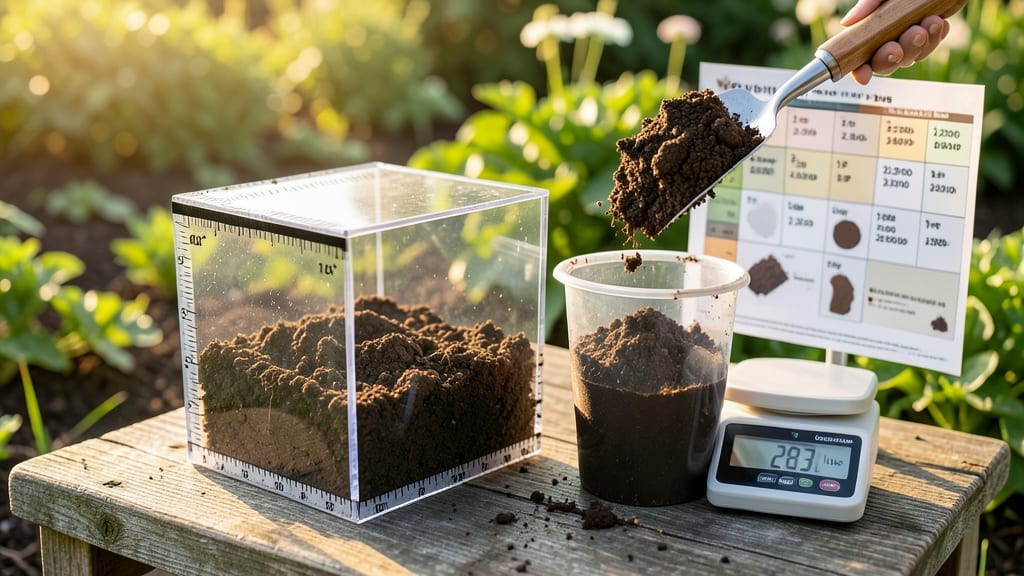
.75 cubic feet of garden soil typically weighs between 12 and 24 pounds, with variations based on composition—organic loam sits on the lighter end while clay-heavy or sand-dominant mixes push toward the heavier range. Moisture levels also play a role, as damp soil often weighs slightly less than its dry counterpart.
.75 cubic feet of garden soil is a common measurement for container gardening and raised beds, but its weight can vary dramatically based on what's in it. 🌱 For example, potting mix—often blended with compost and perlite—usually falls closer to 12-16 pounds, while pure clay soil can approach 22-24 pounds due to its dense mineral structure.
Even a 10% difference in moisture can shift the weight by 1-2 pounds, so always account for seasonal conditions when calculating bulk soil needs for projects.
This weight range matters most when planning heavy lifting or structural projects.
For instance, a standard 10-gallon grow bag (about .75 cubic feet) filled with potting mix might feel manageable, but the same volume of clay soil would require two people to lift safely. 💪 Always verify with your supplier if you're purchasing soil by volume rather than weight—some brands pack their products more densely than others.
💡 In This Article
- Soil Density Variations by Composition
- Practical Tips for Measuring Soil Weight in Gardening
Soil density variations by composition
Soil weight hinges on its composition, where particle size and organic content create dramatic differences. Clay soil, packed with microscopic particles, can reach 22-24 pounds per .75 cubic feet due to its dense mineral structure—imagine tightly packed marbles versus loose sand.
Meanwhile, organic loam with compost and perlite lightens the load to 12-16 pounds, as air pockets and decomposed plant matter reduce density. The contrast is like comparing a brick to a sponge!
Moisture plays a sneaky role too.
Damp soil often weighs 1-2 pounds less than dry soil because water displaces air in pores, but the trade-off is reduced stability—wet clay can shrink 20% by volume when dried, altering weight calculations permanently. 💧 Even a 10% moisture increase can shift potting mix weight by nearly 1 pound, making spring planting (when soils are saturated) particularly tricky for weight-based projects.
Particle shape matters as much as size. Angular sand grains pack tightly, increasing density, while rounded river sand creates gaps that lighten the load. This is why beach sand feels heavier than desert sand—15% more compacted due to wave action.
For gardeners, this means pre-mixed potting soils (with added perlite) often weigh 30% less than native clay, even in equal volumes.
Compaction from foot traffic or machinery can double soil density in raised beds. A freshly tilled garden loam might weigh 14 pounds dry, but after a season of walking, that same volume could hit 18 pounds.
This explains why professional landscapers use vibrating plates to maintain consistent density during large-scale projects.
Here's a quick comparison for common soil types in .75 cubic feet:
- Potting mix (organic): 12-16 lbs (lightest due to perlite/compost)
- Garden loam (balanced): 16-20 lbs (ideal for planting)
- Sandy soil: 18-22 lbs (dense but drains well)
- Clay soil: 22-24 lbs (heaviest natural option)
Understanding these variations helps avoid overloading containers or misjudging project requirements. For example, a 4'x8' raised bed (3 cubic feet) filled with clay soil would weigh 96-112 pounds empty—enough to require structural reinforcement! 🏗️