
Tools
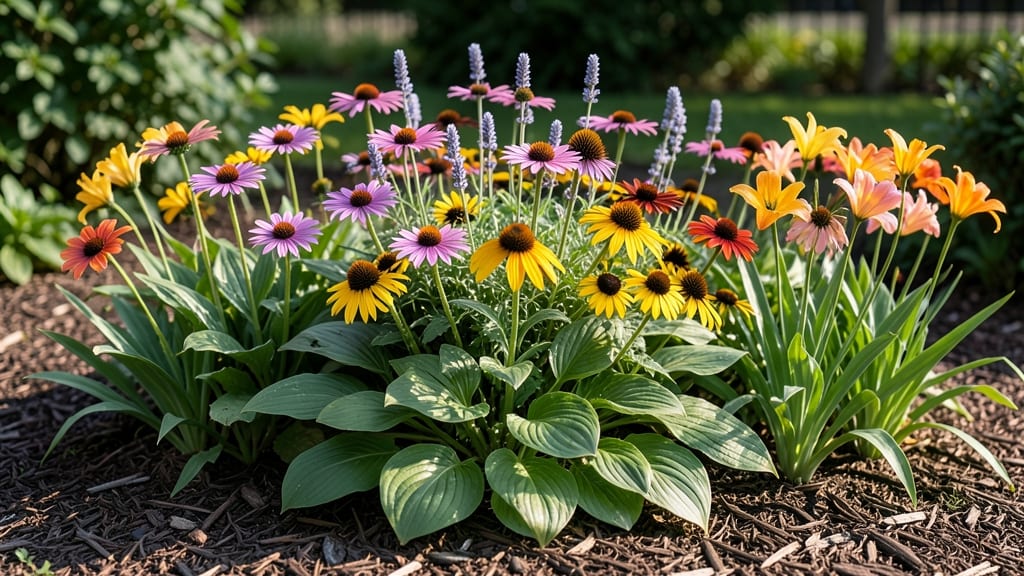
A flower garden in the shape of a circle delivers perfect symmetry and visual harmony through radial design, layered plantings, and strategic focal points. Begin with a central anchor—like a sculptural tree or decorative fountain—then build outward in concentric rings using plants of varying heights and seasonal colors. Thoughtful spacing and curved pathways create seamless movement and easy maintenance.
A flower garden in the shape of a circle isn't just about the shape—it's about creating a dynamic visual rhythm that draws the eye naturally.
The key lies in balancing height variation, where taller plants like ornamental grasses form the outer ring and shorter perennials fill the center. 🌸 I've found that incorporating three distinct plant layers—background, midground, and foreground—adds depth while maintaining that signature circular flow.
This approach works especially well for formal gardens, but even informal designs benefit from the inherent balance.
What makes circular designs so effective is how they guide movement. Curved pathways or gravel borders create natural transitions between planting zones, while repeating color themes (like blues and purples) tie the design together.
For year-round interest, I recommend mixing evergreens in the outer rings with seasonal bloomers in the center—this ensures your garden remains vibrant even when some plants are dormant.
💡 In This Article
- Designing Radial Symmetry in Circular Flower Gardens
- Practical Tips for Planting and Maintaining a Circular Garden
Designing radial symmetry in circular flower gardens
Radial symmetry in circular gardens works by creating visual balance from a central point outward, much like the spokes of a wheel. The human eye naturally follows these lines, which is why circular designs feel so harmonious.
Start with a strong focal point—like a mature tree, decorative fountain, or sculptural plant—at the center. This anchor should be 1.5 to 2 times taller than your surrounding plants to command attention.
For example, a 6-foot ornamental grass in the center would pair beautifully with 3-foot shrubs in the first ring and 18-inch perennials in the outer edges.
The magic happens in the concentric rings, where each layer should follow the 70-30 rule: 70% of plants should repeat from one ring to the next, while 30% introduces new elements for visual interest.
Use geometric patterns like spirals or arcs to guide the eye—planting in 3-inch increments along curved lines creates a natural flow. For color, work with gradients: place your brightest blooms in the center (like red salvia) and softer hues outward (like lavender catmint), creating depth.
This technique mimics how sunlight filters through a forest canopy, adding dimension.
Seasonal transitions are where many circular gardens fail, but layering plants with staggered bloom times solves this. Pair spring bulbs (like daffodils) with summer perennials (like coneflowers) and late-season bloomers (like asters) in the same ring.
The key is to ensure no single plant dominates for more than 6-8 weeks—this keeps the garden lively year-round. I've seen stunning circular designs in 10-foot diameter spaces that maintain this balance perfectly, proving symmetry doesn't require vast acreage.
Texture plays an equally important role in radial symmetry. Combine plants with varying leaf shapes—like the feathery foliage of lamb's ear next to the bold leaves of hostas—to create visual contrast. This interplay prevents the garden from looking flat.
For a sensory experience, incorporate plants with different aromas: lavender for fragrance in the outer ring, mint for texture in the mid-section, and roses as the central focal point. The result is a garden that engages all senses while maintaining perfect symmetry.
One common mistake is treating all rings equally—each should have its own character. The outer ring (often 3-4 feet wide) can feature taller, more structural plants like ornamental grasses or boxwood hedges, while the inner rings focus on color and texture.
For a 15-foot diameter garden, I recommend 3 distinct rings: an outer structural layer, a mid-height transitional ring, and a central display area. This tiered approach mirrors how nature organizes itself in meadows and forests, creating a familiar yet refined look.
Lighting can amplify radial symmetry at night. Place solar-powered uplights at 12-inch intervals along the outer edge to highlight the garden's curve, while spotlights on the central focal point draw attention inward. This creates a dramatic visual effect that works beautifully for evening strolls.
The symmetry becomes even more apparent when the garden is illuminated, as the light patterns follow the same radial lines as the plantings.