
Pests
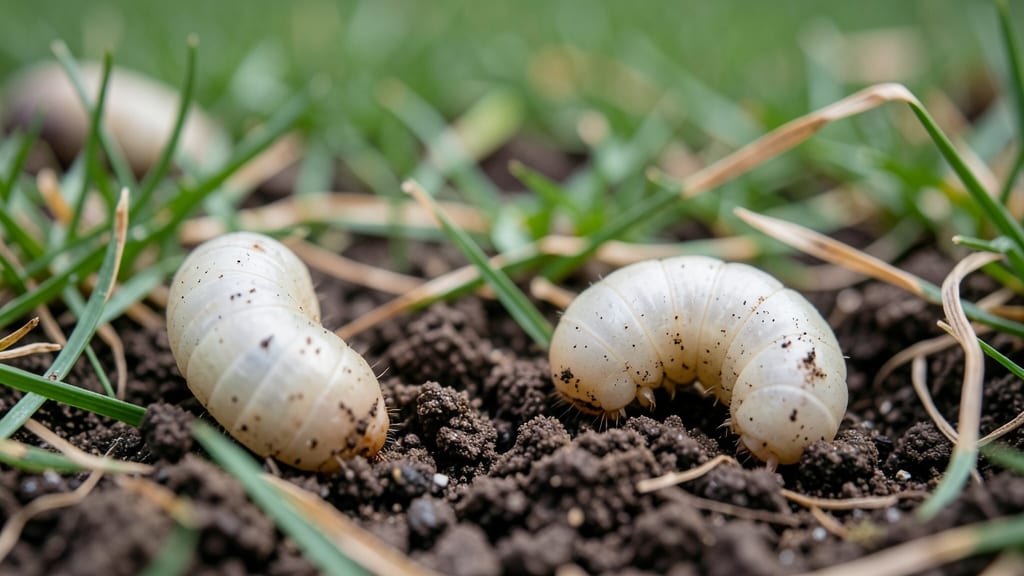
Grubs are bad for your garden because they feed on plant roots, weakening grass and garden plants, often causing yellowing, wilting, or dead patches. Severe infestations can kill lawns entirely if left untreated.
Grubs—those C-shaped larvae of beetles—are like tiny lawn vampires, sucking the life out of your plants by chewing through roots. 🌱 The damage starts small: patches of grass turn brown or thin out as roots lose their ability to absorb water and nutrients.
Over time, this stress makes plants more vulnerable to disease and heat stress, turning a lush garden into a patchwork of struggling vegetation. What's worse, grubs often target the most tender roots of young seedlings or newly planted perennials, stunting growth before it even begins.
While they might seem harmless at first, their presence is a clear warning sign. Left unchecked, a single square foot of lawn can host hundreds of grubs, creating a cycle of destruction that spreads rapidly.
The key to protecting your garden lies in early detection—look for spongy, easily pullable grass or moles tunneling through your lawn—and taking swift action before the damage becomes irreversible.
💡 In This Article
- How Grubs Destroy Plant Roots and Lawn Health
- Natural and Chemical Grub Control Methods for Gardens
How grubs destroy plant roots and lawn health
Grubs—specifically the larvae of beetles like Japanese beetles, June bugs, or chafers—target plant roots with surgical precision.
Their mandibles slice through root tissues like tiny saws, severing the vascular bundles that transport water and nutrients. 🌱 This disruption creates a domino effect: roots lose their ability to anchor plants, while the plant's ability to photosynthesize declines due to nutrient starvation.
Studies show that just 10-15 grubs per square foot can reduce grass root mass by 30-50%, leaving plants vulnerable to drought and disease.
The damage isn't uniform—grubs prefer young, tender roots of grasses (like Kentucky bluegrass or fescue) because they're easier to consume than woody perennials.
Their feeding patterns create a "spongy" lawn effect: when you step on infested areas, the grass pulls up easily like a carpet. 🌿 This happens because grubs weaken the root zone, causing the soil to separate from the thatch layer.
In severe cases, entire sections of turf lift up like a puzzle piece, exposing the grubs beneath—this is your clearest sign of an infestation.
What makes grubs particularly destructive is their feeding cycle. They spend 10-12 months underground, molting up to 6 times as they grow. Each molt increases their appetite, and by late summer, a single grub can consume 0.5-1 gram of roots per week—equivalent to 50-100 feet of root tissue.
This relentless feeding creates dead zones where grass struggles to recover, even with watering or fertilization. The worst part? By the time you notice brown patches, the grubs may already be pupating into beetles, preparing to lay eggs for next year's infestation.
Grubs also create secondary damage by attracting predators like moles and skunks, which dig up lawns in search of an easy meal. These animals cause additional soil compaction and aeration issues, further stressing plants.
The economic impact is staggering: in the U.S., grub damage costs gardeners and landscapers $1 billion annually in lost grass, repairs, and treatments. The key to prevention lies in understanding their life cycle and acting before they reach their peak feeding stage in late summer to early fall.
Here's what happens at the cellular level: When grubs chew roots, they release enzymes that break down plant cell walls, creating entry points for fungal infections. This is why grub-damaged plants often develop a grayish mold or rot, even if you water and fertilize normally.
The combination of physical damage and fungal invasion creates a perfect storm for plant decline. 🌱 To visualize the scale, imagine a single grub the size of a grain of rice—now imagine 500 of them in a 10-square-foot area, each working nonstop for months.
Grubs target grass because its fibrous root system is their ideal buffet. Unlike deep-rooted perennials (which can survive some root loss), grasses rely on a dense network of shallow roots.
When grubs sever 50% of these roots, the plant can no longer support itself, leading to the classic "dollar spot" pattern of dying grass.
This is why lawns are their favorite target—grubs have evolved to exploit this vulnerability, making turfgrass their primary food source in 80% of documented cases.