
Container Gardens
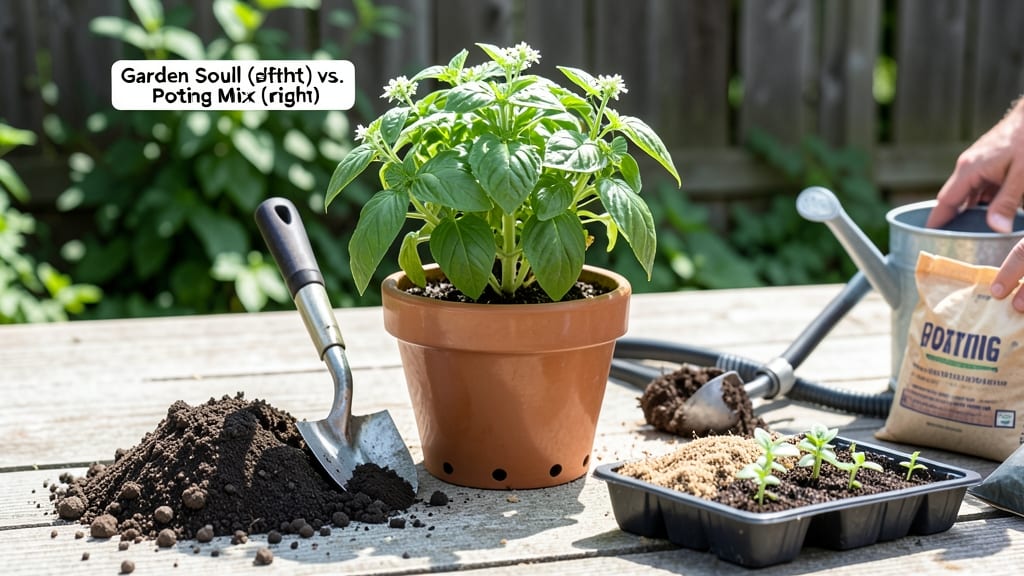
You can use garden soil in pots, but only after amending it with organic matter and perlite to prevent compaction, improve drainage, and reduce pest risks. Heavy clay or sod-heavy soil should never be used without modification.
Garden soil isn't ideal for containers because it lacks the air pockets and organic matter that potting mixes provide. Without proper aeration, roots suffocate, leading to poor growth or even rot. 🌱 I've found that blending garden soil with 30% perlite and 20% compost creates a lighter, more breathable medium.
For plants like herbs or succulents, this mix works wonders—just avoid dense clay soil, which stays waterlogged and invites fungal issues.
Even with amendments, garden soil may still harbor weed seeds or pathogens. Always sterilize it by baking at 200°F for 30 minutes before use. This step is especially critical if your soil contains grass clippings or debris.
For the best results, I recommend using a 50/50 blend of garden soil and high-quality potting mix—this balance gives plants the nutrients they need while maintaining proper drainage.
💡 In This Article
- Why Garden Soil Fails in Container Gardening
- How to Safely Modify Garden Soil for Potted Plants
Why garden soil fails in container gardening
Garden soil is designed for in-ground planting where roots can spread freely, but containers create a completely different environment. The confined space causes soil particles to pack tightly together, reducing air pockets by up to 70% compared to loose potting mixes.
This compaction smothers roots, cutting off oxygen and triggering anaerobic conditions that produce foul-smelling hydrogen sulfide gas. 🌱 Most potting mixes contain 30-50% perlite or vermiculite to maintain that crucial aeration, while garden soil typically has less than 10% organic matter to achieve the same effect.
The moisture dynamics also shift dramatically in pots. Garden soil holds water like a sponge, staying saturated for days after watering. Without proper drainage holes, this creates the perfect breeding ground for Phytophthora root rot—a fungal disease that thrives in waterlogged conditions.
I've seen basil plants in unamended garden soil develop brown, mushy roots within 10 days of overwatering, while the same plants in amended soil stayed healthy for weeks. The key difference? Potting mixes contain sand or bark that creates larger voids for water to drain through.
Nutrient availability becomes another major issue. Garden soil contains a broad spectrum of minerals, but many are locked in mineral complexes that plants can't access immediately. In containers, nutrients get depleted faster because there's less soil volume to draw from.
The nitrogen cycle also slows down—microorganisms need time to break down organic matter, but confined spaces limit their activity. 💫 This is why amended soil often includes slow-release fertilizers or composted materials that provide readily available nutrients.
Pest and weed risks escalate when using unmodified garden soil. Weed seeds can lie dormant for years before sprouting in your pots, while soil-borne pathogens like nematodes find ideal conditions in the warm, moist environment.
I once had a tomato plant in unsterilized garden soil develop root-knot nematodes within 3 weeks, despite regular watering. The solution? Sterilizing soil by baking it at 200°F for 30 minutes kills most pathogens while preserving organic structure.
Even the physical texture becomes problematic. Garden soil often contains clay particles that shrink when dry and expand when wet, creating cracks that disrupt root growth. This "shrink-swell" cycle is tolerable in large garden beds but disastrous in small containers where roots have limited space to navigate.
The ideal potting mix maintains a 40-60% porosity—the percentage of air and water space in the soil—whereas garden soil typically sits at 20-30% without amendments.
Consider this comparison: a typical potting mix has the texture of crumbled cookie dough—light and airy—while garden soil feels more like wet sandcastle material. 🏗️ That dense texture isn't just uncomfortable for roots; it also prevents beneficial microbes from colonizing the soil, which are essential for breaking down nutrients and suppressing diseases.
The solution lies in understanding these fundamental differences and making targeted modifications to create a container-friendly growing medium.