
Container Gardens
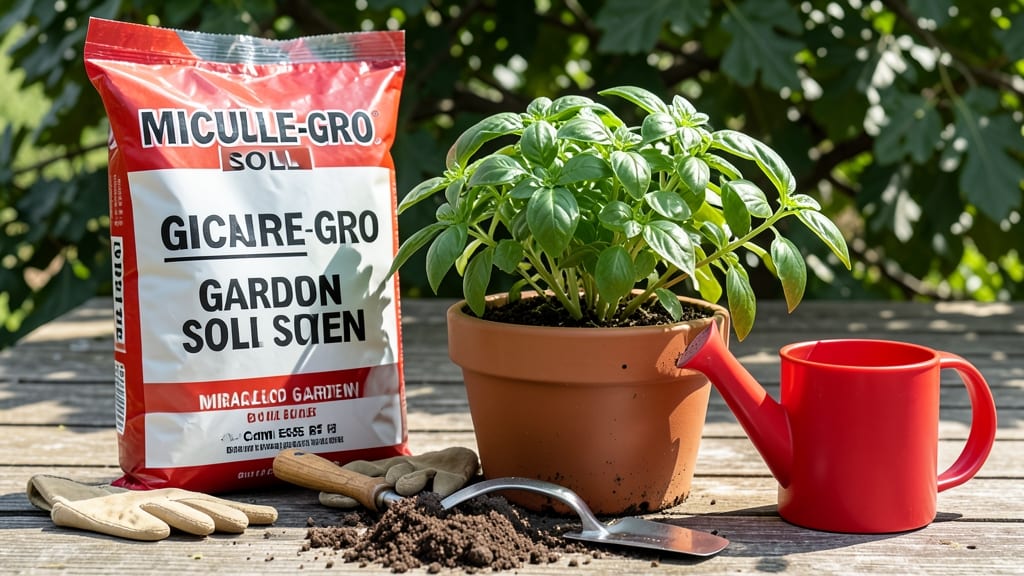
You can use Miracle-Gro Garden Soil in containers, but its heavy clay content causes poor drainage and suffocates roots, limiting it to short-term use with moisture-loving plants like lettuce or seedlings. For most container gardens, a lightweight potting mix with added perlite works far better for long-term growth.
Miracle-Gro Garden Soil works in containers only as a temporary solution because its dense composition holds too much moisture, creating anaerobic conditions that stunt root development. 🌱 The clay-heavy formula, designed for in-ground planting, compacts easily in pots, cutting off oxygen to delicate roots.
Even with frequent watering adjustments, most container plants—especially herbs, tomatoes, and peppers—suffer from root rot within weeks. The solution? Mix in 20-30% perlite or vermiculite to create air pockets, or use it only for seed-starting trays where plants won't stay long-term.
For example, I've successfully used it for 6-week lettuce starts by adding a 1-inch layer of coarse sand to the bottom of pots, but I always transition seedlings to a 50/50 blend of potting mix and compost once they're ready for transplanting.
The key difference? Potting mixes are formulated to stay loose and drain quickly, while Miracle-Gro Garden Soil is built for heavy, moisture-retentive soil beds where drainage isn't as critical.
💡 In This Article
- Why Miracle-Gro Garden Soil Fails in Containers
- Best Alternatives for Container Gardening with Miracle-Gro
Why Miracle-gro garden soil fails in containers
Miracle-Gro Garden Soil contains about 40-50% clay, which makes it perfect for in-ground gardens where drainage isn't critical.
But in containers, this clay becomes a major problem because it compacts easily under the weight of plants and water, creating a dense barrier that suffocates roots. 🌱 When you water, the heavy clay holds moisture too tightly, preventing oxygen from reaching the root zone—a condition called hypoxia that stunts growth or triggers rot.
Most potting mixes, by contrast, contain only 10-20% clay or none at all, with the rest being organic matter and sand for aeration.
The issue isn't just drainage—it's the lack of air pockets. Healthy roots need a mix that stays 30-40% air-filled by volume. Miracle-Gro Garden Soil typically sits at 10-20% air when compacted, forcing roots to struggle for oxygen.
You'll notice this when plants wilt despite wet soil or develop yellowing leaves—a classic sign of root suffocation. Even adding extra watering holes won't fix the problem because the clay doesn't break down easily, unlike the fibrous structure of potting mixes.
Consider how this plays out with common container plants. Tomatoes, for instance, need well-aerated soil to support their deep root systems, yet they'll quickly develop blossom-end rot in heavy clay.
Herbs like basil require frequent watering, but the clay's poor drainage leads to soggy roots that rot within 2-3 weeks.
The contrast is stark when you compare it to a 50/50 mix of potting soil and perlite, which maintains 40% air space and drains freely—ideal for containers where water can't escape as easily as in open ground.
What most gardeners don't realize is how quickly this soil degrades in containers. The clay particles break down over time, clogging drainage holes and creating a crust that repels water.
After just 4-6 weeks of use, you'll often find the soil surface becoming impermeable, forcing you to dig in sand or vermiculite to restore drainage. This cycle of degradation makes Miracle-Gro Garden Soil a poor long-term choice, even for experienced container gardeners.
There's also the nutrient imbalance to consider. While Miracle-Gro provides controlled-release fertilizer, the clay binds nutrients too tightly, making them less available to plants. In containers, where nutrients leach out faster, this means your plants may show deficiency symptoms (like purple stems in peppers) even when you're adding fertilizer.
The solution? Amend the soil with compost or worm castings to improve nutrient availability—but this only masks the deeper aeration problem.
The bottom line is that Miracle-Gro Garden Soil was engineered for in-ground planting, where its moisture retention and nutrient release work perfectly.
In containers, those same qualities become liabilities, turning a reliable soil into a root-smothering obstacle. 🌿 The moment you see your container plants struggling despite your best watering efforts, you'll know the soil composition is the real culprit.