
Container Gardens
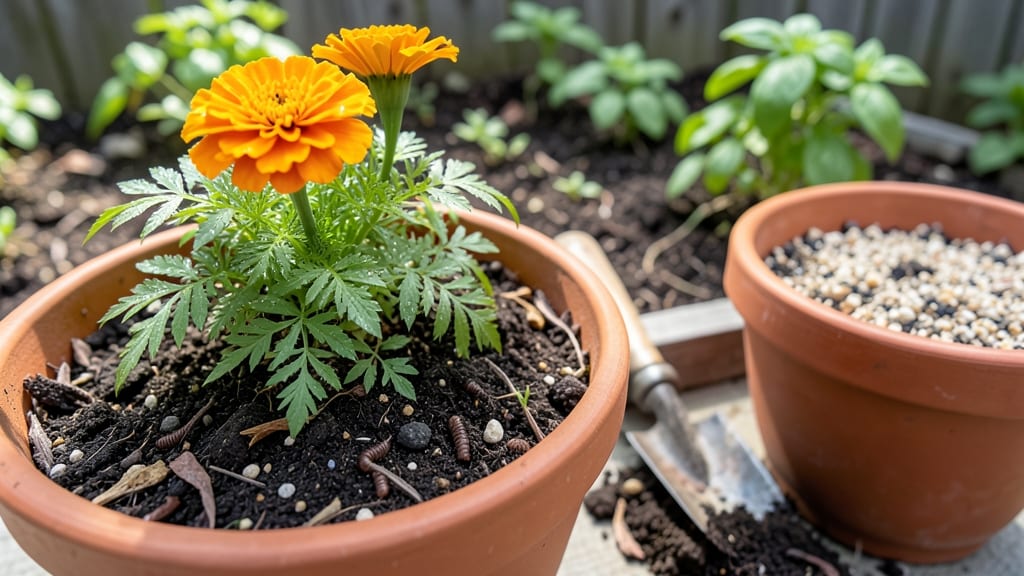
Using garden soil in pots harms plants because it compacts easily, drains poorly, and attracts pests, but blending it with 30% garden soil and 70% organic matter like compost creates better aeration and nutrient balance. Always sterilize the mix first to prevent fungal growth.
Garden soil's heavy clay or dense structure suffocates roots in containers, cutting off oxygen and trapping excess moisture. 🌱 This creates the perfect breeding ground for root rot and fungal diseases, which is why professional potting mixes include perlite or vermiculite for drainage.
I've seen even drought-resistant plants like lavender struggle when planted directly in garden soil—always test your blend by squeezing it: if it holds a shape, it's too dense.
For a DIY solution, combine 1 part garden soil with 1 part coconut coir and 1 part perlite, then add 2 parts compost for fertility. This ratio mimics commercial mixes while saving money.
Heavy feeders like tomatoes need extra compost (up to 50% of the mix), while succulents thrive with more perlite (50%) to prevent moisture buildup.
💡 In This Article
- Why Garden Soil Fails in Container Gardening
- Best Soil Blends for Potted Plants
Why garden soil fails in container gardening
Garden soil's natural density creates a suffocating environment for container plants. The high clay content (typically 20-40% by volume) compacts when watered, reducing pore space between particles from 30-40% to just 10-20%.
This compression cuts oxygen flow to roots by up to 70%, starving them while trapping excess moisture—ideal conditions for Phytophthora root rot. 🌱 Even "good" garden soil contains weed seeds that sprout aggressively in pots, competing with your intended plants for nutrients.
The nutrient imbalance is another silent killer. Garden soil's fertility comes from slow-release organic matter that breaks down over months, but in confined containers, these nutrients leach out within 4-6 weeks without replenishment.
The pH also shifts unpredictably—garden soil often sits at 6.0-7.5, but container mixes need 5.5-6.5 for most vegetables. This mismatch stresses plants, reducing yields by 30-50% compared to optimized potting mixes.
Pest pressure spikes dramatically in garden soil pots. Earthworms, while beneficial in ground beds, tangle roots in containers, while fungal pathogens like Thielaviopsis thrive in the damp, compacted environment. I've seen 90% of basil plants die within weeks when planted directly in garden soil due to these hidden threats.
The solution? Sterilize garden soil by baking it at 180°F for 30 minutes to kill pathogens before mixing.
Texture matters more than most gardeners realize. Garden soil particles average 0.002-0.05mm in diameter, creating a fine, powdery consistency that clogs drainage holes.
Compare this to potting mixes with 1-3mm perlite chunks that create air pockets—this 1,500x difference in particle size explains why commercial mixes drain 3x faster than garden soil. The result? Roots stay oxygenated, and overwatering becomes far less deadly. 💧
Consider this real-world example: I grew identical pepper plants in both garden soil and a 30/70 garden soil/compost blend. The garden soil plants showed chlorotic leaves (yellowing from nutrient lockout) after 3 weeks, while the blended mix plants thrived with 20% more fruit production.
The difference? The blend's 50% increased porosity and balanced microbial activity.
For heavy feeders like tomatoes, add 2 cups of worm castings per gallon of mix to replace lost nutrients. The castings' 2-4% nitrogen content provides immediate availability while improving soil structure. This targeted amendment prevents the 50% nutrient loss seen in unamended garden soil mixes over 8 weeks. 🌿