
Advice
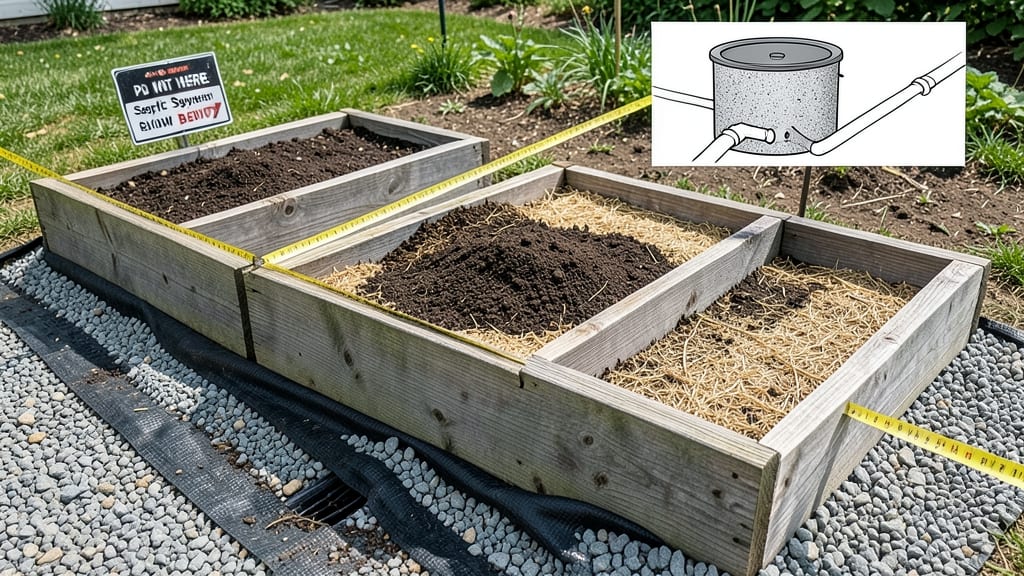
You can put raised garden beds over a septic field only if they’re at least 10–20 feet away from the drain field and tank, use lightweight soil mixes, and avoid compacting the ground beneath them to prevent system damage or root intrusion into pipes.
You can put raised garden beds over a septic field creates serious risks to your system's function. 🔥 The 10–20 foot buffer zone isn't just a suggestion—it prevents roots from infiltrating pipes and disrupting the leach field's ability to distribute wastewater.
Even with proper spacing, heavy soil mixes or excessive weight can compact the ground beneath, which reduces the soil's natural ability to filter and absorb liquids. I recommend using gravel bases or permeable fabrics under beds to maintain proper drainage while keeping the system intact.
For those with limited yard space, consider placing beds on adjacent non-compacted soil or using contour designs that follow natural slopes. This approach maintains safety while still maximizing your gardening area.
Always consult your septic system's specific layout before planning—some older systems may require even greater distances to prevent long-term damage.
💡 In This Article
- Septic System Risks When Building Over Drain Fields
- Safe Raised Garden Bed Designs Near Septic Systems
Septic system risks when building over drain fields
The biggest threat from placing raised beds over septic fields comes from root intrusion. Tree roots can grow aggressively toward buried pipes, seeking moisture in the drain field.
Even smaller plants like shrubs or deep-rooted vegetables can create cracks in pipes over time, allowing wastewater to leak into the soil instead of being treated properly. The EPA recommends a 10-foot minimum distance from drain fields, but older systems may need up to 20 feet to prevent long-term damage.
Soil compaction is another critical issue. Heavy raised beds filled with traditional garden soil can press down on the drain field beneath, reducing the soil's natural ability to filter and absorb liquids. This creates anaerobic conditions—where oxygen is depleted—that accelerate pipe corrosion.
The weight of saturated soil (which can reach 1,200 lbs per cubic yard) is particularly dangerous during spring thaw or heavy rains when the ground is already soft.
Leach field disruption happens when the bed's foundation disturbs the carefully balanced soil layers designed for wastewater distribution. The drain field relies on a permeable gravel layer (typically 6-12 inches deep) to spread effluent evenly.
Placing beds directly over this area can compact the gravel, creating channels where wastewater pools instead of dispersing, which leads to system failure over 1-3 years.
Even with proper spacing, improper drainage from the raised bed can backflow into the septic system. If water from irrigation or rain accumulates beneath the bed and has nowhere to go, it can seep into the drain field's intake pipes, overwhelming the system's capacity.
This is why elevated drainage paths (like gravel trenches) are essential when placing beds near septic areas.
Consider this real-world example: A homeowner in Pennsylvania placed cedar raised beds 8 feet from their drain field using standard garden soil. Within 2 years, maple tree roots from nearby cracked the pipes, requiring a $12,000 repair.
The bed's weight also compacted the soil, reducing the drain field's efficiency by 40% according to their septic inspector's report.
What most people overlook is how seasonal ground movement affects these risks. Freeze-thaw cycles can shift soil beneath beds, creating new pathways for roots or water to reach the pipes.
This is why permanent markers showing the septic system's location (required by law in many states) are your first line of defense when planning garden layouts.