
Landscaping
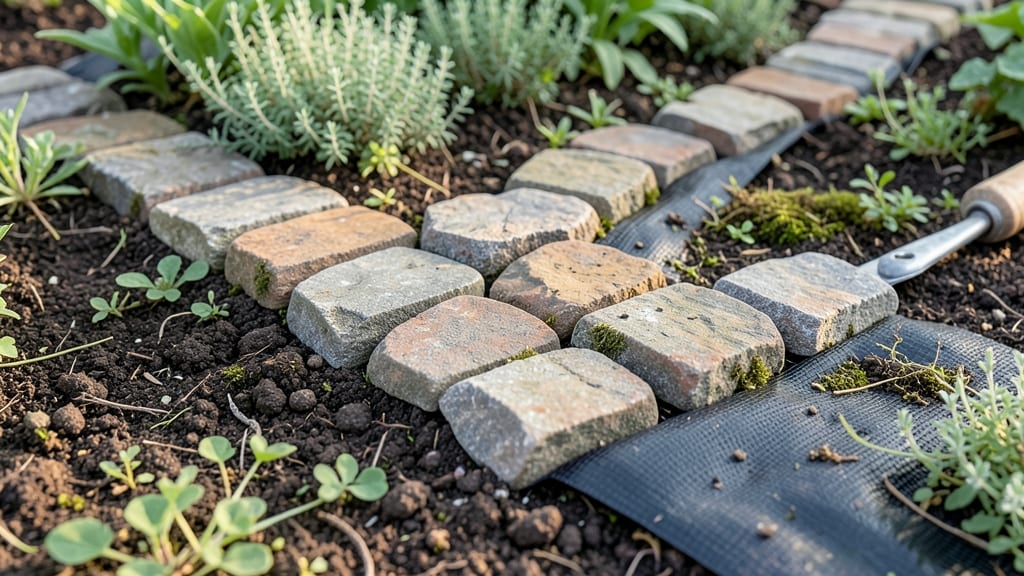
Cobble garden edging creates clean borders for pathways and flower beds using natural stone, offering long-lasting durability that resists erosion and weed intrusion when installed correctly.
This classic landscaping technique uses irregularly shaped stones to frame garden spaces, blending rustic charm with functional benefits. 💫 The right cobble choice depends on your climate—harder stones like granite handle freeze-thaw cycles better, while softer slate offers a more natural, uneven look.
I recommend starting with a trench slightly deeper than your stones to ensure stability, then layering landscape fabric underneath to block weeds. For extra security, top with a thin layer of sand before setting each stone, which prevents shifting over time.
One common mistake is skipping the fabric layer, which leads to weed growth between stones within months. If you're working with uneven terrain, consider using a flexible edging material like plastic or metal along the bottom to maintain a consistent height.
For high-traffic areas, larger stones (2-3 inches) provide better durability than smaller ones, though they require more precise placement.
💡 In This Article
- Best Cobble Materials for Long-Lasting Garden Edging
- Step-by-Step Guide to Installing Cobble Edging
Best cobble materials for long-lasting garden edging
When selecting cobble materials, the key factors are hardness (measured on the Mohs scale), weather resistance, and how the stone interacts with your local climate.
For example, granite scores 6-7 on the Mohs scale, making it ideal for regions with freeze-thaw cycles—its crystalline structure resists cracking when water expands in pores during winter. In contrast, slate (3-4 Mohs) offers a softer, more affordable option but may crumble over time in harsh climates unless sealed properly.
Each material brings distinct aesthetic qualities too. River rock (smooth, rounded stones) creates a natural, organic look that blends seamlessly with water features or woodland gardens, while bluestone (flat, layered stones) provides a polished, uniform edge perfect for geometric designs. Fieldstone (irregularly shaped, uncut stones) adds rustic charm but requires more labor to arrange evenly.
The cost varies widely: granite averages $3-$6 per square foot installed, while fieldstone can drop to $1-$3 per square foot due to its irregularity and lower processing needs.
What most people overlook is how stone porosity affects installation. Porous materials like slate absorb moisture, which can lead to moss growth between stones if not treated with a waterproofing sealant. For high-traffic areas, I recommend granite or river rock—their low porosity means less maintenance and longer lifespan.
The trade-off? Granite's uniform shape makes precise placement easier, while fieldstone's randomness creates a more organic, "wild" garden feel that some homeowners prefer.
Consider your garden's color palette too. Bluestone's deep gray-blue hues complement modern designs, while fieldstone's earthy browns and grays suit cottage-style gardens. For a neutral look, granite's range of colors (from white to deep red) offers versatility.
Pro tip: Test a few samples against your garden's existing stones or plants—natural light can make colors appear different in situ than in a catalog.
Another critical factor is stone size. Larger cobbles (3-4 inches) provide better stability for pathways but require deeper trenches (typically 4-6 inches deep), while smaller stones (1-2 inches) work well for flower bed edges but may shift more over time.
For windy areas, I suggest using stones with interlocking shapes (like certain river rock varieties) to reduce movement during storms.
Finally, think about local availability. Sourcing stone from regional quarries reduces transportation costs and environmental impact. For instance, bluestone is abundant in Pennsylvania, while granite dominates in New England.
Check with local landscaping suppliers—they often offer free samples and can advise on the best match for your soil type and drainage patterns.