
Tools
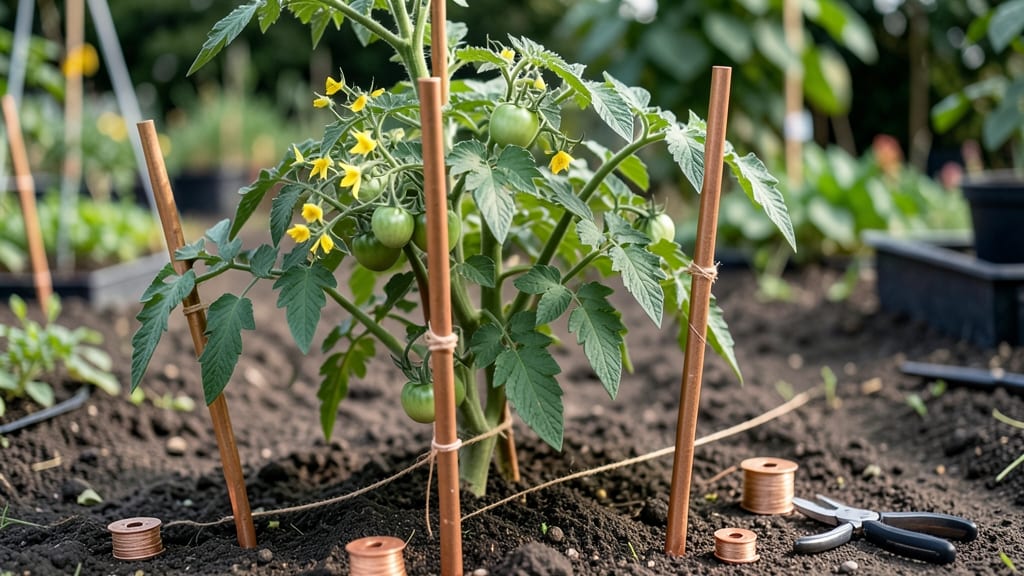
These copper garden stakes benefits provide unmatched durability, natural rust resistance, and long-term performance—perfect for supporting heavy vines, trellises, and climbing plants while preventing fungal growth and pest issues.
The benefits of copper garden stakes lie in their natural patina—a protective layer that forms over time and shields the metal from moisture and oxidation. 🔥 Unlike iron or steel, which rust quickly in damp soil, copper actually becomes more stable with age, making it ideal for outdoor use.
I've seen stakes last decades with minimal care, even in coastal areas where salt accelerates corrosion in other metals.
Beyond longevity, copper's antimicrobial properties create a hostile environment for common garden pests like aphids and fungal spores. This means fewer chemical treatments and healthier plants overall. The stakes also heat up in sunlight, which can deter climbing insects naturally—a bonus for organic gardeners.
💡 In This Article
- Why Copper Resists Rust and Corrosion Better Than Other Metals
- Best Uses for Copper Garden Stakes in Plant Cultivation
Why copper resists rust and corrosion better than other metals
Copper's rust resistance stems from its unique chemical reaction with oxygen and moisture. When exposed to air, copper oxidizes to form copper oxide, which then reacts with carbon dioxide to create a greenish-blue patina.
This patina isn't just surface-level—it's a dense, protective layer that actually seals the metal beneath, preventing further corrosion. Unlike iron or steel, which develop porous rust that flakes away, exposing fresh metal to oxidize again, copper's patina stays intact and continues shielding the stake for decades. 🔥
Let's compare copper to common alternatives: Steel stakes rust within 1-3 years in damp soil, while aluminum corrodes unevenly due to its reactive surface. Copper, however, maintains its structural integrity for 20-30 years or more.
The patina formation process begins within months but stabilizes completely in about 5-10 years, creating a self-repairing barrier. Even in harsh coastal environments where salt accelerates corrosion in other metals, copper stakes show minimal degradation because the patina resists chloride ions that would normally attack the metal.
Temperature plays a surprising role too. Copper's thermal conductivity means it heats up quickly in sunlight, which helps evaporate moisture from its surface—reducing the conditions that enable rust formation. Meanwhile, cold temperatures actually strengthen copper's resistance by slowing down oxidation reactions.
This dual protection makes copper ideal for gardens in both hot climates (like Arizona) and cold regions (like the Pacific Northwest), where temperature fluctuations would stress other metals. The material's natural properties create a perfect storm of protection against the elements.
What most gardeners don't realize is how copper's antimicrobial properties work alongside its corrosion resistance. The same oxidation process that creates the patina releases trace copper ions into the surrounding soil.
These ions create a 1-2 inch "protected zone" around the stake where fungal spores and bacterial growth are inhibited—a natural defense mechanism that extends beyond just the metal itself. This dual functionality explains why copper stakes often outperform treated wood or plastic alternatives in long-term garden applications.
For visual comparison, imagine three stakes side-by-side after five years: A steel stake would show significant rust flaking, an aluminum stake might develop pitting corrosion, while the copper stake would display its characteristic patina with no structural compromise.
The key difference lies in copper's ability to convert its initial oxidation into a protective layer rather than a destructive process. This chemical alchemy is what makes copper stakes the gold standard for garden infrastructure. ✨
When selecting copper stakes, look for 99.9% pure copper—any alloys with zinc or nickel can compromise the patina formation process. The thicker the gauge (typically 16-18 gauge for stakes), the longer they'll last, as thicker metal takes longer for corrosion to penetrate completely.
This attention to material purity and thickness explains why premium copper stakes cost more upfront but save money over their 20-30 year lifespan compared to cheaper alternatives.