
Tools
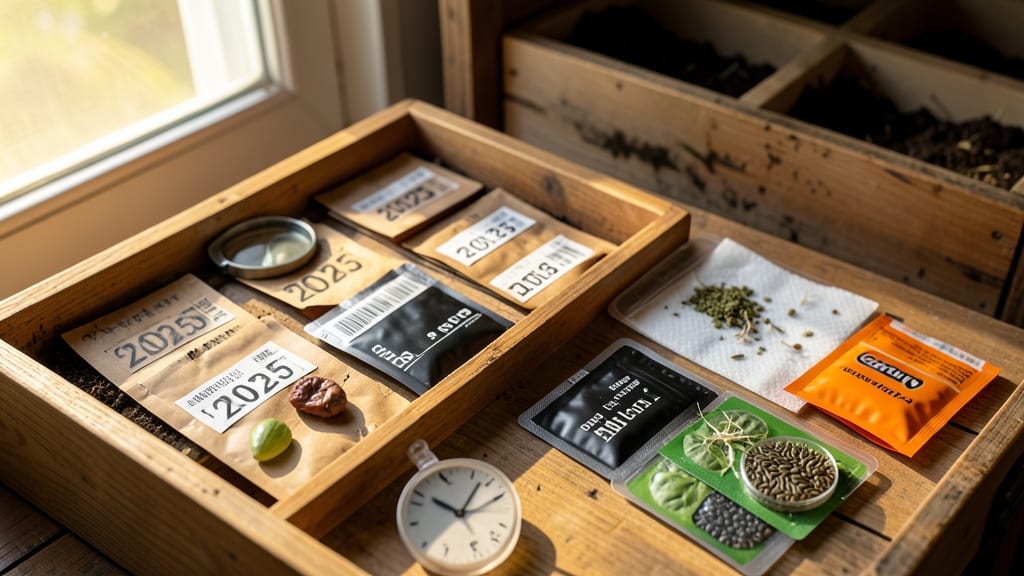
Garden seeds do go bad over time, losing their ability to sprout within 1-5 years unless stored properly. Factors like moisture, temperature swings, and oxygen exposure accelerate this process, while controlled conditions can preserve seeds for much longer.
Seeds degrade through a natural aging process called desiccation and oxidation, where their internal moisture evaporates and cellular structures break down. 🌱 The good news? Some seeds—like peas and beans—can last 3-5 years, while others, such as lettuce or onions, may only stay viable for 1-2 years.
Even "dormant" seeds need protection from light and temperature fluctuations, which is why I always store mine in a cool, dark place (like a sealed container in the fridge) to slow the clock.
Beyond time, humidity is the silent killer—even slight dampness triggers mold or rot, rendering seeds useless. I’ve learned the hard way that paper envelopes aren’t enough; airtight containers with silica gel packets are my go-to for long-term storage.
Labeling seeds with their purchase date and germination test results (a simple soil test) helps track freshness without guesswork.
💡 In This Article
- Seed Viability Timeline: How Long Do Garden Seeds Last?
- Best Seed Storage Practices to Extend Lifespan
Seed viability timeline: how long do garden seeds last?
The lifespan of garden seeds depends on their internal moisture content and cellular integrity. Seeds contain abscisic acid, a natural preservative that slows aging, but this depletes over time.
For example, bean seeds typically maintain viability for 3-5 years when stored properly, while lettuce seeds often degrade within 1-2 years due to their delicate embryonic structure.
The key factor is the seed's moisture content—most seeds should have 5-10% moisture or less to prevent fungal growth and cellular damage. 🌱
Oxygen exposure accelerates seed deterioration through oxidation, which breaks down fatty acids in the seed's membrane. Seeds with higher oil content, like tomato seeds, degrade faster (often 2-3 years) compared to low-oil seeds like carrot seeds (which can last 4-5 years).
Temperature also plays a critical role: every 10°F increase above 32°F doubles the aging rate. That’s why seeds stored at 40°F or below (like in a fridge or freezer) can last 2-3 times longer than those kept at room temperature.
Germination rates provide a clear indicator of seed freshness. A 90% germination rate is ideal for planting, but this drops to 70-80% after 1-2 years for most seeds.
To test viability, place 10 seeds in a damp paper towel at 70°F for 5-7 days—if fewer than 70% sprout, it’s time to replace them. This simple test saves money and frustration compared to planting entire packets and hoping for success. 💡
Light exposure also impacts longevity, as ultraviolet rays degrade seed proteins and DNA. Seeds stored in opaque containers (like glass jars or metal tins) last significantly longer than those in clear plastic bags. Even indirect sunlight can reduce viability by 10-20% over a year.
For long-term storage, pairing airtight containers with silica gel packets (to absorb moisture) creates an ideal environment, extending seed life by up to 50% compared to standard paper envelopes.
Extreme conditions reveal the most dramatic differences. Seeds stored in humid climates (above 60% humidity) can lose viability in as little as 6-12 months, while those kept in desert-like conditions (below 30% humidity) may last 5-10 years.
For example, heirloom tomato seeds from a well-sealed container in a cool basement can remain viable for 5+ years, whereas the same seeds left in a garage during summer might fail to sprout after just 2 years. 🌡️