
Companion Plants
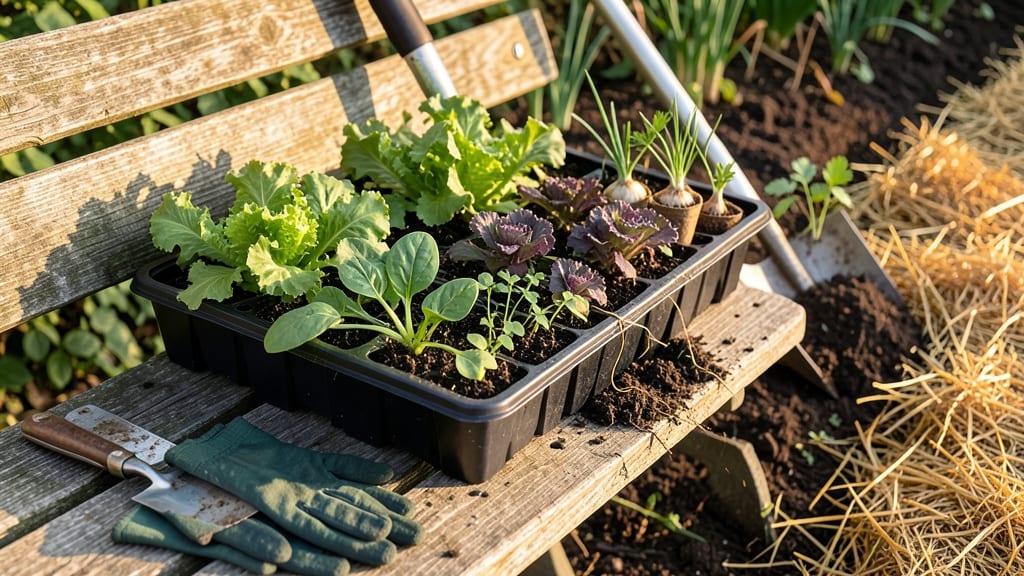
To plant a vegetable garden in Kansas, time your planting around frost dates: sow cool-season crops like spinach and peas 4-6 weeks before the last spring frost (usually mid-March to early April), and warm-season crops like tomatoes and peppers after the last frost (late April to mid-May). Always verify with local USDA Zone 5-7 frost data for precise timing.
Kansas's growing season varies by region, but most areas fall within USDA Zones 5-7, where frost can linger into April. 🌱 The key is understanding your specific last frost date—this determines whether your seedlings will survive or wither.
For example, if you're in western Kansas (Zone 6), you might plant early peas in late February, while eastern Kansas (Zone 5) gardeners should wait until March. Microclimates near buildings or hills can also shift frost dates by a week or more, so always scout your yard before planting.
Another pro tip: use succession planting for crops like lettuce or radishes. This means sowing new seeds every 2-3 weeks after your initial planting to ensure a continuous harvest. For warm-season crops, wait until the soil reaches at least 50°F—a soil thermometer is your best friend here.
And don't forget about row covers! They can extend your growing season by 2-4 weeks in both spring and fall, giving you more time to grow veggies before frost hits again.
💡 In This Article
- Kansas Frost Dates and USDA Planting Zones
- Best Vegetables to Plant by Kansas Season
Kansas frost dates and USDA planting zones
Kansas's frost patterns are shaped by its continental climate, where cold Arctic air clashes with warmer southern winds. The state spans USDA Zones 5-7, with western regions (like Garden City) typically in Zone 6, while eastern areas (like Kansas City) fall into Zone 5.
The last spring frost usually arrives between mid-March and early April, but this can shift dramatically—some years see frost as late as May 1 in northern Kansas. This variability is why gardeners rely on local records from sources like the National Oceanic and Atmospheric Administration (NOAA) or university extensions.
The science behind frost timing involves temperature inversion layers—cold air sinks and pools in low areas, while hillsides warm faster. This creates microclimates where your backyard might be 3-5°F warmer than the official weather station reading.
For example, a south-facing slope in Wichita (Zone 7) can support tomatoes 2 weeks earlier than the surrounding flatland. To test your microclimate, place a frost-sensitive plant like marigolds in different spots—if they survive overnight temperatures below 32°F, you've found a warmer pocket. 🌿
Soil temperature is equally critical—most vegetables need soil at 50°F before planting, while warm-season crops like peppers require 60°F. A soil thermometer (inserted 2 inches deep) reveals when your garden is truly ready.
In Kansas, this often means waiting until late April to early May for tomatoes, even if the air feels warm. The 10-day forecast rule is another gardener's trick: if nighttime lows stay above 40°F for that period, you're likely safe to plant frost-sensitive crops.
Historical frost data shows Kansas experiences an average of 70-90 frost days annually, but urban heat islands can reduce this by 10-15 days in cities like Topeka. This urban advantage comes from buildings and pavement radiating heat.
Conversely, rural areas with open fields may see frost 7-10 days later in spring. To account for this, many Kansas gardeners use the "3-4-5 Rule": count back 3 weeks for hardy crops, 4 weeks for semi-hardy ones, and 5 weeks for frost-tender varieties from your last expected frost date.
For precision, consult your county's USDA Plant Hardiness Zone Map—Kansas City sits in Zone 6a (-10°F to -5°F), while Dodge City is in Zone 7a (-5°F to 0°F).
The 10-year average for last spring frost in Manhattan (Zone 6b) is April 15, but individual years can vary by 2 weeks either way. This is why experienced gardeners plant test rows of fast-growing crops like radishes—if they thrive, it's a green light for more sensitive plants. 🌱
One often-overlooked factor is radiation frost, which occurs on clear nights when heat escapes rapidly. These can happen as late as June in Kansas, catching off-guard gardeners with tender seedlings.
To protect your plants, use frost cloths (which raise temperatures by 5-8°F) or even old bedsheets draped over hoops. In my own garden, I've seen tomato plants survive 28°F nights with this protection—something unthinkable without it.
This simple technique can extend your growing season by 4-6 weeks in both spring and fall.