
Watering
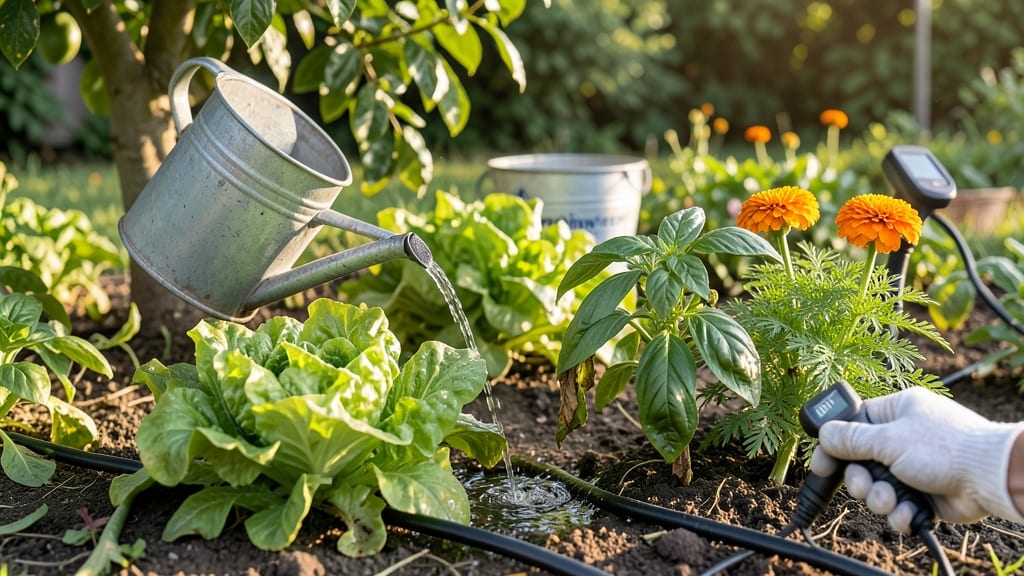
You don’t need to water your garden every day unless you’re facing extreme heat, sandy soil, or newly planted seeds. Most plants grow best with 1-1.5 inches of water per week, adjusted for your local climate and soil drainage. Too much water actually damages roots more often than too little.
Daily watering creates more problems than it solves for most gardens. 💧 The key is understanding your soil type—sandy soils dry out fast and need frequent shallow watering, while clay holds moisture longer and requires deeper, less frequent soaks.
I’ve seen firsthand how overwatering leads to root rot, especially in humid climates where water doesn’t evaporate quickly. Instead of sticking to a rigid schedule, check the top inch of soil: if it’s dry, that’s your cue to water.
Seasonal changes also shift watering needs dramatically. During summer’s peak heat, you might need to water twice weekly, but winter’s cooler temps and rain often mean you can skip watering entirely. 🌱 Pay attention to your plants’ signals—wilting leaves usually mean thirst, while yellowing or mold suggests overdoing it.
The goal is consistent moisture at the root level, not a rigid daily routine.
💡 In This Article
- How Soil Type and Climate Determine Watering Frequency
- Smart Watering Schedules for Different Plants and Seasons
How soil type and climate determine watering frequency
The foundation of proper watering lies in understanding your soil's composition, which directly impacts how quickly water drains or evaporates. Sandy soils, made up of large particles, drain water rapidly—often within 30-60 minutes—requiring frequent, shallow watering to keep moisture near surface roots.
In contrast, clay soils with tiny particles hold water like a sponge, staying damp for 5-7 days after a deep soak. Loamy soils, the ideal middle ground, balance drainage and retention, typically needing water every 3-5 days depending on rainfall.
Climate plays an equally critical role, especially evaporation rates. In arid regions like the Southwest U.S., water can evaporate 2-3 times faster than in humid coastal areas, meaning plants may need watering every 2 days instead of weekly.
Temperature matters too—roots in 85°F+ soil struggle to absorb water efficiently, while cooler 60-70°F soil promotes better uptake. I’ve noticed that in my own garden, morning watering (before 10 AM) minimizes evaporation loss by up to 30% compared to afternoon sessions.
Seasonal shifts create dramatic changes in watering needs. During summer’s peak heat, even drought-resistant plants may require 1.5-2 inches of water weekly, while winter’s cooler temps and natural rainfall often reduce needs to 0.5 inches or less.
The key is observing your garden’s microclimate—shady areas stay moist longer than sunbaked spots, and windy locations lose water faster. A simple soil moisture meter (costing $10) reveals when to water, eliminating guesswork.
Root zone depth is another critical factor. Shallow-rooted plants like lettuce need frequent, light watering to keep the top 2 inches moist, while deep-rooted trees benefit from deep watering every 7-10 days to encourage strong root growth.
The "drip line" (where a tree’s branches extend) is often the best place to water deeply—this mimics natural rainfall patterns and prevents surface runoff.
Humidity levels create invisible watering adjustments. In high-humidity zones (like the Southeast U.S.), water evaporates slowly, so plants may only need watering every 5-7 days even in summer. Conversely, low-humidity desert climates demand daily checks for wilting.
The 1-1.5 inch weekly rule works best when adjusted for your local climate—check your area’s evapotranspiration rate (ET rate) for precise guidance.
Special cases like monsoon seasons or drought conditions require temporary adjustments. During monsoons, I’ve seen gardens thrive with no supplemental watering for weeks, while drought years might need drip irrigation systems delivering 0.5 inches daily to prevent stress.
The goal is always to match your watering routine to your soil’s capacity and climate’s demands—not a one-size-fits-all daily schedule.