
Tools
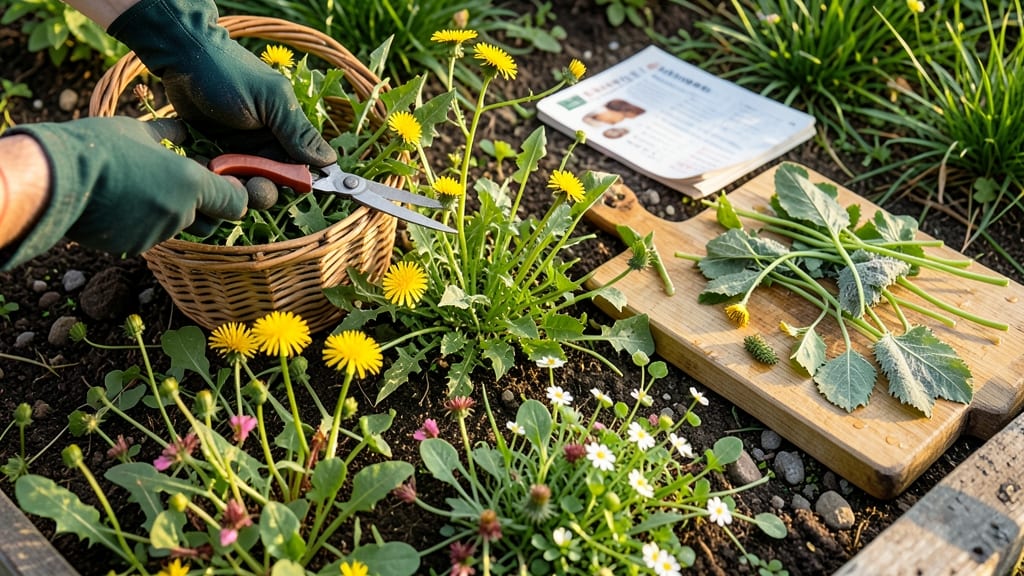
Eating weeds from the garden is safe only if properly identified, as many edible varieties like dandelion and purslane offer nutritional benefits, while toxic lookalikes such as poison hemlock require careful distinction before consumption.
Before you even think about adding garden weeds to your plate, you need to know the difference between safe greens and their deadly doubles. 🔥 Many common "weeds" like dandelion and purslane pack nutrients—dandelion greens are rich in vitamin K and iron, while purslane contains omega-3s—but their toxic lookalikes (like poison hemlock) can cause serious illness.
I always check three key features: leaf shape, stem texture, and root structure. For example, dandelion leaves are deeply lobed and grow in a rosette pattern, while poison hemlock has smooth stems with purple spots and a hollow core.
When in doubt, I avoid it completely.
Once you've confirmed safety, you can start harvesting.
The best time to pick edible weeds is early in the morning after the dew has dried, when their nutrients are most concentrated. Dandelion leaves work well in salads or sautéed with garlic, while purslane adds a tangy crunch to wraps or pestos.
Store them in the fridge for up to 5 days, or freeze them in ice cube trays with olive oil for later use. Just remember: never eat anything from chemically treated lawns, and always wash garden weeds thoroughly to remove dirt and potential pests.
💡 In This Article
- Identifying Edible Garden Weeds vs Toxic Lookalikes
- Nutritional Benefits and Culinary Uses of Common Edible Weeds
Identifying edible garden weeds vs toxic lookalikes
Visual identification starts with the leaf structure—edible weeds often have distinct patterns that set them apart. Take dandelion, for example: its leaves form a deep, jagged lobed shape resembling a jagged saw blade, growing in a tight rosette at ground level.
In contrast, poison hemlock (its deadly lookalike) has finely divided leaves arranged in triplets along a smooth, purple-spotted stem that grows 3-8 feet tall. The key difference? Dandelion leaves are hairless and grow directly from the root, while hemlock's leaves attach to the stem with a visible petiole.
The stem texture is another critical clue. Safe edibles like lambsquarters have thick, fleshy stems with a slightly waxy coating, while water hemlock (another dangerous mimic) features a hollow core and a purple-tinged base.
Run your thumb along the stem: edible weeds often feel slightly rough or downy, while toxic varieties are smooth or slick. 🌱 For instance, chickweed has tiny, oval leaves with a silvery sheen and stems that sprawl along the ground, whereas its toxic cousin, mouse-ear hawkweed, has fuzzy leaves and a bitter taste.
Root examination can be a game-changer. Edible weeds like purslane have thick, fleshy roots that store moisture, while toxic plants often develop taproots with a woody texture. Dig carefully: dandelion roots are long and conical, perfect for roasting, whereas hemlock's roots are fibrous and deeply branched.
Always pull weeds gently—if the root snaps easily, it's a red flag for toxicity.
Scent and taste are final checks, but use them cautiously. Many edible weeds (like stinging nettle) have a sharp, peppery aroma when crushed, while toxic plants often smell musty or bitter.
Before tasting, rub a small leaf between your fingers: a mild, earthy scent suggests safety, but a chemical or foul odor means avoid it. Never taste raw plants directly—always cook a tiny piece first to test for reactions.
Here’s a quick visual checklist for common edible weeds:
- Dandelion: Deeply lobed leaves, yellow flowers, no hollow stems
- Purslane: Succulent, red-tinged stems, small oval leaves
- Lambsquarters: Triangle-shaped leaves, white sap when broken
- Chickweed: Tiny, silvery leaves, sprawling growth habit
When in doubt, consult a local foraging guide or app like iNaturalist—many regions have unique toxic plants that don’t fit standard profiles. Always cross-reference with three reliable sources before consuming anything new. 🌿