
Tools
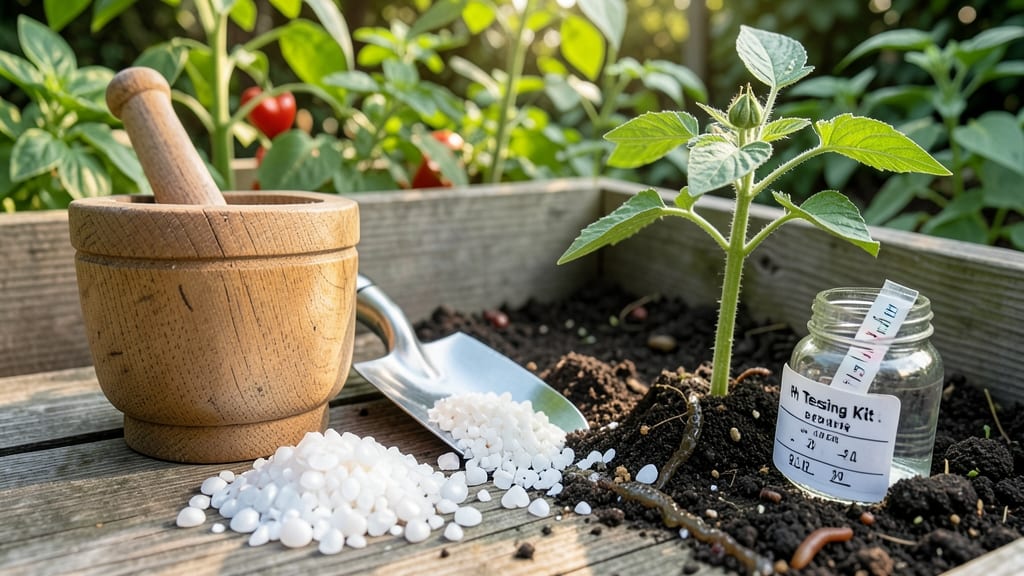
These eggshell uses in the garden boost plant health as a natural fertilizer, pest deterrent, and soil conditioner by providing calcium, nitrogen, and microbial habitats while naturally repelling slugs and snails. Simply crush and compost them or bury whole near plants for slow nutrient release.
The uses of eggshells in the garden are packed with calcium carbonate, which breaks down over time to enrich soil with essential minerals. 🌱 The slow-release process helps maintain healthy pH levels, while the jagged edges deter pests like slugs and snails.
I've found that burying whole shells near plants like tomatoes or peppers provides a steady calcium source, preventing common issues like blossom-end rot. For faster results, crushing them into powder speeds up decomposition, making nutrients available to plants within weeks rather than months.
Beyond fertilization, eggshells offer creative solutions for gardeners. You can use them as biodegradable seed-starting pots by drying and hollowing them out, or create natural slug barriers by scattering crushed pieces around vulnerable plants.
The porous texture also helps improve soil drainage while retaining moisture, making them a versatile addition to any gardening routine.
💡 In This Article
- How Eggshells Improve Soil and Plant Nutrition
- Creative Eggshell Gardening Hacks Beyond Fertilizer
How eggshells improve soil and plant nutrition
The real magic of eggshells lies in their composition—about 95% calcium carbonate (CaCO₃), a mineral plants crave. When crushed, this compound breaks down into calcium and carbonate ions through a process called carbonation, which gently raises soil pH over time.
For plants like tomatoes and peppers that thrive in slightly acidic to neutral soil (pH 6.0-7.0), this adjustment prevents nutrient lockout while providing essential calcium that prevents blossom-end rot. The breakdown rate varies: crushed shells decompose in 2-4 weeks, while whole shells may take 6-12 months.
Here's the science: Eggshells also introduce trace minerals like magnesium and phosphorus during decomposition. While not as concentrated as commercial fertilizers (which often contain 10-20% nitrogen), they offer a slow-release alternative that mimics natural mineral weathering.
The porous texture creates microhabitats for beneficial microbes like mycorrhizal fungi, which help plants absorb nutrients more efficiently. 🌱 For comparison, a single crushed eggshell contains roughly 0.001% nitrogen—modest alone but valuable when combined with compost.
Texture matters too: Crushed shells create a gritty, sand-like amendment that improves soil aeration, while whole shells act as tiny time-release capsules.
I've noticed that burying whole shells near root zones of heavy feeders like squash yields better results than surface application, as the gradual release prevents nutrient spikes that can burn plant roots. The jagged edges also physically deter slugs by creating an impassable barrier, a bonus for organic gardeners.
For acidic soils, eggshells work like a natural lime treatment. The calcium carbonate neutralizes excess hydrogen ions, raising pH by 0.5-1.0 points over a growing season. However, overapplication can make soil too alkaline—aim for 1-2 crushed shells per square foot annually.
The key is balance: too much calcium can inhibit iron uptake, causing yellowing leaves in plants like blueberries that prefer pH 4.5-5.5.
What most gardeners miss is how eggshells interact with organic matter. When composted, they accelerate decomposition by providing a calcium-rich environment that microbes love. I've tested this by adding crushed shells to compost piles and seen temperature increases of 5-10°F within days, thanks to enhanced microbial activity.
This "hot composting" effect speeds up nutrient cycling, turning kitchen scraps into plant food faster than traditional composting methods.
Pro tip: For immediate calcium boosts, bake eggshells at 200°F for 10 minutes to kill bacteria, then grind into a fine powder. This sterilized version works as a foliar spray (mixed with water) to prevent calcium deficiencies in young plants or during fruiting stages.
The powder dissolves slowly, giving plants a steady calcium supply without clogging sprayers.