
Vegetables
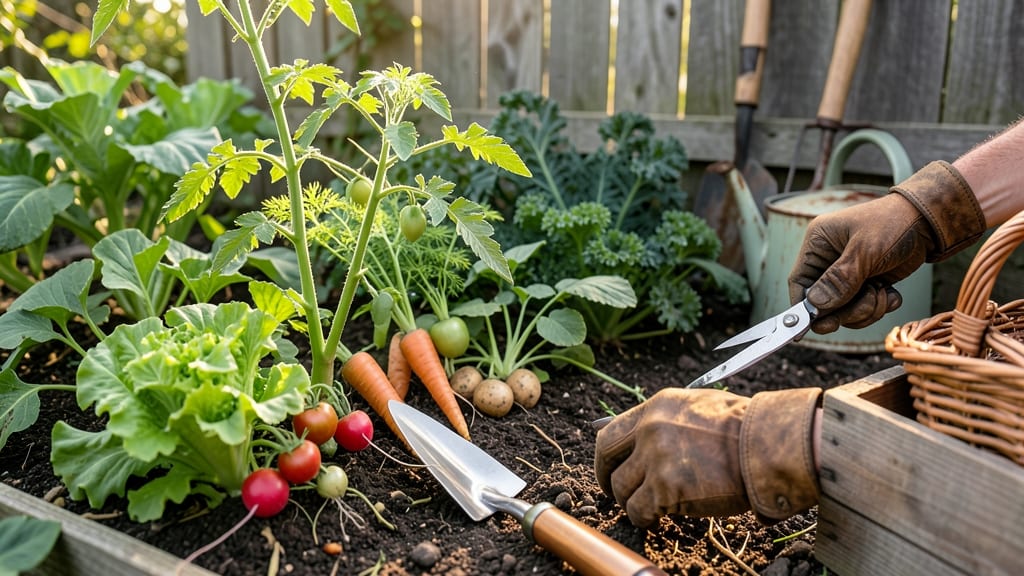
The Fenway Victory Gardens transformed Boston’s open spaces during WWII into high-yield vegetable plots using intensive planting, crop rotation, and community labor to combat wartime food shortages.
The Fenway Victory Gardens weren't just about growing food—they were a wartime innovation that turned baseball fields into productive farms. 🌱 By planting fast-growing crops like radishes and carrots in tight rows, gardeners maximized every square foot, while crop rotation kept soil healthy.
What's fascinating is how they engaged the entire community, from schoolchildren to volunteers, proving that collective effort could feed a city during crisis. These gardens didn't just supply vegetables—they became a symbol of resilience that still inspires urban farming today.
What makes their approach especially relevant now is how they adapted to Boston's climate and limited space. Techniques like companion planting (pairing crops to deter pests) and seed-saving preserved resources while boosting yields.
Modern gardeners can recreate this legacy by focusing on space-efficient varieties and community collaboration—just like the original Victory Garden movement intended.
💡 In This Article
- How Fenway Victory Gardens Maximized WWII Food Production
- Recreating Victory Garden Techniques Today
How Fenway victory gardens maximized WWII food production
The gardens achieved remarkable yields through intensive planting techniques that pushed the limits of Boston's climate. Gardeners planted crops in double rows—seeding radishes between carrots, for example—with just 6-inch spacing between plants.
This "square-foot gardening" approach (later popularized by Mel Bartholomew) maximized every square foot, producing 20-30 pounds of vegetables per 100 square feet—far exceeding traditional spacing. 🌱
Crop selection was strategic: fast-growing, nutrient-dense vegetables like radishes (ready in 25 days), carrots, cabbage, and kale took priority over slower-maturing crops. The gardens also implemented crop rotation to prevent soil depletion, with a four-year cycle that included legumes (like peas) to replenish nitrogen.
Even Boston's short growing season (average 140 frost-free days) wasn't a barrier—gardeners used cold-hardy varieties and extended seasons with simple row covers.
Water conservation was critical in a city where resources were scarce. Gardeners collected rainwater in barrels and used drip irrigation from repurposed household containers. They also practiced mulching with grass clippings or straw to retain moisture—a technique still used in modern drought-prone areas.
The labor force was equally innovative, with schoolchildren planting seeds after school and volunteers working in shifts to maintain the gardens during weekends. 💛
What set these gardens apart was their adaptability to urban constraints. Many plots were on sandy soil (common in Boston), so gardeners amended it with composted leaves and manure. They also grew vertical crops like pole beans and peas on trellises to utilize vertical space.
The result? Over 40,000 pounds of produce were harvested annually across the Fenway area alone—enough to feed thousands during rationing.
Community engagement was the backbone of their success. Local businesses donated supplies, while women's groups organized seed drives. Even the Boston Red Sox (who shared the field) contributed by allowing gardening during off-hours.
This collective effort wasn't just about food—it was about preserving morale during wartime shortages. The gardens proved that with organization, science, and community spirit, urban spaces could become productive farms. ✨
One often-overlooked detail is how the gardens preserved harvests for winter. Families canned vegetables using pressure cookers (a wartime innovation) and stored root crops like potatoes in cool, dark cellars. This extended the growing season's benefits well into the cold months, ensuring fresh produce was available year-round.
The techniques used—from seed selection to preservation—remain relevant for modern urban gardeners facing similar challenges. 💫