
Tools
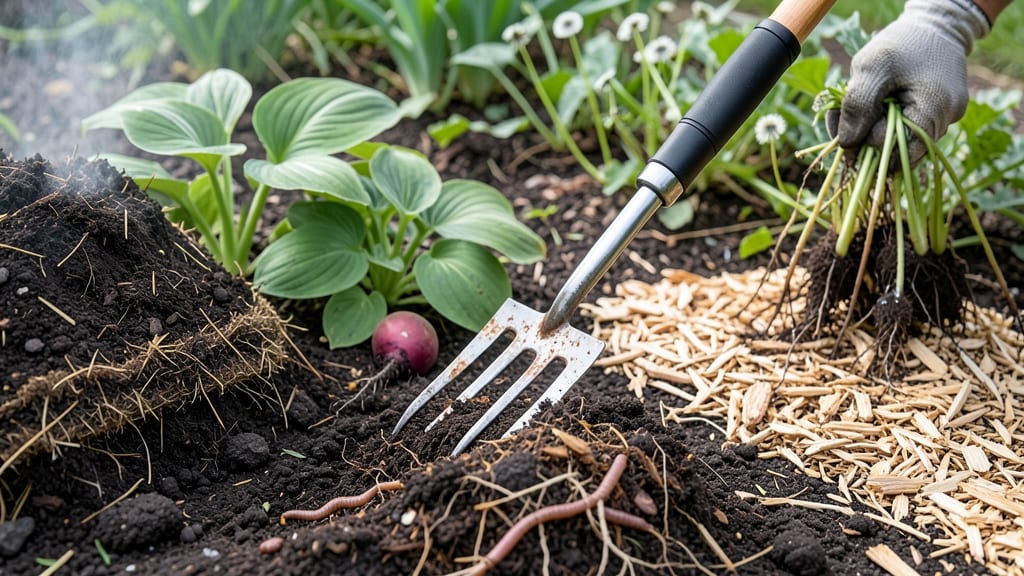
A garden fork has uses far beyond digging and weeding—it aerates compacted soil, lifts heavy mulch layers, and extracts weeds by the root without disturbing nearby plants. Its four sturdy tines also make it perfect for breaking up hardpan, turning compost, or even transplanting delicate seedlings with minimal root damage.
A garden fork's real magic lies in its multi-purpose tines, which act like soil surgeons. 🔥 Unlike a spade that slices through roots, the fork's prongs gently loosen dirt around plant roots, improving oxygen flow and drainage.
This makes it my go-to tool for revitalizing tired garden beds or prepping planting areas—especially in clay-heavy soils where compaction is a nightmare.
The secret's in the spacing: those 3-4 inch gaps between tines let you work between plants without disturbing their roots, which is why I always reach for it when transplanting seedlings or dividing perennials.
What surprises most gardeners is how versatile it becomes with a little creativity. Need to pry out stubborn rocks? The fork's leverage works like a crowbar. Mixing in compost or fertilizer? Its tines create perfect channels for even distribution.
Even harvesting root veggies like carrots becomes easier—the tines lift soil cleanly without breaking the produce. I keep one handy year-round because it's essentially a soil surgeon, compost mixer, and weed extractor all in one.
💡 In This Article
- How a Garden Fork’s Tines Improve Soil Health
- Creative Garden Fork Hacks for Every Task
How a garden fork’s tines improve soil health
The garden fork’s four sturdy, widely spaced tines act like tiny plows that break up compacted soil without disturbing the root zone. When you push it into heavy clay or hardpan, each tine creates vertical channels about 2-3 inches wide, which lets air and water penetrate deep.
This is crucial because compacted soil can reduce oxygen levels by up to 50%, stunting root growth. The fork’s design lets you work between plants without tearing roots, unlike a spade that slices through them.
The mechanical action also improves soil structure by fracturing dense layers. Think of it like fluffing a mattress—those tines create pockets where roots can expand. In clay soils, this prevents the dreaded "hardpan" effect where water runs off instead of soaking in.
For sandy soils, the fork’s pressure helps create temporary channels that slow drainage, giving plants time to absorb moisture. 🌱 The key difference from a hoe or spade is how it works with the soil’s natural layers rather than against them.
Biologically, this aeration boosts microbial activity. Soil microbes thrive in well-oxygenated environments, breaking down organic matter faster and releasing nutrients. Studies show aerated soil can increase microbial populations by 30-40% within weeks. The fork’s tines also help mix in compost or fertilizer without creating clumps, ensuring even distribution.
Unlike tilling, which can disrupt beneficial fungi like mycorrhizae, the fork’s gentle action preserves these soil ecosystems while improving structure.
For clay-heavy gardens, the fork’s leverage lets you target specific compaction zones. Drive the tines in at a 45-degree angle and twist slightly to break up dense layers—this mimics how earthworms create tunnels. In raised beds, I use it to loosen the bottom 6-8 inches where roots often get crowded.
The result? Plants grow deeper and more resilient, with roots accessing nutrients they’d otherwise miss in compacted soil.
One often-overlooked benefit is how the fork’s tines help with drainage. In low-lying areas prone to waterlogging, driving the fork in at intervals creates drainage channels that prevent root rot. The tines’ spacing—typically 3-4 inches apart—lets you work efficiently in tight spaces without disturbing nearby plants.
This makes it perfect for vegetable gardens where root crops like carrots or beets need loose soil to grow straight and unbroken.
For maximum effectiveness, use the fork when soil is slightly moist—not bone-dry or muddy. The ideal moisture level lets the tines glide through without sticking, while still being firm enough to break up compaction. After aerating, top with a 1-inch layer of compost to seal in moisture and feed microbes.
The fork’s versatility means it’s my first tool for spring soil prep, fall garden cleanup, and even troubleshooting waterlogged spots mid-season.