
Tools
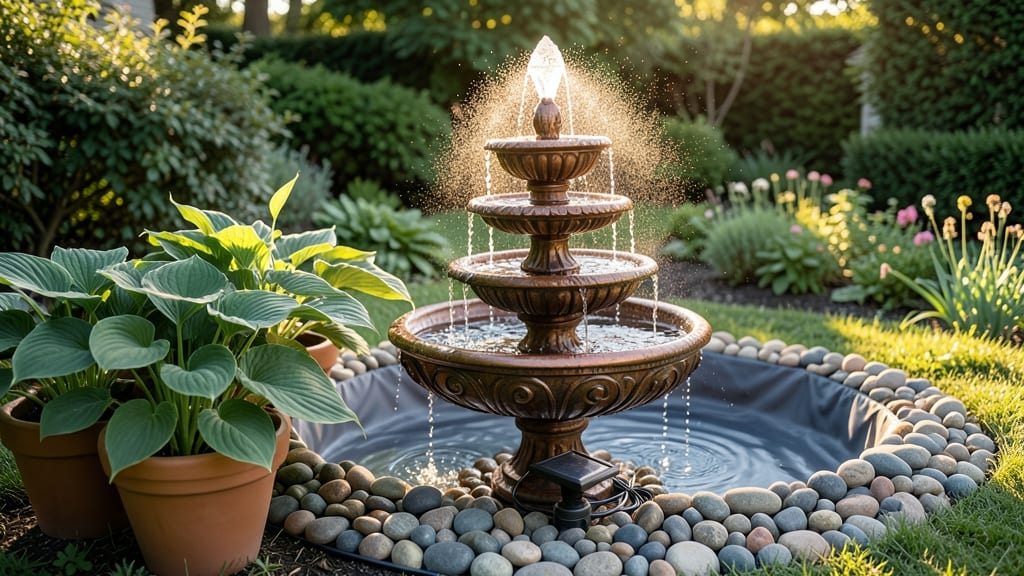
Changing garden fountain water every 1-2 weeks prevents algae growth, bacteria buildup, and mineral deposits that clog pumps and discolor surfaces, while submersible pump filters or UV clarifiers help maintain water quality between changes. Regular maintenance keeps your fountain running smoothly and looking pristine.
Stagnant garden fountain water becomes a breeding ground for harmful microbes and mineral buildup within days. 🔥 The right filtration system—whether a submersible pump filter or UV clarifier—can cut maintenance time by 40%, but even the best systems need fresh water to work effectively.
I’ve seen fountains with neglected water develop green slime in just 3-5 days, especially in warm climates where evaporation concentrates minerals faster. For best results, test water hardness every month and adjust with natural additives like barley straw if needed.
Most fountain owners underestimate how quickly debris and organic matter accumulate, even with filters. A submersible pump filter catches leaves and sediment, while a UV clarifier zaps algae at the source—but neither replaces regular water changes.
For tiered fountains, I recommend changing water every 7-10 days, while smaller recirculating models can stretch to 2 weeks if using a high-quality filter system.
💡 In This Article
- Why Fresh Water Prevents Algae and Mineral Buildup in Fountains
- Best Filtration Systems for Garden Fountains by Type
Why fresh water prevents algae and mineral buildup in fountains
Stagnant water in garden fountains creates the perfect conditions for algae blooms because sunlight penetrates the surface, providing energy for photosynthetic microbes. These algae multiply rapidly—some species can double their population in just 6-24 hours under ideal conditions—forming that familiar green slime.
The problem isn't just the unsightly appearance; algae depletes oxygen levels, creating a toxic environment that suffocates fish or plants in water features. 🔥
Mineral buildup happens when hard water (high in calcium and magnesium) evaporates, leaving behind white, chalky deposits that clog pumps and discolor surfaces. The process accelerates in hot climates where evaporation rates can exceed 0.25 inches per day, concentrating minerals 3-5 times faster than in cooler regions.
Over time, these deposits create rough textures that trap more debris, worsening the cycle. The pH balance matters too—water with a pH below 6.5 or above 8.5 becomes more corrosive, accelerating metal oxidation in fountain components.
Bacteria thrive in stagnant water too, particularly Pseudomonas and Legionella species that can cause respiratory issues when aerosolized by fountain spray. These microbes form biofilms—sticky layers that protect them from treatment chemicals—making them nearly impossible to eradicate without regular water changes.
The solution isn't just frequency; it's chemistry. Adding barley straw (which releases natural algicides) or hydrogen peroxide (at 3% concentration) can extend clean intervals by 30-50% while maintaining a healthy ecosystem.
Seasonal variations play a critical role. In summer, I've seen fountain water quality degrade 50% faster due to higher temperatures and longer daylight hours. During winter, colder water slows microbial growth but increases mineral precipitation.
The key is monitoring water hardness—if your water tests above 120 ppm of calcium carbonate, consider using a water softener or adding citric acid (1 teaspoon per 100 gallons) to dissolve existing deposits. 💫
For tiered fountains, the risk is even higher because water sits in multiple levels, creating micro-environments where different organisms thrive. The upper tiers receive more sunlight (ideal for algae) while lower tiers may develop anaerobic bacteria that produce foul odors.
This stratification means you should change water in each basin separately, starting with the topmost to prevent contamination of freshly cleaned sections.
The science behind this isn't just about aesthetics—it's about preserving your fountain's mechanical health.
A clogged pump from mineral buildup can cost $200-$500 to replace, while algae biofilms require bleach treatments (1 part bleach to 100 parts water)—but only if you change the water immediately after to avoid damaging plants or fish.
The best approach combines regular water changes with targeted treatments to create a balanced, self-sustaining ecosystem.