
Landscaping
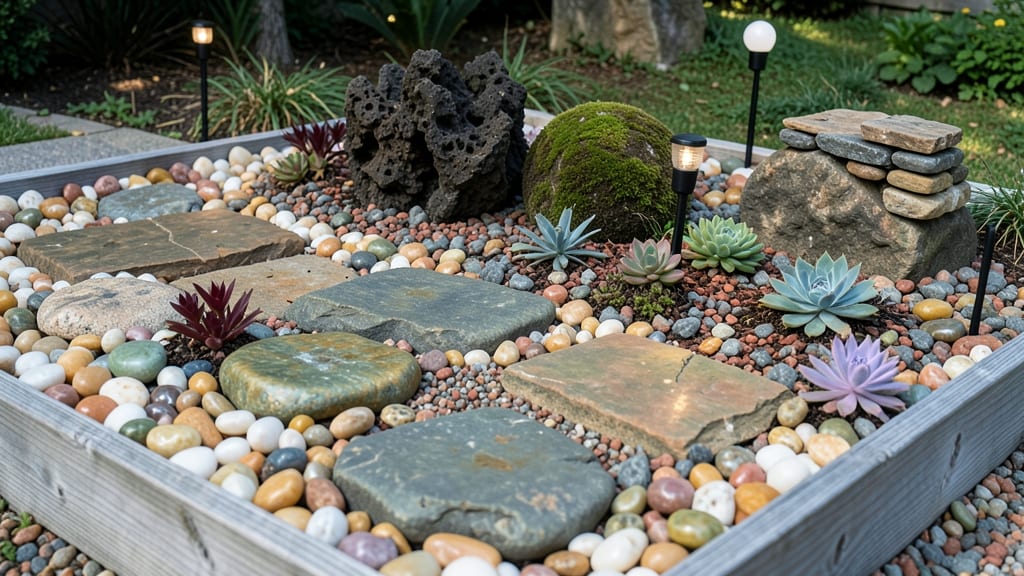
Garden ideas using stones transform outdoor spaces into stunning, functional designs that require minimal upkeep while adding texture and visual interest. These layouts prevent soil erosion and suppress weeds naturally.
Stones bring a timeless, organic feel to any garden while solving practical problems like drainage and weed growth. 💫 The key is matching stone types to your space—smooth river rocks create flowing pathways, while flat flagstones offer clean, structured borders.
For small gardens, consider mosaic patterns or stacked stones in containers, while larger areas benefit from herringbone or spiral arrangements that guide the eye through your landscape.
What sets stone designs apart is their durability and versatility. Unlike mulch or wood chips, stones don't decompose or need frequent replacement, making them ideal for high-traffic areas. Plus, you can mix colors and textures to create focal points or blend seamlessly with your garden's natural palette.
The installation process is simpler than you might think—most projects just require basic tools and a little planning.
💡 In This Article
- How to Choose Stones for Garden Paths and Borders
- 15 Stone Garden Layouts for Every Space
How to choose stones for garden paths and borders
Stone selection is the foundation of any successful garden design, as each type offers unique benefits in terms of durability, drainage, and visual appeal.
For pathways, river rocks (typically 1-3 inches in diameter) create a natural, flowing look while allowing water to drain easily—ideal for sloped areas where erosion is a concern.
Flat flagstone (usually 1/2 to 1 inch thick) provides a polished, structured appearance perfect for formal gardens, while slate offers a rustic charm with its natural cleft edges.
The size and shape of stones dramatically impact both function and aesthetics. Smaller stones (1/2 inch or less) work well for borders or edging, filling gaps between larger elements, while larger stones (3+ inches) create bold statements in pathways or as focal points.
Color coordination is equally important—earthy tones like beige, gray, and brown blend seamlessly with natural landscapes, while black basalt or red sandstone add dramatic contrast. Pro tip: Group stones by color family in 3-foot sections to maintain visual harmony.
Placement technique transforms raw materials into cohesive designs. Random arrangements with varying sizes create organic, free-flowing pathways, while structured patterns like herringbone or straight lines offer geometric precision. For borders, consider stacked stones (placed vertically) to define edges sharply or flat stones laid horizontally for a sleek, modern look.
The key is to balance natural irregularities with intentional design—even the most irregular stones can look intentional when placed with purpose.
Durability varies by stone type, so choose based on your garden's traffic and climate. Granite and quartzite withstand heavy foot traffic and freeze-thaw cycles, making them ideal for northern climates, while limestone offers a softer look but may erode faster in acidic soils.
Always test stone stability by placing them on a 2-inch bed of compacted gravel before finalizing layouts—this prevents shifting over time.
Texture plays a subtle but crucial role in design. Smooth stones like marble or river rocks reflect light beautifully, creating a luminous effect in shaded areas, while rough feldspar or granite adds tactile interest underfoot.
For sensory appeal, mix textures—pairing smooth stones with rough-edged ones adds depth to pathways. This contrast also helps guide the eye through your garden, creating visual layers that invite exploration.
One often-overlooked factor is how stones interact with surrounding plants. Light-colored stones (white quartz or light gray flagstone) enhance vibrant greenery, while dark stones (black gabbro or deep brown slate) make bold plants like purple coneflowers or black mondo grass stand out.
Always leave a 2-inch gap between stones and plants to prevent moisture buildup that could encourage weeds or fungal growth.