
Trees
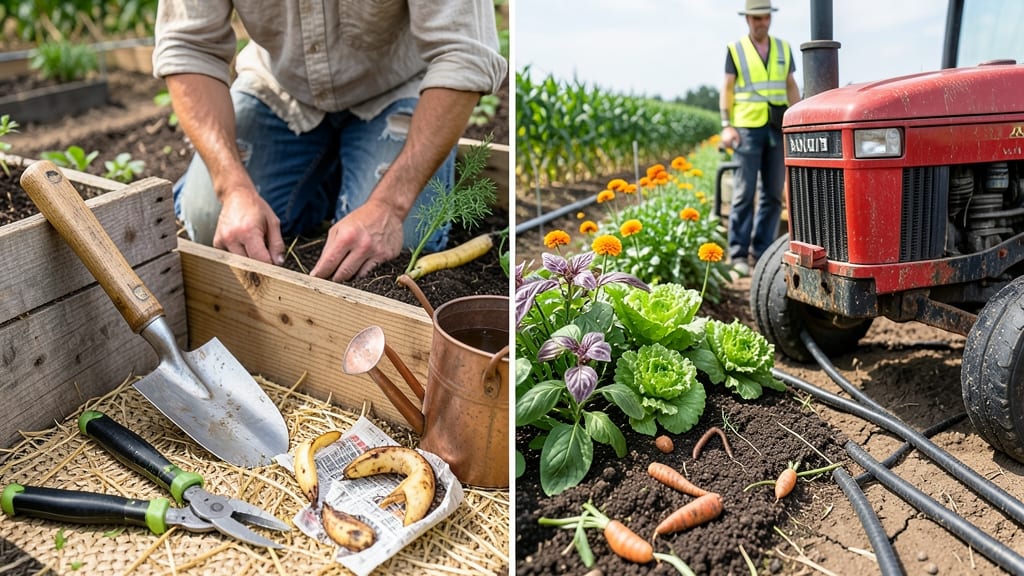
The difference between gardeners and farmers lies in their focus: gardeners cultivate plants for personal enjoyment or small-scale use in controlled spaces, while farmers grow crops or raise livestock on larger plots for commercial or subsistence purposes, differing in scale, goals, and methods.
The distinction goes beyond just the size of the land—it’s about purpose and practice.
Gardeners often prioritize beauty, biodiversity, and small harvests, whether for home use or hobbyist projects, while farmers focus on maximizing yield, sustainability, and marketability. 🌱 For example, a gardener might grow heirloom tomatoes for their flavor or roses for their blooms, while a farmer cultivates acres of hybrid varieties for sale.
The tools and techniques reflect these goals too: gardeners use hand tools and creative layouts, while farmers rely on machinery and large-scale systems.
Another key difference is the level of specialization. Farmers often work with crop rotation, soil science, and weather patterns to ensure consistent production, whereas gardeners may experiment with companion planting or seasonal varieties for aesthetic or culinary rewards.
Both roles require passion, but their approaches and outcomes serve entirely different needs.
💡 In This Article
- Scale and Scope: Gardeners vs Farmers in Plant Cultivation
- Key Skills and Tools: What Gardeners and Farmers Need to Succeed
Scale and scope: gardeners vs farmers in plant cultivation
The most obvious difference lies in land use—gardeners typically work with spaces measuring 100-500 square feet, while farmers cultivate acres or hundreds of acres.
A home gardener might fill a 5-gallon container with herbs or dedicate a 4x8-foot raised bed to vegetables, whereas a farmer might manage 500+ acres of corn or soybeans.
This scale shift directly impacts crop selection: gardeners prioritize diverse, ornamental, or heirloom varieties like zucchini blossoms or purple basil, while farmers focus on high-yield, disease-resistant hybrids optimized for market demand.
Production goals create another stark divide. Gardeners often aim for personal consumption or small harvests—think 20-30 pounds of tomatoes for home canning or a dozen fresh roses per week. Farmers, however, target commercial-scale output, such as 50,000 bushels of wheat per season.
The timing also differs: gardeners work in short, intensive seasons (e.g., planting lettuce in early spring and fall), while farmers plan year-round cycles with crop rotation and storage solutions like silos or cold storage facilities.
Sustainability approaches vary dramatically too. Gardeners often embrace organic methods, using compost tea, hand-pulling weeds, and companion planting (like basil with tomatoes). Farmers, however, must balance sustainability with scalability, using techniques like precision agriculture (GPS-guided tractors) or no-till farming to preserve soil while maintaining productivity.
A gardener might spend hours hand-watering 20 tomato plants, while a farmer relies on center-pivot irrigation systems covering hundreds of acres.
Economic factors play a huge role in these differences. Gardeners typically operate at break-even or hobbyist levels, where costs (like $50 worth of seeds) rarely exceed returns. Farmers, however, deal with high-stakes investments: a single $200,000 combine harvester must process thousands of acres to justify its cost.
This economic pressure shapes decisions—farmers prioritize drought-resistant crops or contract farming agreements, while gardeners might experiment with unconventional varieties like blue potatoes just for fun.
Even the risk tolerance differs. A gardener can afford to lose a single zucchini plant to pests without major consequences. A farmer, however, faces existential risks from weather events—like a late frost wiping out a $50,000 wheat crop.
This is why farmers rely on diversified income streams (e.g., selling hay, running agritourism) while gardeners often focus on single-season rewards like a perfect harvest of heirloom peppers.
Consider the sensory experience: a gardener might spend 30 minutes hand-pruning a single rose bush, savoring the fragile petals and citrusy aroma of the blooms.
A farmer, meanwhile, operates a $100,000 cotton picker that harvests 500 pounds of cotton per hour, where the focus is on bulk efficiency rather than individual beauty. Both roles require deep plant knowledge, but the scale of impact transforms every decision.