
Light Requirements
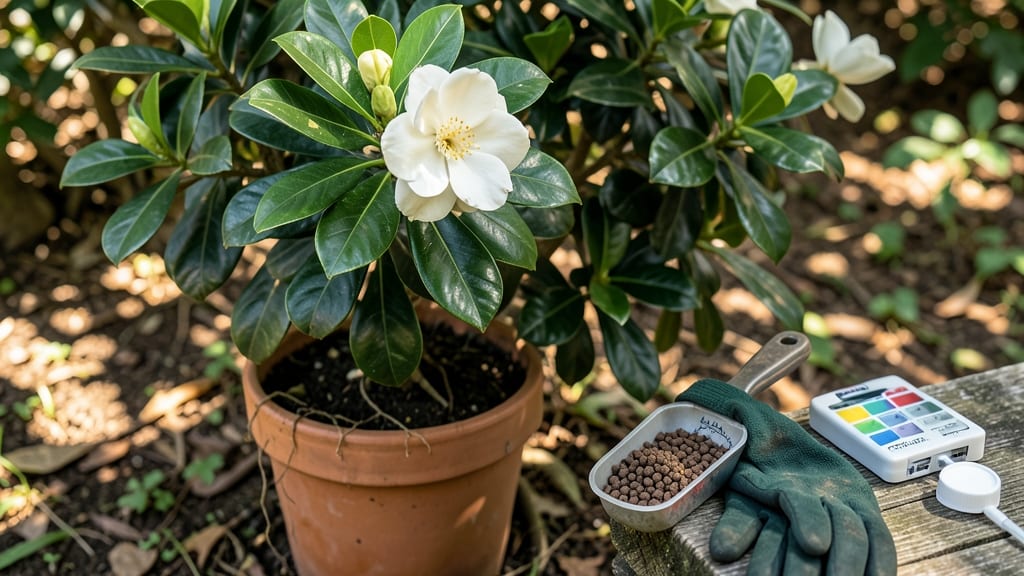
To meet your gardenia fertilizer requirements, you need a precise balance of nutrients and the right soil acidity — or those fragrant blooms will stay just out of reach.
Picture this: you’ve spent months nurturing your gardenia 🌸, only to watch it throw out sparse, half-sized buds that never open. The problem might not be water or light, but the way you’re feeding it — or worse, what you’re not feeding it.
Gardenias demand acidic soil (pH 4.5–6.0) and a fertilizer tailored to their needs, like a slow-release blend with high iron and balanced NPK (6-6-6 or 8-3-9). Too much nitrogen? Lush leaves, zero flowers.
Too little phosphorus? Buds drop before blooming. I’ll walk you through the exact schedule, signs of over- or under-feeding, and how to adjust for container vs. in-ground plants.
By the end, you’ll know when to feed, what to avoid, and how to turn your gardenia into a bloom machine—with fewer guesses and more fragrant results.

Optimal pH levels and fertilizer types for gardenia blooms
Gardenia plants thrive when their soil pH stays between 4.5 and 6.0, creating the perfect acidic environment for nutrient absorption. This acid-loving plant won’t bloom abundantly if the pH drifts outside this range, so testing your soil annually is a must.
I’ve learned that even a slight increase to 6.5 or higher can cause iron chlorosis, turning leaves yellow while veins stay green—a sure sign your gardenia is starving for nutrients despite being fed.
Understanding your gardenia’s fertilizer requirements means choosing the right blend of nitrogen (N), phosphorus (P), and potassium (K). A balanced 6-6-6 or 8-3-9 formula works best, but the key is pairing it with high iron and micronutrients like magnesium and zinc.
Organic options like fish emulsion or cottonseed meal release nutrients slowly, while synthetic fertilizers offer precise NPK control—both have their place in my garden.
Here’s the breakdown of what your gardenia needs to bloom beautifully, including seasonal adjustments for both organic and synthetic fertilizers:
For potted gardenias, I recommend using a slow-release fertilizer like Osmocote to avoid overfeeding, which can scorch roots. In-ground plants benefit from a top-dressing of compost in early spring to boost organic matter and acidify the soil naturally.
My trick? Mix in pine needles or oak leaves around the base—they decompose slowly, keeping the pH in check while adding nutrients.
Seasonal timing is critical: feed gardenias in early spring (April) when new growth appears, and again in early summer (June) to support blooming. I avoid fertilizing in fall and winter because gardenias enter dormancy, and feeding during this time can lead to weak growth and fewer flowers the following year.
A common mistake I’ve seen is over-fertilizing in late summer, which can cause nutrient burn and stunted blooms.
If your gardenia’s leaves turn yellow between veins, it’s a classic sign of iron deficiency due to high pH. To fix this, I amend the soil with sulfur to lower pH and apply a chelated iron supplement.
For brown leaf tips, it’s often a sign of over-fertilization—flush the soil with water and reduce feeding frequency. These adjustments have helped my gardenias recover from nutrient stress every time.
Pro tip: Water before fertilizing to prevent root burn. I always give my gardenias a deep watering the day before applying fertilizer, especially when using granular or synthetic options. This ensures the nutrients are absorbed evenly and reduces the risk of salt buildup in the soil.
For organic fertilizers like fish emulsion, I dilute it to half-strength to avoid shocking the roots.
Container gardenias need extra attention because their root systems are limited. I use a well-draining acidic potting mix (like a blend of peat moss, perlite, and pine bark) and fertilize every 4–6 weeks during the growing season.
Potted plants also dry out faster, so I monitor soil moisture closely—never let them sit in soggy soil, as this can suffocate roots and prevent nutrient uptake.
Remember, gardenias reward patience. By maintaining the right pH balance and
Step-by-step guide to fertilizing gardenias for maximum flowers
Gardenias thrive when fed with the right nutrients at the right time. Unlike many plants, they demand acid-loving care and precise feeding schedules to reward you with fragrant, abundant blooms.
Skipping steps—like adjusting pH levels or using the wrong fertilizer—can leave your gardenia struggling, even with proper water and sunlight. Let’s break down the exact monthly feeding routine that transforms weak growth into lush, flowering shrubs.
First, always use a balanced, acid-loving fertilizer with an NPK ratio of 6-6-6 or 8-3-9. Gardenias need equal parts nitrogen for foliage and phosphorus for blooms, but too much nitrogen can stunt flowering.
Organic options like cottonseed meal or fish emulsion work well, but synthetic blends are faster-acting. Dilute liquid fertilizers to half-strength to avoid burning delicate roots, especially for container-grown gardenias.
🌱 Step-by-Step Fertilizing Schedule for Gardenias
-
Step 1: Test Soil pH
Gardenias need acidic soil (pH 4.5–6.0). Use a soil test kit to check—adjust with sulfur if too alkaline. -
Step 2: Early Spring Feeding (April)
Apply 1 tbsp slow-release fertilizer per plant (or half-strength liquid) when new growth appears. Focus on root zones to avoid leaf burn. -
Step 3: Mid-Summer Light Feed (June–July)
Use half-strength liquid fertilizer every 6 weeks to support blooming. Skip if leaves yellow—this signals over-fertilization. -
Step 4: Root Feeding Technique
For established plants, dig a 6-inch trench around the base and mix in compost or bone meal. Water deeply to activate nutrients. -
Step 5: Fall & Winter Rest
Stop fertilizing after August. Let the plant harden off naturally—no winter feeding is needed. -
Step 6: Correct Over/Under-Fertilization
Yellow leaves? Flush soil with water. Brown tips? Reduce fertilizer and increase mulch to retain moisture.
Container gardenias need more frequent feeding because nutrients leach out faster. Use a water-soluble acid fertilizer every 4 weeks during the growing season, but rinse the pot monthly to prevent salt buildup.
For in-ground plants, a slow-release granular fertilizer applied in spring is often enough—just top-dress and water in. Avoid fertilizing when the plant is stressed (e.g., after pruning or during extreme heat).
Watch for signs of nutrient deficiencies: Pale leaves mean low nitrogen, while small buds that drop signal phosphorus deficiency. Iron chlorosis (yellow leaves with green veins) is common in alkaline soil—correct it with chelated iron and peat moss.
If your gardenia’s blooms are sparse, it might be over-fertilized with nitrogen. Switch to a low-nitrogen, high-phosphorus blend to encourage flowering.
Pro tip: Mulch with pine needles or oak leaves to naturally acidify the soil and retain moisture. This reduces fertilizer needs by up to 30% while keeping roots cool. Pair your feeding schedule with regular pruning after blooming to redirect energy into next year’s flowers.
With this routine, your gardenia will reward you with glossy foliage and intoxicating blooms by mid-summer.
🌸