
Tools
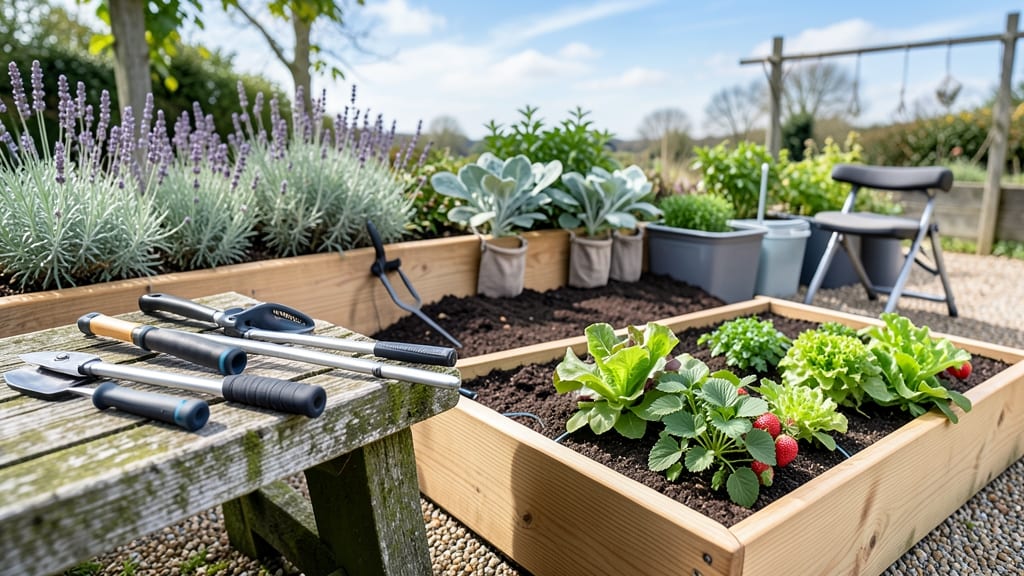
Gardening for people with disabilities becomes fully accessible through specialized tools, raised planting areas, and smart technology like voice-controlled watering systems. These adaptations help maintain independence while working around physical or sensory challenges.
Adaptive gardening transforms what might seem like limitations into opportunities for creative problem-solving. 🌱 The right tools—like extended-reach pruners or gloves with built-in grips—can make tasks like trimming or harvesting far more manageable, while raised beds eliminate bending and kneeling entirely.
Many gardeners with disabilities also find that sensory-friendly plants (like textured lamb's ear or strongly scented lavender) enhance the experience by engaging different senses. What's most rewarding is seeing how these small adjustments can turn gardening from a chore into a joyful, empowering activity.
For those with mobility challenges, wheelchair-accessible beds or vertical planters mounted at the right height can make gardening possible without assistance. Voice-activated systems take it further by allowing complete hands-free operation, from adjusting irrigation schedules to checking soil moisture levels.
The key is starting with the individual's specific needs—whether it's grip strength, vision, or stamina—and building solutions around those realities rather than working against them.
💡 In This Article
- Adaptive Gardening Tools for Mobility and Dexterity
- Designing Accessible Garden Layouts and Plant Choices
Adaptive gardening tools for mobility and dexterity
Ergonomic tools are designed to reduce physical strain by redistributing pressure and minimizing repetitive motions. For example, long-handled pruners with 12-18 inch extensions allow gardeners to trim plants without bending, while their lightweight aluminum construction (typically weighing 8-12 ounces) reduces arm fatigue.
The curved handles on one-handed seeders distribute force more evenly across the palm, making planting seeds easier for those with limited grip strength. These tools often incorporate non-slip grips, which are especially helpful for people with arthritis or Parkinson's disease, where hand tremors can make standard tools difficult to control.
The science behind ergonomic design focuses on joint alignment and force distribution. Standard gardening tools often require 15-25 pounds of gripping force, which can be painful for someone with carpal tunnel syndrome or rheumatoid arthritis. Adaptive tools reduce this requirement by 40-60% through lever mechanics and wider handle diameters.
Sensory-friendly options, like textured handles with raised dots or Braille patterns, provide tactile feedback for visually impaired gardeners, allowing them to identify tools by touch alone. The materials used—often aluminum or lightweight composites—also resist rust and corrosion, ensuring durability in all weather conditions.
Weighted gloves (typically 1-3 pounds) serve a dual purpose: they provide stability for tasks requiring precision while also offering gentle resistance exercises for hand muscles.
For those with limited dexterity, tools with built-in seed trays or automatic watering attachments can transform gardening from a physically demanding task into a manageable activity. The key advantage of these adaptations is their ability to maintain the core gardening experience while eliminating common barriers.
For instance, a 36-inch high raised bed paired with a lightweight trowel allows someone in a wheelchair to plant and harvest without transferring to the ground.
When selecting tools, consider the specific type of disability. For mobility challenges, focus on extended handles and lightweight materials, while dexterity issues benefit most from tools with enlarged grips and simplified mechanisms. Sensory adaptations, like tools with contrasting colors or vibrating alerts, can make gardening safer and more intuitive.
Many adaptive tools are now available through specialized catalogs or online retailers, with some even offering custom modifications—such as attaching a magnetic tip to a trowel for easier seed retrieval—upon request.
Another innovative solution gaining popularity is the use of voice-activated gardening tools. These systems, often integrated with smart home technology, allow gardeners to control irrigation, adjust lighting, or even prune plants using simple voice commands.
For someone with limited mobility, this means being able to tend to their garden without leaving their chair. The technology works through Bluetooth-enabled sensors that communicate with a central hub, which then activates motors or valves based on voice instructions.
This approach not only enhances accessibility but also adds a layer of convenience that traditional tools simply can't match.
What's particularly inspiring about adaptive gardening tools is how they often lead to unexpected benefits. For example, lightweight tools designed for arthritis sufferers are frequently adopted by younger gardeners who appreciate the reduced strain on their wrists.
Similarly, sensory-friendly tools that help visually impaired gardeners often provide better grip for everyone. The result is a more inclusive gardening community where everyone—regardless of ability—can enjoy the therapeutic benefits of working with plants. 🌿