
Tools
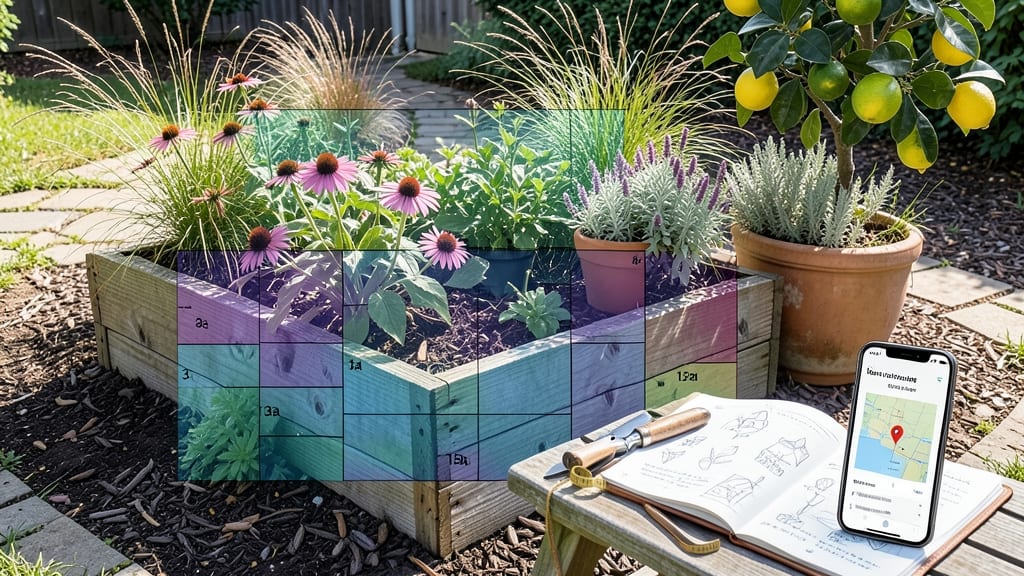
To find your gardening zones by zip, use the USDA Plant Hardiness Zone Map to identify your specific climate zone based on your location, which directly impacts which plants will grow successfully in your area. Simply enter your ZIP code on the official USDA website or mobile app for accurate results.
Understanding your gardening zones by zip is essential because these zones are based on average annual minimum temperatures, which dictate which plants can survive winter in your area. 🌱 For example, a Zone 5 location can handle plants that thrive in temperatures down to -20°F, while Zone 9 areas rarely see temperatures below 20°F. These zones also account for microclimates—like urban heat islands or coastal regions—which can create variations even within the same ZIP code.
Knowing your zone helps you select plants that will not only survive but thrive, reducing trial-and-error in your garden.
Once you've identified your zone, you can use this information to plan your garden with confidence. Many nurseries and seed packets list recommended zones for each variety, making it easier to choose plants that match your climate.
Additionally, understanding these zones helps you prepare for seasonal changes and potential shifts in climate patterns over time.
💡 In This Article
- How USDA Plant Hardiness Zones Determine Plant Survival
- Step-by-Step Guide to Look Up Zones by ZIP Code
How USDA plant hardiness zones determine plant survival
The USDA Plant Hardiness Zone Map divides North America into 13 zones based on the average annual minimum winter temperatures recorded in a specific area over a 30-year period.
Each zone is further split into "a" and "b" subzones, representing a 5°F difference—for example, Zone 6a (down to -10°F) and Zone 6b (down to -5°F).
This system helps gardeners predict which plants can survive the coldest temperatures in their region, as most plants die when exposed to temperatures 5-10°F colder than their hardiness rating.
The science behind these zones relies on historical climate data collected from thousands of weather stations across the country. For instance, a plant rated for Zone 7 can typically handle winters as cold as 0°F to 10°F, while a Zone 3 plant survives down to -40°F to -30°F.
However, zones don’t tell the whole story—microclimates (like urban areas, slopes, or bodies of water) can create temperature variations of 5-10°F within just a few feet. Coastal regions, for example, often experience milder winters than inland areas just 20 miles away due to ocean currents and humidity.
Zones aren’t static—they shift over time due to climate change.
Since the USDA updates the map every 10 years (the latest version, released in 2023, reflects data from 1991-2020), gardeners in some areas may find their zone has crept northward by half a zone or more compared to older maps.
This means plants that once struggled in your area might now thrive, while others that were once safe bets could face new risks.
For example, a gardener in Zone 6b might now find that Zone 7 plants (like certain roses or hydrangeas) survive winters more reliably than they did 20 years ago.
Understanding these zones is critical for plant selection because it directly impacts survival rates. A Zone 5 perennial planted in Zone 7 might die in a harsh winter, while a Zone 8 annual planted in Zone 5 will likely fail to germinate or grow.
Even within a single zone, soil type, sunlight exposure, and wind patterns can create microclimates that affect plant health. For example, a south-facing wall can create a Zone 8 microclimate in an otherwise Zone 6 yard, allowing you to grow plants that wouldn’t survive elsewhere in your garden.
Exceptions to the rule also exist. Some plants, like drought-tolerant succulents or heat-loving citrus trees, are more influenced by summer heat and water availability than winter cold.
Meanwhile, evergreens and broadleaf plants often have different hardiness ratings for foliage vs. roots, meaning they might survive winter but lose leaves.
This is why gardeners in Zone 6 can grow Zone 5 plants with extra winter protection (like mulch or burlap wraps) or choose varieties bred for extended cold tolerance.
Finally, zones help gardeners plan for seasonal transitions. For instance, a Zone 7 gardener knows to start frost-sensitive plants (like tomatoes or peppers) indoors 6-8 weeks before the last frost date, while a Zone 3 gardener might need to extend the season with cold frames or row covers.
By aligning plant choices with your zone—and accounting for microclimates—you’ll avoid costly mistakes and create a garden that thrives year after year. 🌿