
How To
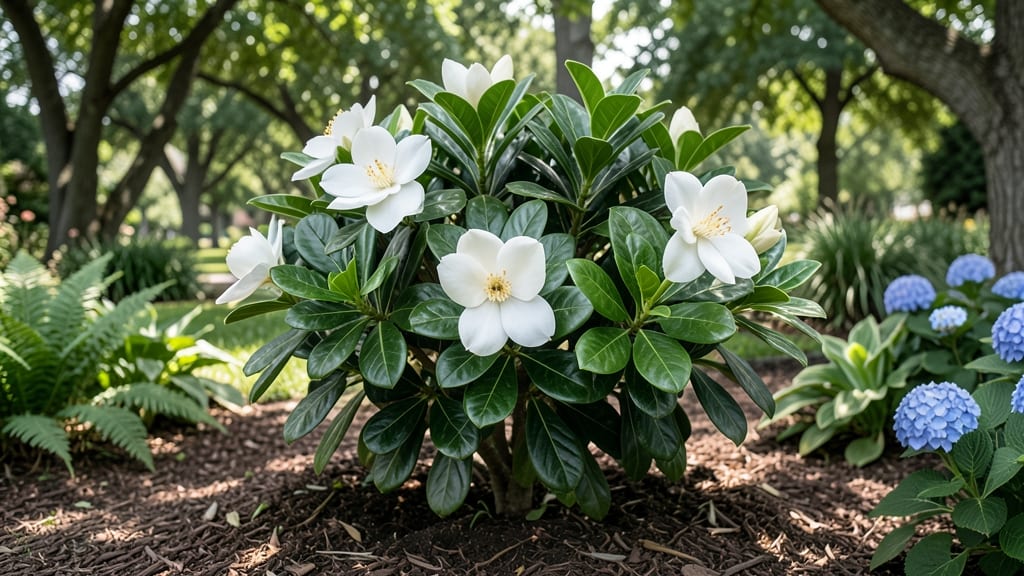
Gardenia bushes grow between 3 and 6 feet tall at maturity, but their size depends heavily on the variety you choose—some stay compact enough for containers while others sprawl into small trees.
If you’re dreaming of fragrant gardenias but wondering whether they’ll overpower your garden or fit snugly in a container, knowing their mature size is key—because these tropical beauties vary dramatically by variety.
From the petite ‘Radicans’ (just 2-3 feet tall) to the towering ‘Kleim’s Hardy’ (reaching 6 feet or more), each gardenia 🌸 has its own growth habits. Whether you’re planning a patio display or a backyard border, picking the right type makes all the difference.
Below, we’ll break down the size ranges of popular varieties, how to control growth with pruning, and the best spots to plant them so they thrive without taking over your space.
Gardenia bush mature size by popular variety: height & spread guide
Choosing a gardenia variety isn’t just about fragrance—it’s about space planning. These tropical shrubs range from compact container darlings to tall garden statement-makers, with mature sizes differing by 3 feet or more.
Whether you’re designing a backyard oasis or a balcony garden, knowing each variety’s height and spread helps you avoid overcrowding or underutilized space.
Most gardenias thrive in USDA Zones 8-11, but cold-hardy varieties like ‘Kleim’s Hardy’ push limits to Zone 6 with winter protection. Their growth habits also shift based on sunlight exposure: full sun (6+ hours) accelerates growth, while partial shade (4-6 hours) keeps them more compact.
Below, I’ve compared 10 popular varieties to help you pick the perfect fit for your garden.
Pro Tip: Always check your variety’s root system—some, like ‘Radicans’, spread aggressively, while others stay tidy in containers.
| Variety | Mature Height (ft) | Mature Spread (ft) | Growth Habit | Sun Needs | Best For |
|---|---|---|---|---|---|
| ‘Kleim’s Hardy’ | 4–6 ft | 3–5 ft | Upright, bushy | Full sun to partial shade | Cold-hardy gardens, hedges |
| ‘Radicans’ | 6–10 ft | 5–8 ft | Vining, sprawling | Partial shade | Trellises, large landscapes |
| ‘Veitchii’ | 3–5 ft | 2–4 ft | Compact, rounded | Partial shade | Containers, small gardens |
| ‘Fortuniana’ | 2–3 ft | 2–3 ft | Dwarf, bushy | Partial shade | Patios, urban gardens |
| ‘Mystery’ | 5–7 ft | 4–6 ft | Tall, upright | Full sun | Privacy screens, large borders |
| ‘Cleopatra’ | 3–4 ft | 3–4 ft | Bushy, multi-stemmed | Partial shade | Foundation plantings |
| ‘Augusta’ | 6–8 ft | 5–7 ft | Tall, spreading | Full sun to partial shade | Specimen plantings |
| ‘Kleim’s Blush’ | 4–5 ft | 3–4 ft | Compact, rounded | Partial shade | Containers, mixed borders |
| ‘Radicans Alba’ | 5–7 ft | 4–6 ft | Vining, white blooms | Partial shade | Shady gardens, trellises |
| ‘Tahitian Snowflake’ | 2–3 ft | 2–3 ft | Dwarf, bushy | Partial shade | Balconies, window boxes |