
Size
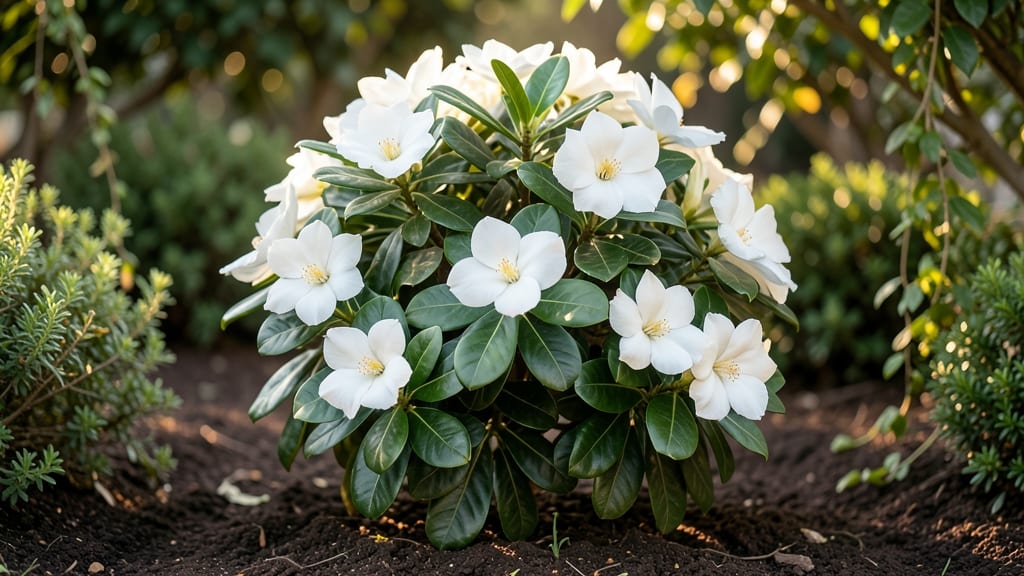
Gardenias grow to heights ranging from 2 to 6 feet depending on the variety, transforming your garden into a fragrant paradise 🌸.
If you’re dreaming of fragrant, glossy gardenias but wondering whether they’ll fit your garden’s size or container, their mature height might surprise you—some dwarf varieties stay under 3 feet while others tower over 12!
Most gardenias mature as medium-sized shrubs, reaching 4 to 6 feet in height with a spread of 3 to 5 feet, making them perfect for hedges or privacy screens. Dwarf varieties, like 'Radicans,' stay compact at just 2 to 3 feet, ideal for containers or small spaces.
Here’s what you need to know about their growth habits, how pruning shapes their size, and how to choose the right variety for your space—so you can enjoy their iconic blooms without overcrowding your yard.

Gardenia height ranges by popular varieties (with mature size charts)
Choosing the right gardenia variety depends on your space and vision. Some varieties stay compact enough for containers, while others grow tall enough to create privacy screens.
The average gardenia height ranges from 2 feet for dwarf types to 12 feet for large-growing varieties, with most falling between 4-6 feet. Their growth habits also vary—some grow upright while others spread wider, so let’s explore the most popular types and their mature sizes.
Gardenias thrive in USDA zones 6a-10a, but their height potential depends on both genetics and care. For example, full sun exposure can encourage taller growth, while partial shade may keep plants more compact. Pruning also plays a key role—regular trimming can maintain desired height or encourage bushier growth.
Below, you’ll find a visual comparison of 10+ gardenia varieties, including their mature heights, spread, and ideal growing conditions.
🌱 Pro Tip: Always check your variety’s specific needs before planting. Some gardenias, like ‘Kleim’s Hardy’, are cold-hardy but may grow slower in cooler climates, while tropical varieties like ‘Radicans’ need warmer conditions to reach their full height potential.
If you’re working with limited space, varieties like ‘Veitchii’ or ‘Prosperity’ are perfect for containers or small gardens. Their compact growth habit keeps them under 3 feet tall, making them ideal for patios or balconies.
Just ensure your container has drainage holes and is at least 12–15 inches deep to accommodate their root systems.
For larger landscapes, ‘Fortuniana’ or ‘Florida’ can create stunning focal points. These varieties grow 6–15 feet tall and thrive in full sun, making them excellent for privacy hedges or backyard borders. However, their size means they’ll need regular pruning to control spread and maintain a manageable shape.
One common mistake is assuming all gardenias grow the same way. For example, ‘Kleim’s Hardy’ is cold-hardy but may grow more slowly in cooler zones, while ‘Radicans’ spreads wider in warmer climates. Always match your variety to your local climate and garden conditions to ensure healthy growth and abundant blooms.
💡 Lighting Matters: Gardenias in full sun often grow taller and may produce fewer blooms, while those in partial shade stay more compact and flower more prolifically.
If you’re unsure about your garden’s sunlight, start with a partial shade variety like ‘Mystery’ or ‘Golden Age’ for a balance of height and fragrance.
For container gardeners, dwarf varieties like ‘Veitchii’ or ‘Prosperity’ are game-changers. Their controlled height
How to control gardenia growth: pruning tips for height management
Pruning your gardenia isn’t just about keeping it tidy—it’s the key to controlling its height and shape while encouraging lush, fragrant blooms. Without proper pruning, even dwarf varieties can become leggy or overgrown, while standard types may outgrow their intended space.
The good news? With the right techniques, you can shape your gardenia to fit your garden’s design—whether you want a compact container plant or a tall privacy hedge.
Timing is everything when it comes to pruning. I’ve learned that spring and fall are the best times to prune, but the method differs slightly depending on the season.
Pruning in late winter or early spring (just before new growth begins) helps shape the plant for the upcoming growing season, while light pruning in fall removes dead or damaged branches and prepares the plant for dormancy.
Avoid heavy pruning in fall, as it can stimulate new growth that won’t harden off before winter.
Before you grab your shears, gather the right tools: sharp bypass pruners for clean cuts, sterilized alcohol wipes to prevent disease, and gardening gloves to protect your hands from thorns.
I also recommend having a small bucket of water nearby to rinse your tools between cuts—this keeps them sharp and reduces the spread of bacteria.
⚠️ Warning: Over-Pruning Risks
Pruning too aggressively—especially cutting back more than 1/3 of the plant at once—can shock your gardenia, leading to stunted growth or fewer blooms. Even standard varieties like 'Kleim’s Hardy' (6+ feet) may struggle to recover if pruned back harshly. Always cut just above a leaf node or bud to encourage new growth in the right direction.
To maintain your desired height, focus on selective pruning. If your gardenia is growing too tall, target the topmost branches first, cutting just above a leaf node to redirect energy downward. For bushier growth, prune the outermost stems to encourage inward branching.
Pro tip: I like to step back and assess the plant’s shape from all angles—this helps me spot uneven growth before it becomes a problem.
One common mistake I see is pruning after the blooming season, which removes next year’s flower buds. Gardenias set buds on old wood, so always prune right after flowering (late summer) or in early spring.
Another pitfall? Using dull shears, which can tear branches and invite pests. Always make cuts at a 45-degree angle, about 1/4 inch above a bud or node, to promote faster healing and reduce water pooling.
Encouraging bushier growth without sacrificing blooms is all about strategic cuts and timing. After pruning, apply a balanced, acidic fertilizer (like 10-10-10) to support new growth. I’ve found that mulching around the base with pine bark helps retain moisture and acidity, which gardenias love.
With consistent care, even leggy plants can transform into full, fragrant shrubs—just give them time and patience!