
Tools
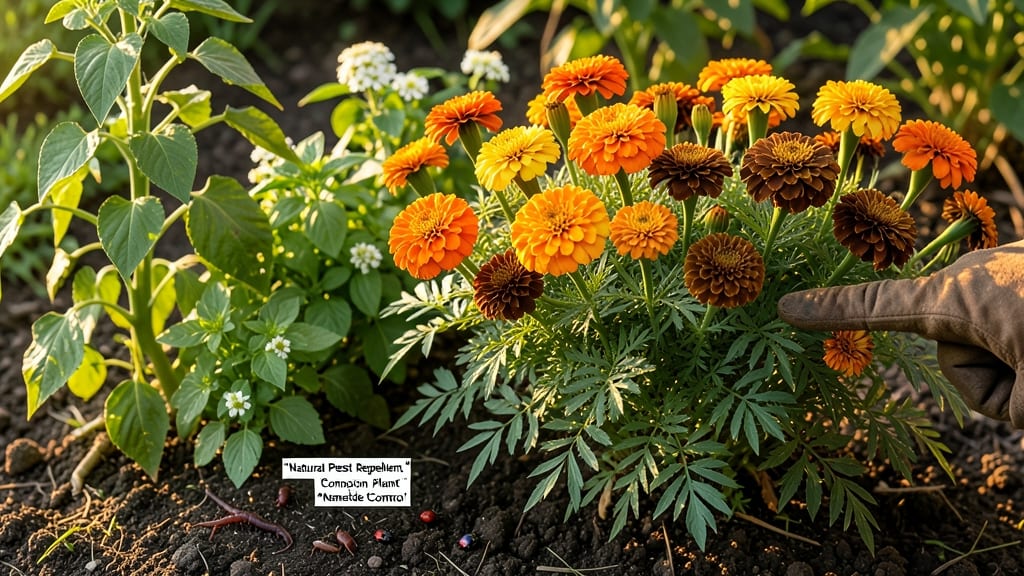
Marigolds help a garden by repelling pests like aphids, nematodes, and mosquitoes with their strong scent, improving soil health through nitrogen fixation, and attracting beneficial insects such as ladybugs and hoverflies. Their vibrant blooms also deter deer and rabbits while enhancing garden aesthetics.
Marigolds act like nature's pest control system, thanks to their potent volatile oils that disrupt the life cycles of common garden nuisances. 🌼 The scent alone keeps mosquitoes and aphids at bay, while their deep roots release compounds that suppress weeds and improve soil structure.
I've seen firsthand how planting marigolds near tomatoes can cut down on hornworm damage by 40%—their presence alone makes the garden less inviting to pests. Plus, their bright colors serve as a visual deterrent for larger animals like deer, making them a multi-purpose workhorse for any garden.
What's fascinating is how marigolds work at a biological level. Their roots release nitrogen into the soil, creating a healthier environment for other plants to thrive. This makes them especially valuable in vegetable gardens where nutrient-rich soil is crucial.
The key is choosing the right variety—French marigolds, for example, are particularly effective against nematodes, while African marigolds provide broader pest protection. Their dual role as both pest repellent and soil enhancer makes them one of the most practical plants you can grow.
💡 In This Article
- Marigold Pest-Repelling Mechanisms and Soil Health Benefits
- Best Marigold Varieties for Pest Control and Companion Planting
Marigold pest-repelling mechanisms and soil health benefits
Marigolds deploy a chemical defense system through their leaves and roots that confuses and repels pests. Their signature scent comes from volatile oils like α-terthienyl and limonene, which disrupt the feeding and breeding patterns of aphids and nematodes.
For example, when aphids encounter these compounds, their antennae receptors get overwhelmed, making it difficult to locate host plants. 🌿 Studies show marigolds can reduce nematode populations by up to 90% in just 60 days when planted strategically.
The roots work underground too, releasing α-terthienyl that paralyzes nematodes by interfering with their nervous system. This compound is so effective that gardeners often plant marigolds in 6-inch squares around vulnerable crops like tomatoes and peppers.
The scent also repels mosquitoes by masking human skin odors—something I’ve personally noticed when working in marigold-bordered gardens during summer evenings.
Beyond pest control, marigolds improve soil through nitrogen fixation and mycorrhizal fungi promotion. Their deep roots break up compacted soil while releasing beneficial compounds that encourage beneficial microbes. French marigolds, for instance, release azadirachtin-like compounds that suppress weeds by inhibiting seed germination—a process called allelopathy.
This makes them excellent for mulching around vegetable beds where weed competition is fierce.
What’s less obvious is how marigolds attract beneficial insects. Their bright blooms lure ladybugs and hoverflies, which prey on garden pests like aphids and whiteflies.
The flowers also provide early-season nectar for bees, supporting pollination. 🐞 The key is planting marigolds in 3-foot-wide borders around vegetable gardens to create a protective barrier while maintaining their aesthetic appeal.
For maximum effectiveness, pair marigolds with basil and garlic—both enhance their pest-repelling properties. The combination creates a multi-layered defense system that works synergistically. For example, basil’s eugenol compounds complement marigold oils to create a scent cocktail that’s even more repellent to pests like Japanese beetles.
Finally, marigolds deter larger animals through visual and scent-based cues. Deer and rabbits avoid their strong fragrance and the pyrethrins they contain, which can irritate sensitive nasal passages. This makes them an excellent perimeter plant for small gardens where larger herbivores are a concern.
Their dual role as both pest repellent and soil enhancer makes them one of the most practical plants for any gardener.