
Blooming
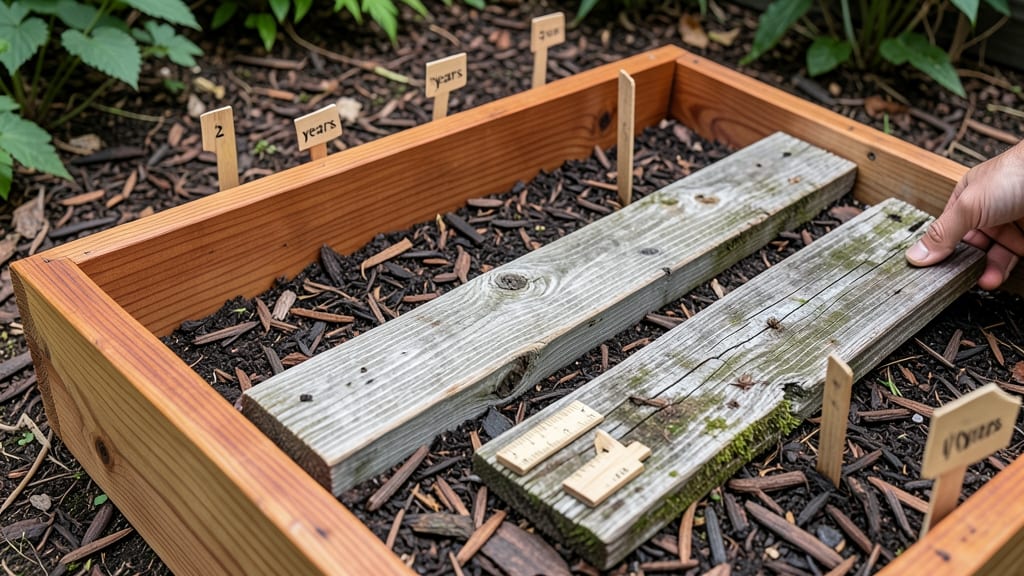
Cedar garden beds last 10 to 15 years on average with proper care, though exceptional maintenance can extend their lifespan to 20+ years thanks to cedar's natural resistance to rot and insects. Their durability varies based on local climate conditions, soil acidity levels, and how well you maintain them.
Cedar's natural oils, particularly thujaplicin, create a built-in defense against moisture and pests, which is why it outperforms many other woods in garden settings. 🌲 However, factors like heavy rainfall, alkaline soil, or poor drainage can accelerate wear, cutting years off its lifespan.
I've seen cedar beds in dry climates last nearly twice as long as those in humid regions—proper site selection and installation make all the difference.
To maximize longevity, focus on sealing fresh cedar every 2-3 years with a high-quality outdoor wood preservative, especially in high-moisture areas. Regularly check for soft spots or mold growth, as these early signs often indicate where decay might start.
The key is balancing cedar's natural durability with proactive care—it's a partnership between the wood's properties and your maintenance efforts.
💡 In This Article
- Why Cedar Wood Resists Decay Better Than Other Garden Beds
- Extending Cedar Garden Bed Lifespan: Maintenance Checklist
Why cedar wood resists decay better than other garden beds
Cedar's legendary durability comes from its natural chemistry, specifically a compound called thujaplicin—a powerful antimicrobial oil that acts like built-in pest repellent. This oil creates a chemical barrier that deters fungi, bacteria, and insects that typically break down wood.
For comparison, pressure-treated wood relies on chemical additives (like arsenic compounds in older versions) while pine contains almost no natural preservatives, making cedar the gold standard for outdoor longevity. 🌲 The oil content also makes cedar naturally water-resistant, though not waterproof, which is why it performs better than redwood in many climates.
Moisture exposure is the #1 enemy of any wood, but cedar handles it better than most. When cedar gets wet, the thujaplicin oil actually becomes more concentrated on the surface, creating an even stronger protective layer.
However, prolonged saturation—like from poor drainage or heavy rainfall—can still cause rot over time. UV exposure also plays a role: while cedar's natural oils help resist sun damage, the surface fibers will eventually dry out and crack if not protected.
This is why cedar beds in dry, sunny climates (like the Southwest U.S.) often last 15-20 years with minimal care, while those in humid, rainy regions may need more frequent maintenance.
The pH of your soil matters more than you might think. Cedar performs best in neutral to slightly acidic soil (pH 5.0-7.0)—alkaline soils (pH 7.5+) accelerate decay by breaking down the protective oils faster. I've noticed this particularly in vegetable gardens where compost has raised soil pH over time.
The good news? Cedar's natural oils give it a 3-5 year head start against rot compared to untreated pine or fir, which explains why many gardeners report cedar beds lasting 2-3 times longer than other woods in identical conditions.
Let's talk about the science: cedar's cellular structure has tighter grain patterns than most softwoods, which means moisture has a harder time penetrating. When you run your hand along a fresh cedar plank, you'll feel that characteristic smoothness—this tight grain is both beautiful and functional.
The downside? Those same tight grains make cedar more prone to splitting when dried improperly. This is why proper installation (with expansion gaps) and gradual acclimation to outdoor conditions are critical for maximizing its lifespan.
Here's where cedar really shines against alternatives: pressure-treated wood often develops mold in shaded areas, pine warps dramatically with moisture changes, and redwood (while durable) requires more frequent sealing.
Cedar's natural stability means it maintains its shape and structural integrity longer, which is why it's the preferred choice for raised beds, planter boxes, and even outdoor furniture where longevity matters. The tradeoff?
It costs more upfront, but the 10-15 year average lifespan (vs. 5-7 years for pine) makes it a smarter long-term investment for serious gardeners.
One final pro tip: if you're comparing cedar to other woods, look at the service life ratings from the American Wood Council. Cedar earns a 20-25 year rating for ground contact (like garden beds), while pine gets only 10-15 years.
This standardized rating system confirms what gardeners have known for generations—cedar's natural properties make it the clear winner for outdoor durability. 💪