
Light Requirements
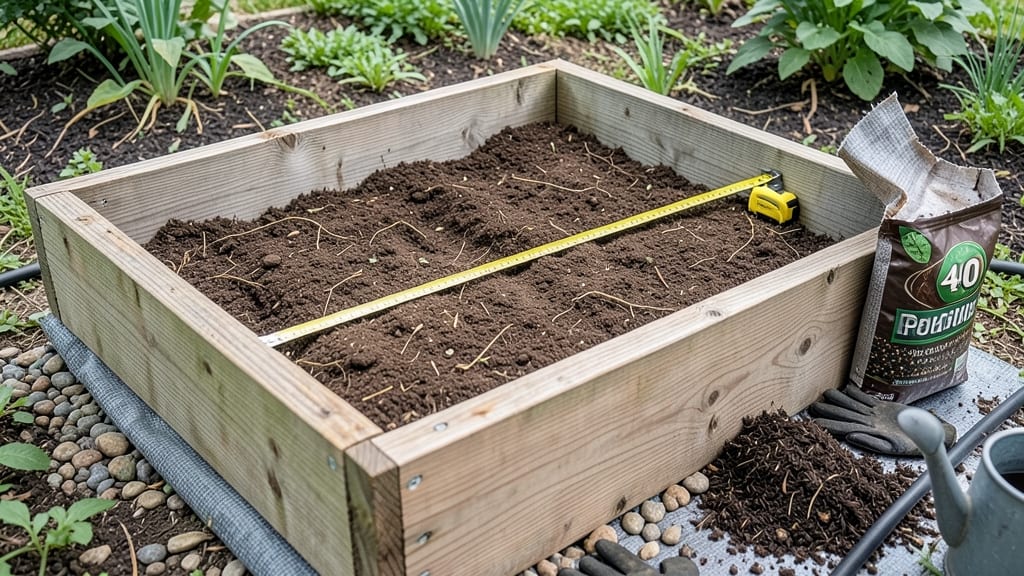
To determine how much soil for a raised garden bed, calculate based on dimensions and plant needs: a standard 6-inch depth requires 0.75 cubic feet per square foot, while deeper beds (12+ inches) need 1.5+ cubic feet per square foot. Multiply length × width × depth, then adjust for compaction and drainage layers.
Raised garden bed soil volume depends on your plants' root systems and the bed's depth. 🌱 For most vegetables and herbs, a 6-inch depth works perfectly, but root crops like carrots or potatoes need 12+ inches to thrive.
The key is accounting for soil settling—loose topsoil settles 25-30% after watering, so always buy 20-25% more than your initial calculation. I recommend using a mix of 60% topsoil, 30% compost, and 10% perlite for optimal drainage and aeration.
For custom beds, measure your frame's interior dimensions (not exterior) and subtract any drainage gaps. 📏 A 4'×8' bed at 12 inches deep needs about 32 cubic feet of soil—roughly 1.3 cubic yards—but this varies with frame thickness.
Pro tip: Use a soil calculator to account for bulk discounts at garden centers, where buying in 1 cubic yard increments often saves money.
💡 In This Article
- Optimal Raised Garden Bed Soil Depth by Plant Type
- Calculating Soil Volume for Custom Raised Beds
Optimal raised garden bed soil depth by plant type
Soil depth directly impacts plant health because roots need space to spread and access oxygen, water, and nutrients. Shallow beds (6 inches) work for leafy greens like lettuce or herbs such as basil, whose roots stay compact.
But root vegetables like carrots or potatoes need 12+ inches—deeper beds prevent root crowding and breakage. 🌱 The science? Roots grow toward moisture and nutrients, so deeper soil means fewer competition struggles.
For example, a 4-inch bed limits radish roots to 6-8 inches long, while 12 inches lets them reach their full 12-14 inch potential.
Drainage and aeration also depend on depth. Shallow beds dry out faster, while deeper ones retain moisture longer but risk waterlogging if drainage isn’t added (like gravel at the bottom).
Organic matter—like compost—fills 20-30% of soil volume, so a 6-inch bed with 30% compost actually has only 4.2 inches of usable topsoil.
This is why I recommend 60% topsoil for stability and 30% compost for fertility, balancing structure and nutrients. 💫 For shrubs or perennials, aim for 18+ inches to support extensive root systems.
Compaction changes everything. Freshly tilled soil settles 25-30% after watering, so a 6-inch bed shrinks to 4.5 inches. To avoid replanting, always buy 20-25% more soil than calculated. For instance, a 4'×8'×6" bed needs 19.2 cubic feet of loose soil but settles to 14.4 cubic feet.
Pro tip: Use a soil moisture meter to check compaction—if it reads dry after watering, your soil has settled too much.
Plant type dictates depth needs, but soil type matters too. Sandy soil drains quickly but holds less water, while clay retains moisture but suffocates roots. Amending with 10% perlite or vermiculite improves aeration in heavy soils.
For example, tomatoes thrive in 12-inch beds with amended soil, but strawberries only need 6 inches if the bed is well-drained. Always match depth to the plant’s mature root zone—check seed packets for guidance.
Here’s a quick reference for common plants:
- Vegetables (leafy greens, herbs): 6 inches (e.g., lettuce, basil)
- Root crops (carrots, potatoes): 12+ inches
- Shrubs/perennials: 18+ inches (e.g., rosemary, lavender)
- Flowers (annuals): 6-12 inches (depends on variety)
For precision, dig a test hole before building your bed—if roots hit hardpan (compacted subsoil) at 8 inches, plan for deeper beds or raised layers. 🌿 This ensures roots grow downward instead of circling, which stunts growth.