
Planting
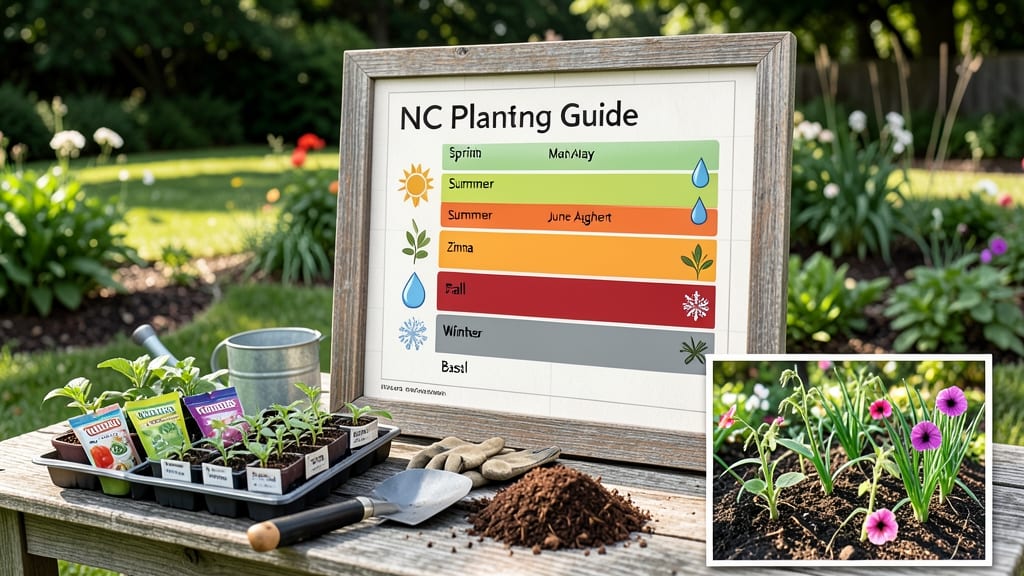
Planting your garden in North Carolina at the right time can mean the difference between a bountiful harvest and a disappointing flop—especially when your last frost date shifts from March in the mountains to April on the coast.
North Carolina’s diverse climate means your garden’s success hinges on planting at the perfect time—miss the window, and you risk stunted growth, pests, or even total crop failure. But with NC’s 8 frost-free zones, timing varies dramatically from the mountains to the coast.
Cool-season crops like lettuce and peas thrive when planted 4-6 weeks before your last frost, while warm-season favorites such as tomatoes and peppers need to wait until 2-3 weeks after the danger has passed.
In Zone 7b, that might mean starting in early March, but in Zone 8a, you’ve got until mid-April.
Below, I break down the exact frost dates by zone, which crops to plant when, and how to adjust for NC’s unpredictable weather—so you can finally get that garden right.
NC frost-free dates by USDA Zone: when to plant cool vs warm-season crops
North Carolina spans USDA Zones 5b to 8a, creating dramatic differences in frost-free dates. In the mountains (Zone 5b-6a), your last frost might hit as late as April 15, while coastal areas like the Outer Banks (Zone 8a) often see frost-free conditions by March 15.
These variations mean your planting schedule in Asheville won’t match Wilmington—or even Raleigh vs. Charlotte.
The key to success? Planting cool-season crops (like lettuce, spinach, and peas) 4-6 weeks before your last frost, and warm-season crops (tomatoes, peppers, squash) 2-3 weeks after. Below is your zone-by-zone breakdown, including exceptions for Piedmont microclimates (warmer valleys) and coastal delays (salt spray can extend frost risk).
🌱
Notice how Zone 8a (coastal NC) lets you start warm-season crops like tomatoes and peppers as early as February 15, while Zone 5b gardeners in the mountains must wait until May 15. This shift explains why Asheville gardeners often plant 6 weeks later than their coastal neighbors.
For microclimates, add 1-2 weeks to frost dates in valleys (warmer air pools) and subtract 1 week in high-elevation spots. The Piedmont’s red clay soil also warms slower—amend with compost to speed up soil temperature for early planting.
Pro tip: Use NC State Extension’s frost maps for real-time updates. A late frost in April can wipe out warm-season seedlings planted too early, while a warm February might let you start cool-season crops outdoors before the chart suggests.
🌿
If you’re in Zone 7b or warmer, consider succession planting for warm-season crops. For example, plant bush beans every 2 weeks from April to July to stretch your harvest.
Meanwhile, Zone 5b-6a gardeners should focus on fall planting for cool-season crops like kale and carrots, which thrive in cooler autumn temperatures.
One common mistake? Ignoring soil temperature. Warm-season crops like tomatoes need soil at 60°F+ to germinate. Use a soil thermometer—if your soil is still chilly in April, wait another week or start seeds indoors.
🌱
How to adjust planting times for NC’s unpredictable weather patterns
North Carolina’s weather can throw curveballs—one week you’re planting tomatoes, the next a late frost wipes out your seedlings. The key to success? Flexible timing based on real-time conditions, not just average frost dates.
I’ve learned to adjust planting times using three proven strategies: monitoring soil temperatures, protecting tender plants with frost cloth, and relying on NC State Extension alerts for last-minute updates.
Start by checking your soil temperature with a simple thermometer—most warm-season crops like peppers need soil at 60°F or above, while cool-season crops like spinach thrive in 40-50°F.
If your soil is too cold, delay planting until conditions improve. This small step saved my basil seedlings last spring when a cold snap hit unexpectedly.
Here’s the critical rule: Never plant warm-season crops before May 1 in most of NC, even if frost dates suggest otherwise. Early heatwaves can stress seedlings just as much as late frosts.
For example, in Zone 7b, I’ve had to wait until mid-May to plant tomatoes after soil temperatures finally stabilized.
Late Frost Alert: Protect Your Plants!
NC’s mountain regions (Zone 6b) can see frost as late as May 10, while coastal areas (Zone 8a) rarely face frost after March 15. Use these frost-cloth hacks to extend your planting window:
- Cover seedlings with frost cloth when nighttime temps drop below 32°F.
- Secure edges with bricks or soil to prevent wind damage.
- Remove cloth by 10 AM to avoid overheating.
For real-time adjustments, bookmark the NC State Extension frost alerts (available via email or SMS). Last year, their warning about a late April frost in Raleigh saved my cucumber plants—I covered them just in time.
The alerts also predict heatwaves, which can scorch young seedlings if planted too early.
Another trick? Stagger your planting by 2-week intervals for crops like beans and squash. If one batch fails due to weather, you’ll still have a harvest. I planted three batches of green beans in June, July, and August, and only the first batch struggled when a heatwave hit unexpectedly.
Don’t forget to adjust for microclimates. A south-facing slope warms up faster than a shaded valley, so you can plant 1-2 weeks earlier in sunny spots. For example, my tomatoes thrived in a raised bed near the house, while those in the shady garden bed lagged behind schedule.
By combining soil thermometers, frost cloth, and extension alerts, you’ll turn NC’s unpredictable weather into an advantage. My garden now produces consistently—no more guesswork, just smart adjustments based on real conditions. 🌱