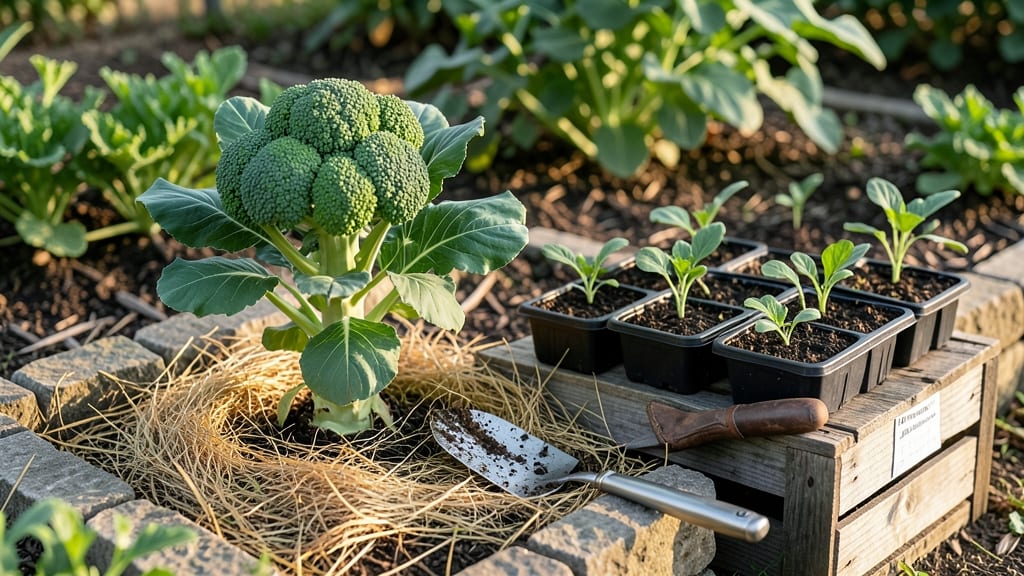
Planting a fall garden in North Texas means timing your crops to beat the first frost—usually by mid-November—but not so early that summer’s heat stalls growth.
North Texas gardeners know timing is everything—plant too early, and frost wipes out your harvest; too late, and your fall crops won’t mature before winter. But with the right schedule, you can enjoy fresh greens, root vegetables, and brassicas all season long—without the frost risk.
In Zones 7b-8a, the ideal window runs from mid-August to mid-October, but not all crops play by the same rules.
Leafy greens like kale and spinach thrive when planted in September, while root vegetables like carrots and beets need an earlier start to reach harvest size before cold sets in.
Below, I’ll break down the exact planting dates by crop type, soil prep tips to keep roots warm, and how to stretch your harvest with row covers—so you can avoid the common mistakes that leave gardens empty by Thanksgiving.
🌱
When to Plant Fall Garden (General Crops) Garden (General Crops)
Jan
❄️
Feb
❄️
Mar
🌱
Apr
🌱
May
🌸
Jun
☀️
Jul
☀️
Aug
🌱
Sep
🌱
Oct
🌱
Nov
🍂
Dec
❄️
North Texas fall planting calendar: exact dates by crop type for frost-free success
Fall gardening in North Texas (Zones 7b-8a) rewards patience with hearty harvests, but timing is critical. The first frost typically arrives around November 15, leaving just 6-8 weeks for cool-season crops to mature.
Start planning now to avoid losing your investment to freezing temperatures—or worse, planting too late for a meaningful harvest.
Your fall garden strategy should include three key phases: extending warm-season crops, starting cool-season plants, and adding frost-tolerant varieties. Each category has its own planting window and last-chance dates.
Warm-season holdovers like tomatoes and peppers need mid-August starts, while cool-season stars such as kale and carrots thrive when planted late August to early October. Frost-tolerant greens can even handle light freezes if seeded correctly.
Below is your crop-by-crop planting calendar, including exact dates, frost risk factors, and North Texas-specific tips. Use this as your roadmap to avoid common pitfalls like overcrowding or underestimating soil warmth—both of which can derail your fall garden before it begins.
🌱
| Crop Type |
Planting Window |
Last Chance Date |
Frost Tolerance |
North Texas Tip |
| Warm-Season Holdovers |
Mid-August |
September 15 |
Sensitive (32°F+) |
Use row covers to extend season; prioritize peppers and tomatoes. |
| Cool-Season Starters |
Late August - Early October |
October 10 |
Moderate (28°F+) |
Direct-sow leafy greens and root veggies for faster harvests. |
| Frost-Tolerant Varieties |
September 15 - October 15 |
November 1 |
Hardy (20°F+) |
Choose collards, kale, or spinach for winter harvests. |
| Green Beans |
August 15 - September 15 |
September 30 |
Sensitive (35°F+) |
Plant Bush Blue Lake for reliable yields; avoid wet soil. |
| Carrots |
September 1 - October 1 |
October 15 |
Moderate (25°F+) |
Loosen soil to prevent forked roots; try Danvers variety. |
| Broccoli |
August 20 - September 10 |
October 5 |
Moderate (28°F+) |
Transplant Calabrese for larger heads; harvest before flowering. |
| Radishes |
September 15 - October 10 |
October 25 |
Hardy (20°F+) |
Sow Cherry Belle for quick harvests (30 days); thin seedlings. |
How to adjust planting dates for North Texas microclimates and soil conditions
North Texas isn’t one-size-fits-all when it comes to gardening. Dallas and Lubbock can feel like different climates, with soil temperatures and frost dates shifting by hundreds of miles. Even within a city, urban heat islands and elevation changes can delay or speed up your planting window.
Understanding these microclimates helps you avoid early frost damage or wasted effort on crops that won’t mature in time.
Start by checking your local frost dates, which can vary by 1-2 weeks between regions. For example, Lubbock’s first frost often arrives 2 weeks earlier than Dallas’.
Use these dates to calculate your planting deadlines—cool-season crops like kale and carrots need 60-70 days to mature, so plant them 8 weeks before frost. Adjust for container gardens, which warm up faster in urban areas.
- 1. Soil Temperature Matters: Use a soil thermometer—cool-season crops like spinach thrive at 45-55°F, while warm-season holdovers (like tomatoes) need 60°F+. In Dallas, soil cools faster than in Lubbock due to higher humidity.
- 2. Elevation Adjustments: Higher elevations (e.g., Fort Worth hills) get colder nights. Shift planting dates 1 week later for areas above 1,000 feet to account for earlier frost.
- 3. Urban Heat Islands: Concrete and pavement in cities like Austin can delay frost by 3-5 days. Plant heat-sensitive crops (like lettuce) 1 week earlier in urban containers to avoid bolting.
- 4. Container Gardening Hacks: Pots dry out faster and warm up quicker. Water containers daily in September and use black fabric mulch to retain heat for root crops like radishes.
- 5. Watch for Rainfall Shifts: Lubbock’s dry climate means less fungal pressure, while Dallas’s humidity favors disease-resistant varieties (e.g., ‘Winterbor’ kale). Adjust spacing and mulching accordingly.
For container gardens, timing is even trickier. Urban areas like Arlington can have microclimates where a south-facing balcony stays 10°F warmer than a north-side yard. Use row covers to extend the season by 2-3 weeks for cold-hardy crops like collards.
Monitor soil moisture closely—containers dry out 3x faster than in-ground beds, especially in windy Lubbock.
Don’t forget to test your soil before planting. North Texas soils often lack organic matter, which affects water retention and nutrient availability.
Amend with compost or aged manure to improve drainage in clay-heavy soils (common in East Texas) or water retention in sandy soils (like those in West Texas). Aim for a pH of 6.0-7.0 for most fall vegetables.
Finally, keep an eye on weather forecasts in late September. A cold snap can push first frost forward by 10 days.
If your broccoli or cabbage starts bolting, switch to faster-maturing varieties like ‘Tendergreen’ broccoli (ready in 50 days) or ‘Early Snowball’ peas (ready in 60 days).
With these adjustments, you’ll maximize your fall harvest—whether you’re gardening in dry Lubbock, humid Dallas, or an urban Austin balcony. The key is flexibility: stay observant, adapt, and enjoy that fresh homegrown kale all the way until Christmas! 🌱
★★★★★4.5(14 reviews)