
Light Requirements
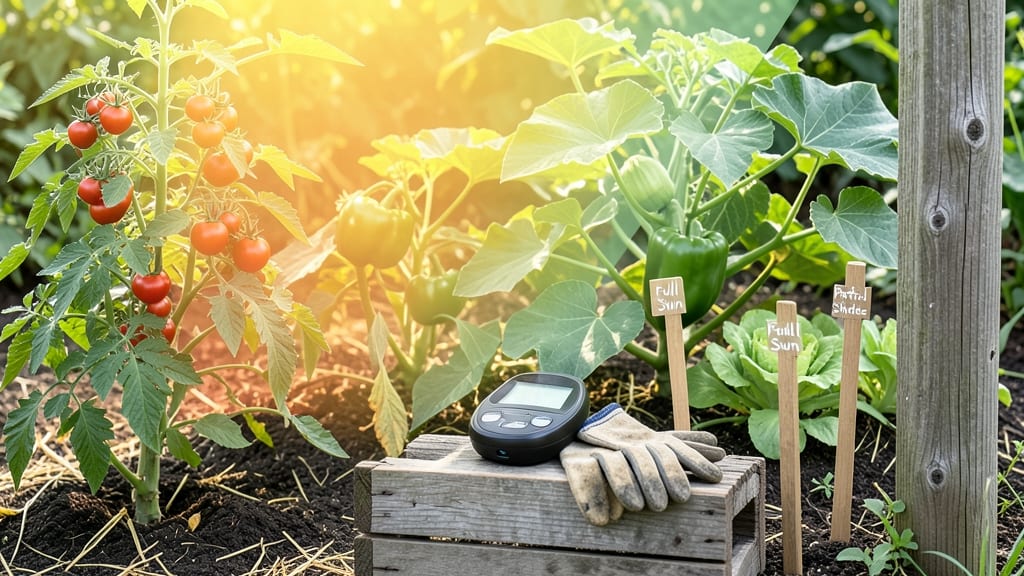
A vegetable garden needs 6 to 8 hours of sunlight daily to thrive, but not all plants demand the same intensity—some bolt in too much heat, others wilt without enough.
Picture this: your tomatoes are sprawling but fruitless, your basil is bitter, and your lettuce bolts into flower by July. These aren’t crop failures—they’re sunlight mismatches. The right balance transforms a struggling patch into a high-yield harvest.
Most vegetables fall into two camps: full-sun lovers like peppers and beans (6+ hours) and partial-shade tolerators like spinach or radishes (4–6 hours).
Below, I’ll break down the exact hours each crop craves, how to measure sunlight in your space, and how to tweak your layout for peak production—no guesswork, just results.
You’ll also learn how to spot sunlight traps in your yard, fix common mistakes (like overcrowding shade-loving plants), and adjust for microclimates—because a sunny corner can turn into a roasting oven if you’re not careful.


Sunlight requirements by vegetable type: full sun vs partial shade needs
Sunlight is the lifeblood of your vegetable garden, but not all plants crave the same amount. Tomatoes and peppers thrive in 6+ hours of direct sun, while leafy greens like lettuce and spinach prefer 4-6 hours to prevent bolting.
Understanding these needs ensures your garden produces bountiful harvests instead of struggling plants.
Full sun lovers—like cucumbers, beans, and squash—require 6-8 hours of sunlight daily to set fruit and grow vigorously. Meanwhile, partial shade crops such as kale, broccoli, and radishes tolerate 3-6 hours of sun, making them ideal for morning sun or dappled light areas.
Here’s how to categorize your garden layout for optimal growth and yield:
| Vegetable Type | Sunlight Needs | Spacing Tips | Companion Plants |
|---|---|---|---|
| Tomatoes, Peppers, Eggplants | 6+ hours (full sun) | 18-24" apart; stake for support | Basil, marigolds, onions |
| Cucumbers, Zucchini, Beans | 6-8 hours (full sun) | 12-36" apart; trellis for vines | Nasturtiums, radishes, lettuce |
| Lettuce, Spinach, Kale | 4-6 hours (partial shade) | 6-12" apart; mulch to retain moisture | Carrots, chives, strawberries |
| Broccoli, Cabbage, Radishes | 4-6 hours (partial shade) | 12-18" apart; fertilize for heads | Dill, celery, thyme |
| Green Onions, Peas, Beets | 3-6 hours (partial shade) | 4-8" apart; thin seedlings | Carrots, lettuce, radishes |
Adjusting spacing and companion planting can dramatically improve yields. For example, tomatoes planted near basil repel pests, while lettuce thrives under taller crops like corn or pole beans that provide afternoon shade.
If your garden has limited sunlight, prioritize leafy greens and root vegetables like carrots and beets, which tolerate 3-6 hours of sun. For containers, choose compact varieties of peppers or bush beans that adapt to partial shade conditions.
Monitor your garden’s microclimates—areas near fences or buildings may receive less sun. Use reflective surfaces like light-colored mulch or white garden markers to bounce extra light onto shade-prone plants during peak sunlight hours.
Seasonal adjustments are key: spring and fall crops often need less sun than summer varieties. For instance, spinach planted in early spring benefits from 4-5 hours of sun, but the same crop in summer may bolt if exposed to more than 6 hours.
Start by mapping your garden’s sunlight exposure using a sunlight meter or by observing shadows at different times of day. This ensures you place full sun lovers in the brightest spots and partial shade crops in areas with filtered light.
With the right layout, you’ll avoid common pitfalls like underripe tomatoes or bitter lettuce. Experiment with succession planting—swap heat-loving peppers for cool-season kale as seasons change to keep your garden productive year-round.
🌱
How to measure and adjust sunlight in your garden for best results
Before you plant a single seed, you need to know your garden’s sunlight map. Not all areas receive equal light—even a small yard can have sunny hotspots next to shady nooks.
I’ve learned the hard way that moving a tomato plant just 3 feet can mean the difference between bushels of fruit and leafy vines with no tomatoes. Start by observing your space for at least a week to track how shadows shift with the sun.
Use a simple sunlight journal to note which areas get morning sun, afternoon sun, or dappled shade. Mark your garden with stakes or spray paint to track changes.
In spring, a south-facing bed might get 8 hours of sun, but by summer, nearby trees could cast 4+ hours of shade. Seasonal shifts are everything—what’s full sun in June might be partial shade in September.
⚠️ WARNING: Most gardeners underestimate shade creep! Trees, fences, and even your house expand shadows as the sun arcs lower in the sky. A 6-foot-tall fence can block sunlight for 2+ hours longer in late summer than in spring. Here’s how to avoid common pitfalls:
⚠️ Ignoring Microclimates: A south-facing slope gets 20% more sun than a flat bed. North-facing areas may never get direct sunlight. Test your spots with a $10 sunlight meter or even a white plate (track how quickly it heats up).
⚠️ Planting by Intuition: Just because your neighbor’s peppers thrive doesn’t mean your north-facing bed is right for them. Always match plants to your garden’s actual sunlight, not assumptions.
For precise measurements, invest in a sunlight meter or use the shadow-stick method. Stick a 12-inch dowel in the ground at noon and mark where its shadow falls every hour.
Repeat for a week to map your garden’s sunlight contours. Pro tip: Use a laser level to ensure stakes are perfectly vertical for accurate readings.
Adjust your layout by grouping full-sun plants (like peppers and cucumbers) in the sunniest spots and partial-shade crops (like spinach or bush beans) where light filters through.
If your garden lacks natural shade, create it with lattice screens or cloth row covers to protect heat-sensitive plants like leafy greens during peak afternoon sun.
Don’t forget about seasonal adjustments. In cooler months, extend growing seasons with cold frames or row covers to give plants extra light. For shade-loving crops, use reflective mulch (like white plastic) to bounce light onto their leaves.
Even a 10% increase in light can boost yields by 30% for plants like lettuce or kale.
Finally, rotate crops annually to prevent soil depletion and ensure even sunlight distribution. If one bed gets too much shade after a few years, it’s time to prune nearby trees or redesign your layout.
A little planning now saves hours of frustration later—and your plants will thank you with bigger, healthier harvests all season long. ☀️🌱