
Watering
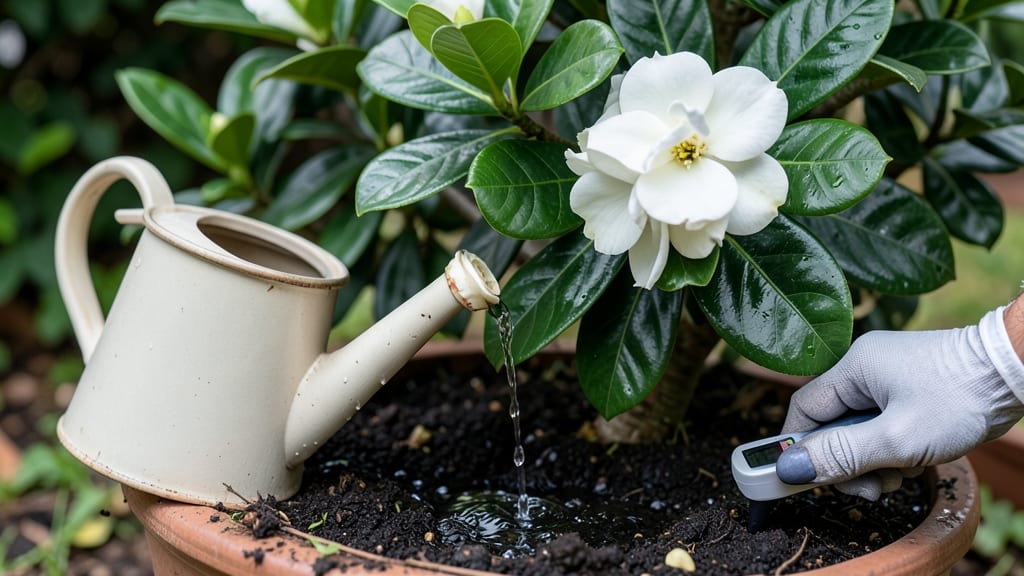
To water a gardenia plant properly means giving it just enough moisture to thrive without drowning its roots—the key to those fragrant, glossy blooms you love.
Struggling to keep your gardenia plant thriving with vibrant blooms? The secret often lies in mastering its watering needs—too much or too little can spell disaster for these delicate yet stunning flowers.
Gardenia 🌸 plants crave consistent moisture but despise soggy soil, which is why many gardeners accidentally kill them by overwatering. The trick is checking soil dampness before watering and adjusting for your climate—humid summers need more frequent watering, while dry winters demand patience.
In this guide, I’ll walk you through the exact watering schedule, tools to use, and how to spot signs of over- or underwatering so you can keep your gardenia blooming beautifully all season.


Understanding gardenia watering needs: soil, climate, and seasonal adjustments
Gardenia plants thrive when their watering needs align with their natural preferences—consistent moisture without soggy roots. These tropical beauties demand attention to detail, especially when it comes to soil type, climate conditions, and seasonal changes.
Whether you're growing gardenias in humid Florida or dry Arizona, understanding these factors is key to avoiding common pitfalls like yellowing leaves or bud drop. Let's break down the science behind their water needs so you can keep your gardenias blooming beautifully year-round.
Gardenia roots prefer well-draining, acidic soil with a pH between 5.0 and 6.5. In heavy clay soil, water drains poorly, leading to root rot, while sandy soil drains too quickly, causing underwatering stress.
Amending your soil with peat moss or pine bark improves drainage and moisture retention. For potted gardenias, ensure your containers have drainage holes and use a lightweight potting mix designed for acid-loving plants.
This balance is critical because gardenias hate having wet feet but also need consistent hydration to support their lush foliage and fragrant blooms.
Your local climate plays a massive role in how often you water. In humid regions, gardenias may need watering every 2-3 days, while in arid climates, you might need to water daily during peak summer months.
Evenings in humid areas can trap moisture, increasing the risk of fungal diseases, so adjust your watering schedule to morning sessions when possible.
If you live in a dry, windy area, consider mulching around the base of your gardenia to retain moisture and protect roots from extreme temperature swings. This simple step can reduce watering frequency by 30-50%.
Seasonal changes dramatically impact gardenia watering needs. During spring and summer, when gardenias are in active growth and blooming, they require more frequent watering—about 1-2 inches per week.
In fall, as temperatures drop, reduce watering to every 3-4 days to mimic their natural dormancy period. Winter care is especially critical: gardenias in USDA Zone 6a or colder may need watering only every 7-10 days, unless you're growing them in containers, which dry out faster.
Always check the top 2 inches of soil before watering—if it's dry, it's time to hydrate.
One of the biggest mistakes gardeners make is watering on a rigid schedule without checking soil conditions. Instead of relying on a calendar, use the "finger test"—stick your finger 1-2 inches into the soil.
If it feels dry, water deeply until it drains from the bottom of the pot or 6 inches into the ground. For potted gardenias, lift the pot to gauge weight—if it feels light, it's time to water.
In containers, watering needs are 2-3 times higher than in-ground plants because soil dries out faster. To help, place pots on elevated trays with pebbles to improve drainage and reduce evaporation.
Gardenia plants also react poorly to hard water, which contains high levels of **
Step-by-step guide to watering gardenias for optimal bloom health
Watering your gardenia plant correctly is the key to those fragrant, creamy-white blooms you adore. Unlike many plants, gardenias demand consistent moisture without becoming waterlogged—a tricky balance that can make or break their health.
I’ve learned through trial and error that timing, technique, and soil conditions all play starring roles in keeping these divas thriving.
Gardenias thrive when their roots stay evenly moist but never soggy. Think of it like Goldilocks—not too wet, not too dry, but just right. Overwatering leads to root rot and yellow leaves, while underwatering causes buds to drop and leaves to wilt.
The good news? With a few simple steps, you can master the art of watering gardenias and enjoy vibrant blooms all season.
- Step 1 Check soil moisture before watering
Use your finger to test the top 1-2 inches of soil. If it feels dry, it’s time to water. For potted gardenias, lift the pot—if it feels light, the soil is dry.
- Step 2 Water deeply in the morning hours
Water your gardenia before 10 AM to allow excess moisture to evaporate during the day. Aim for 1-2 inches of water per week, delivered directly to the soil—not the leaves—to prevent fungal diseases like powdery mildew.
- Step 3 Use a moisture meter for accuracy
For precise readings, invest in a soil moisture meter. Insert it into the soil up to 2 inches deep. Readings below 40% moisture signal it’s time to water, while anything above 60% means hold off.
- Step 4 Adjust for seasonal needs
In summer heat, water every 1-2 days to compensate for rapid evaporation. During winter dormancy, reduce watering to every 7-10 days unless your home is extremely dry.
- Step 5 Troubleshoot yellow leaves or bud drop
Yellow leaves often mean overwatering or poor drainage. Bud drop? Likely underwatering or low humidity. Increase humidity with a pebble tray or group plants together to create a microclimate.
One of my biggest mistakes was watering gardenias at night, thinking it would keep them hydrated overnight. Big error! Evening watering promotes fungal growth, so always stick to morning sessions.
Also, avoid wetting the leaves—this can lead to brown spots and mildew. Instead, use a soaker hose or water at the base of the plant.
If you notice your gardenia’s leaves curling or buds falling off before opening, it’s a cry for help. Yellowing leaves usually mean the roots are suffocating from too much water, while dropping buds often signals stress from inconsistent moisture.
Adjust your watering schedule immediately and consider adding organic mulch to retain soil moisture and regulate temperature.
With these steps, your gardenia will reward you with luxuriant blooms and a heavenly fragrance that fills your garden. Remember, consistency is key—stick to the routine, and your gardenia will thrive for years to come. Happy gardening! 🌸