
Tools
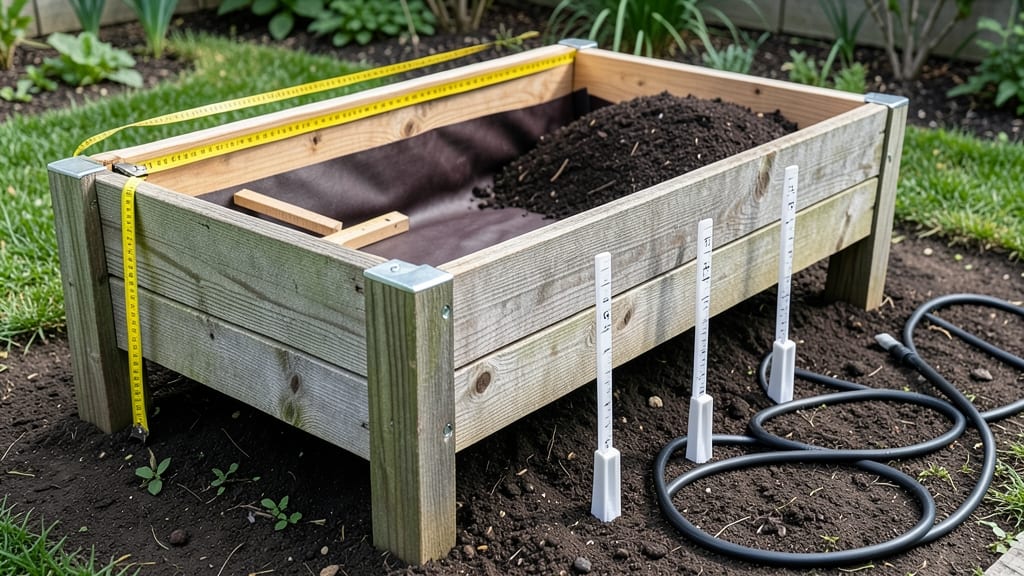
The ideal dimensions for raised garden beds balance plant needs with human ergonomics, featuring widths of 3–4 feet for easy reach, lengths up to 12 feet for space efficiency, and depths of 12–18 inches to accommodate deep-rooted crops. A height of 6–12 inches enhances drainage and reduces strain on your back.
When designing raised beds, I always start with the plants you want to grow—deep-rooted vegetables like carrots or potatoes need that 12–18-inch depth to spread comfortably, while shallow-rooted greens like lettuce thrive in just 6–12 inches. 🌱 The 3–4-foot width is a sweet spot because it lets you reach the center without stepping into the bed, and lengths up to 12 feet maximize space without overwhelming your garden layout.
Pro tip: taller beds (10–12 inches) improve drainage and reduce soil compaction, which is a game-changer for heavy clay soils.
For accessibility, I recommend building beds at waist height—around 2–3 feet tall—so you can tend to them without bending. This also helps with drainage, as excess water flows out more easily.
If you're working with limited space, consider narrower beds (2–3 feet wide) arranged in a grid pattern; they warm up faster in spring and make it easier to rotate crops. The key is matching your bed’s dimensions to both your plants' needs and your own comfort.
💡 In This Article
- Root Depth Requirements for Common Vegetables
- Designing Raised Beds for Accessibility and Soil Health
Root depth requirements for common vegetables
Root depth determines how much soil volume your plants need to thrive. Deep-rooted vegetables like carrots, potatoes, and asparagus require 12–18 inches of soil to develop fully, while shallow-rooted crops such as lettuce, spinach, and radishes only need 6–12 inches.
The difference comes down to how far roots must spread to access water and nutrients—carrots, for example, can grow roots up to 16 inches long, while lettuce roots rarely exceed 6 inches.
This variation is why your raised bed depth should align with your deepest-rooted crop to avoid stunted growth or poor yields.
Soil volume also affects nutrient distribution and moisture retention. A 12-inch-deep bed provides about 27 cubic feet of soil per 4-foot-wide, 8-foot-long bed, which is plenty for most vegetables.
However, if you're growing root crops like beets or parsnips (which can reach 18 inches deep), opt for 18-inch depth to prevent root binding—a condition where roots grow in circles due to limited space. 🌱 The extra depth also helps stabilize soil temperature, keeping roots cooler in summer and warmer in spring, which is especially beneficial for cold-sensitive crops like tomatoes.
Here’s how root depth impacts growth: shallow-rooted plants like herbs and greens benefit from frequent watering and top-dressed compost, while deep-rooted plants need consistent moisture at lower levels.
For instance, a 12-inch-deep bed might suffice for tomatoes, but if you’re growing deep-rooted varieties like heirloom carrots, you’ll need that extra 6 inches to avoid root forking or splitting.
The rule of thumb is to match your bed depth to the mature root length of your deepest crop, plus an extra 2–3 inches for soil settling and drainage.
Consider this comparison for common crops:
- Shallow-rooted (6–12 inches): Lettuce, spinach, radishes, green onions, herbs (basil, cilantro)
- Moderate-rooted (12–18 inches): Tomatoes, peppers, bush beans, beets, carrots (standard varieties)
- Deep-rooted (18+ inches): Potatoes, asparagus, parsnips, heirloom carrots, artichokes
If you’re growing a mix of crops, prioritize depth based on your deepest-rooted plants. For example, a bed with potatoes and lettuce should be 18 inches deep, even though the lettuce would technically thrive in 12 inches.
The extra depth ensures all plants have the space they need to access nutrients and water without competing aggressively. This layered approach also helps with soil structure, as deeper beds allow for better aeration and root penetration.
One common mistake is underestimating root depth for "shallow" crops. Even lettuce roots can grow deeper if the bed is too compacted, leading to bitter leaves. Loose, well-amended soil encourages roots to stay shallow, which is ideal for quick-harvest crops.
For beds with mixed plantings, consider dividing them into sections or using raised bed dividers to allocate depth where it’s needed most.